
Related News
- 00
0000-00
Urban Charging Infrastructure Costs: What Drives CAPEX, OPEX, and ROI by Deployment Type - 00
0000-00
Urban Traffic Solutions in Latin America: Which Models Fit Dense City Corridors? - 00
0000-00
Airport Smart Mobility Explained: Key Systems, Use Cases, and Planning Priorities - 00
0000-00
How to Evaluate an Electric Mobility Provider for Cost, Service Coverage, and Scalability - 00
0000-00
How to Use a Micro Mobility Supplier Directory to Compare OEMs and Component Partners
Ms. Elena Rodriguez
Weekly Insights
Stay ahead with our curated technology reports delivered every Monday.
Airport Smart Mobility Explained: Key Systems, Use Cases, and Planning Priorities





Airport smart mobility has moved from a niche airport project to a broader operating priority. Large hubs now manage passenger circulation, staff transfers, service fleets, curbside pressure, and carbon targets at the same time.
That is why airport smart mobility matters beyond transport hardware alone. It connects vehicles, digital guidance, charging infrastructure, fleet software, and operational data into one movement system across the airport estate.
For organizations tracking low-carbon mobility, the topic also sits close to the wider micro-mobility transition. The same logic shaping e-bikes, smart e-scooters, and connected electric fleets is now influencing aviation ground access.
What airport smart mobility actually covers
In practical terms, airport smart mobility refers to coordinated systems that improve how people, goods, and services move within and around an airport. The scope is much wider than shuttle buses.
It includes landside access, inter-terminal transfer, staff commuting, airside support movement, and last-mile links between parking, rail, hotels, cargo areas, and terminal entrances.
The “smart” element comes from integration. Vehicles are connected to routing tools, charging schedules, usage analytics, safety controls, and maintenance planning rather than operating as isolated assets.
This is where airport smart mobility overlaps with the intelligence model followed by UMMS. Micro-mobility is no longer just about the vehicle. It is about transmission efficiency, battery performance, control systems, and real operating insight.
Why the sector is paying closer attention
Airports face a difficult combination of rising passenger expectations and tighter operational constraints. Congested curbsides, labor shortages, emissions reporting, and fragmented transport links all create pressure.
At the same time, airports are miniature cities. They contain workers, travelers, contractors, retailers, hotels, logistics functions, and security zones with very different movement patterns.
Traditional fixed-route transport often handles peak flow poorly. It can leave gaps in short-distance circulation, especially between parking zones, terminal edges, maintenance facilities, and remote service points.
Airport smart mobility addresses those gaps with more flexible, electrified, and data-visible options. That makes it relevant for both service quality and infrastructure efficiency.
The policy and sustainability angle
Many airports are under pressure to show measurable decarbonization progress. Surface transport emissions, staff commuting, and on-site support fleets are now visible parts of that discussion.
Electrified mobility also aligns with broader public policy trends. Subsidies, zero-emission targets, and urban access rules have already accelerated e-bike and e-scooter adoption in many regions.
Those same forces are pushing airport operators to rethink short-range movement. In that sense, airport smart mobility is part of a much larger transport transition rather than a standalone airport fashion.
Key systems behind airport smart mobility
The strongest airport smart mobility programs usually combine several layers. Each layer solves a different problem, but the value increases when they work together.
Electric and autonomous transport
Autonomous shuttles, electric vans, people movers, and compact service vehicles reduce repetitive short-distance trips. They are especially useful on predictable internal routes with high circulation frequency.
In some layouts, e-bikes and smart e-scooters also have a role. They support maintenance teams, campus staff, security patrols, or short staff commutes across large airport properties.
Connected wayfinding and traveler guidance
Digital wayfinding links maps, signage, apps, occupancy signals, and transport availability. It helps travelers choose the fastest path between modes instead of relying only on static signs.
For airport smart mobility, guidance matters as much as vehicles. A shuttle or micromobility service loses value when users cannot easily find access points, docking areas, or transfer times.
Charging, battery, and energy management
Charging networks are often the hidden constraint. Fleet uptime depends on charger placement, power availability, dwell time, and battery management strategy.
This is an area where insight from the wider two-wheeler ecosystem becomes useful. UMMS closely tracks battery management logic, thermal behavior, and powertrain efficiency, all of which matter in airport deployments.
Fleet software and operational analytics
Software ties the system together. It can monitor asset location, utilization, energy status, maintenance intervals, route demand, and dwell patterns across different vehicle categories.
Without analytics, airport smart mobility remains a pilot. With analytics, it becomes an operational platform that can be adjusted by season, traffic profile, or infrastructure bottleneck.
Where airport smart mobility creates the most value
Not every airport needs the same configuration. The strongest business case usually appears where movement is frequent, distances are awkward, and conventional vehicles are oversized or underused.
The pattern is consistent. Airport smart mobility works best when it removes friction from repeated short-range journeys rather than trying to replace every transport mode at once.
What deserves closer evaluation before deployment
The technology itself is only one part of the decision. Planning failures usually come from weak fit between vehicle choice, operating environment, and management model.
Route logic and user behavior
A useful question is not whether a vehicle looks innovative. It is whether the route is repetitive, measurable, and important enough to justify a dedicated mobility layer.
Walking distances, luggage loads, weather exposure, and security checkpoints all shape user behavior. A technically sound vehicle can still fail if it ignores these frictions.
Battery performance and environmental conditions
Airports operate across heat, rain, wind, dust, and long daily duty cycles. Battery thermal stability, charging rhythm, and weather resilience deserve close attention from the start.
This is also why component quality matters. Brushless motors, drivetrain reliability, sensor performance, and visibility safety systems can have outsized effects in demanding operating conditions.
Governance and interoperability
Airport smart mobility often involves multiple stakeholders. Airport authorities, transport operators, security teams, technology vendors, and energy providers may all influence rollout speed.
That makes interoperability important. Data formats, charging interfaces, maintenance workflows, and access permissions should be aligned before fleet scale increases.
- Map high-frequency short trips before selecting vehicles.
- Check charging capacity against actual duty cycles, not brochure claims.
- Review local rules for shared devices, right-of-way, and operational zones.
- Use pilots to test circulation logic, then scale the working segments.
- Build measurement around uptime, transfer time, utilization, and emissions impact.
How micro-mobility intelligence supports airport decisions
Airport smart mobility is increasingly influenced by developments outside aviation. Advances in e-bike systems, smart e-scooter telematics, battery safety, and electronic control platforms now transfer into airport use cases.
That is where sector intelligence becomes useful. UMMS follows the technical and commercial signals behind electrified two-wheelers, precision drivetrains, and connected mobility systems rather than treating them as isolated product stories.
For airport projects, that perspective helps frame better questions. Which platforms are mature enough for high-cycle use? Which battery strategies support uptime? Which regulations could affect deployment in different markets?
The result is a more grounded view of airport smart mobility. It becomes easier to distinguish between a promising demonstration and a scalable operating model.
A practical next step
A useful starting point is to treat airport smart mobility as a network design question, not a vehicle procurement exercise. Movement demand, charging logic, safety constraints, and digital visibility should be reviewed together.
From there, compare scenarios where short-distance electrified transport can remove friction fastest. The best early opportunities usually sit in staff circulation, remote access links, and predictable internal transfers.
If the goal is a durable framework, keep watching the wider micro-mobility market as well. Many of the strongest ideas in airport smart mobility will continue to emerge from advances in connected two-wheelers, batteries, and fleet intelligence.
Related News

Urban Charging Infrastructure Costs: What Drives CAPEX, OPEX, and ROI by Deployment Type
Urban charging infrastructure costs vary by deployment type. Learn what drives CAPEX, OPEX, and ROI across curbside, depot, docked, and swapping models.

Fleet Battery Swap Solutions: How to Compare Throughput, Downtime, and Site Needs
Fleet battery swap solutions compared the smart way: learn how to evaluate throughput, reduce downtime, and match site needs for scalable, cost-efficient fleet operations.

Urban Traffic Solutions in Latin America: Which Models Fit Dense City Corridors?
Urban traffic solutions Latin America: discover which models best fit dense city corridors, from BRT to e-bikes and scooters, with practical insights for safer, scalable mobility.
Urban Micro Mobility Market Trends: What Operators and Investors Should Track
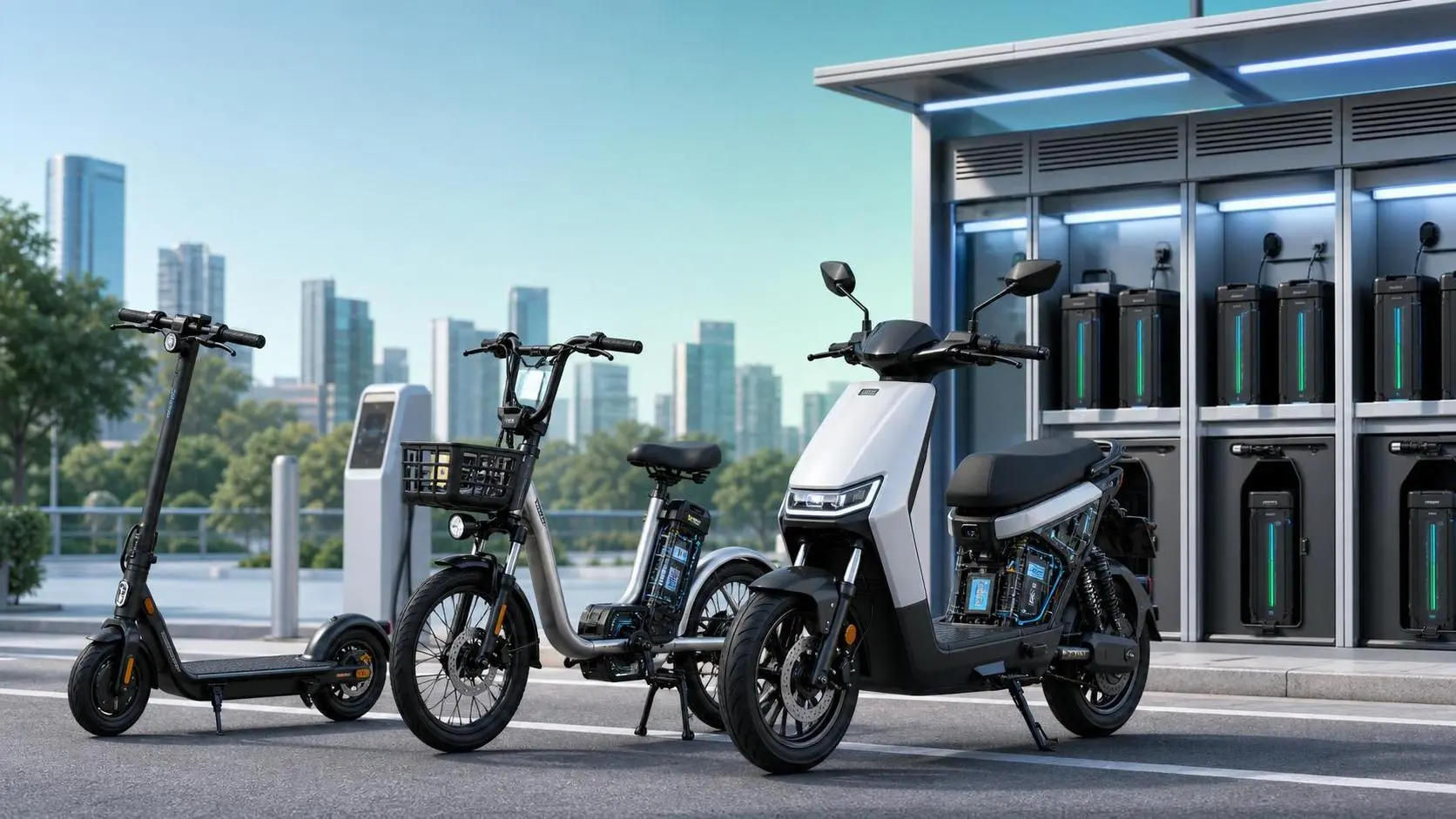
Urban micro mobility market trends are shifting fast. Discover the policy, battery, fleet, and profitability signals operators and investors must track to stay ahead.
How to Evaluate an Electric Mobility Provider for Cost, Service Coverage, and Scalability
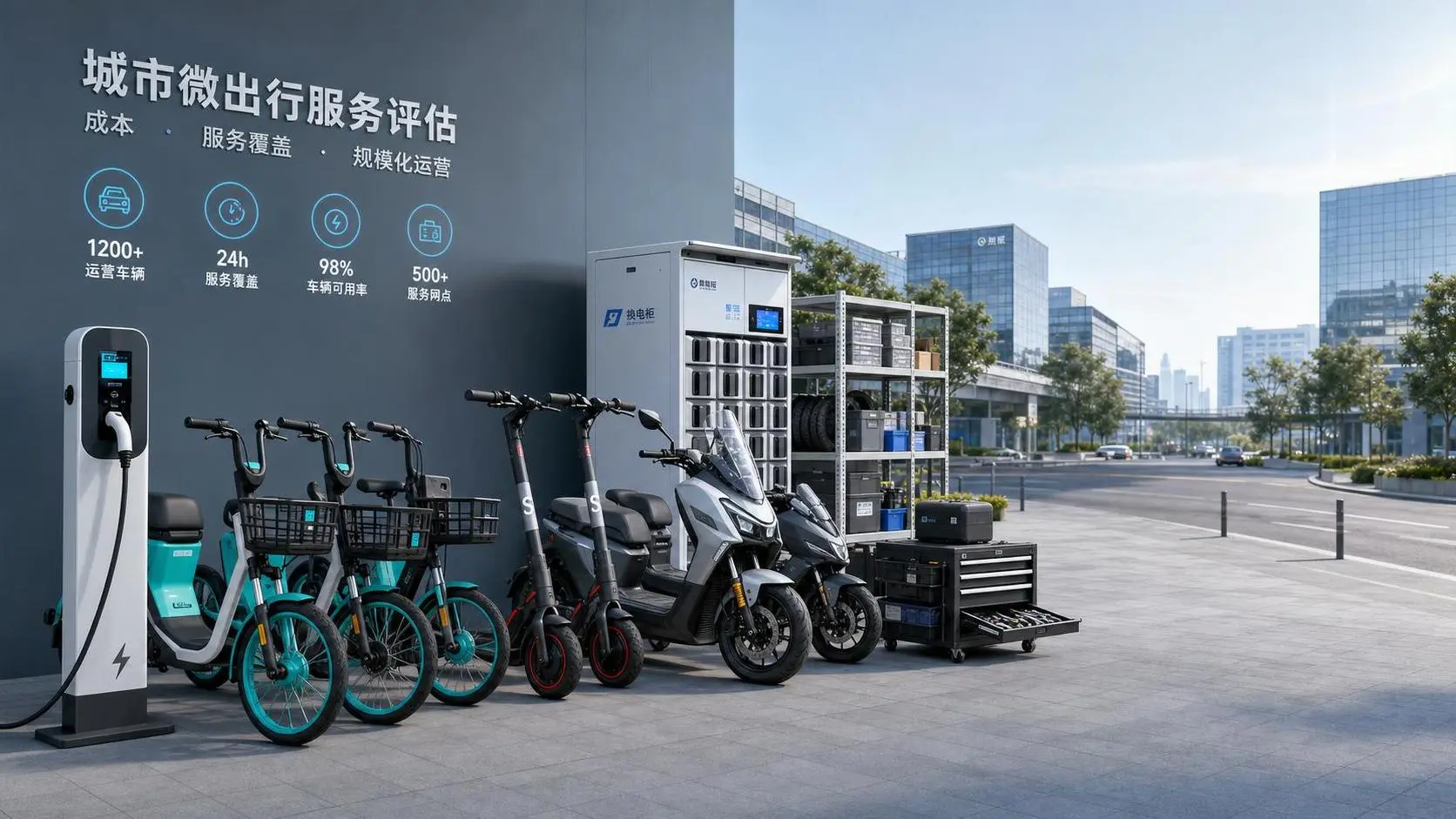
Electric mobility provider evaluation starts with total cost, service coverage, and scalability. Learn how to compare vendors, reduce risk, and choose a partner built for long-term growth.

Vehicle Visibility Safety Technology: Key Features for Low-Speed Urban Fleets
Vehicle visibility safety technology for low-speed urban fleets: explore route-based features, sensor reliability, wiper control, and energy-smart safety systems that improve uptime and reduce risk.

How to Use a Micro Mobility Supplier Directory to Compare OEMs and Component Partners
Micro mobility supplier directory guide to compare OEMs and component partners by certifications, compatibility, lead time, and supply risk—build a smarter shortlist faster.
Smart Mobility Telematics Explained: Which Data Points Matter for Fleet Performance?
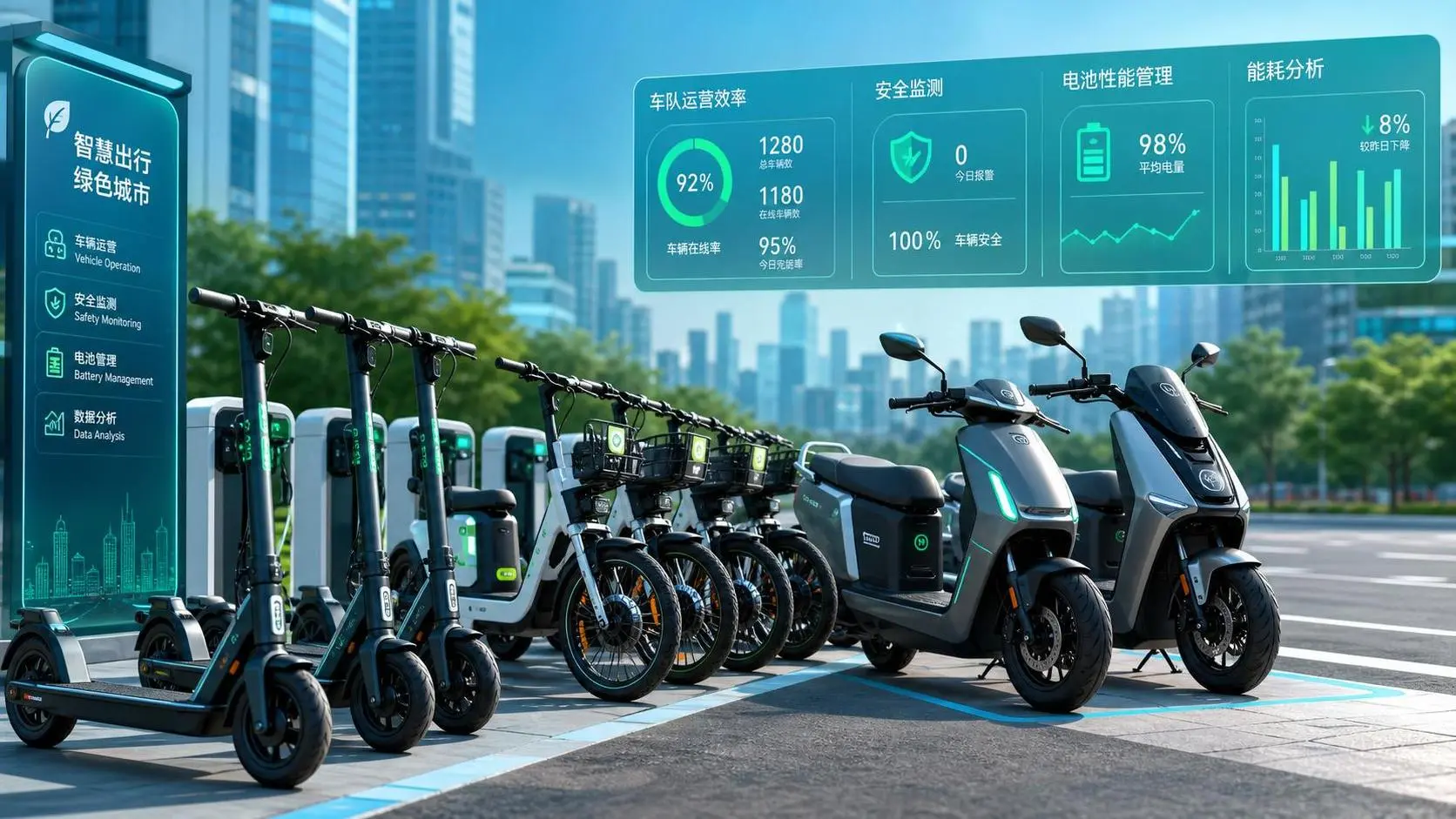
Smart mobility telematics explained: discover the data points that truly impact fleet uptime, battery health, safety, and utilization—so operators can cut costs and improve performance faster.

Micro-Mobility Trends: How Battery Swapping Is Reshaping Shared Scooter Operations
Micro-mobility trends battery swapping are transforming shared scooter operations by boosting uptime, cutting charging friction, and improving fleet efficiency. Explore the key business drivers.