
Related News
- 00
0000-00
Urban Micro Mobility Market Trends: What Operators and Investors Should Track - 00
0000-00
Micro-Mobility Trends: How Battery Swapping Is Reshaping Shared Scooter Operations - 00
0000-00
Urban Electric Vehicles Market: Key Growth Drivers and Adoption Challenges - 00
0000-00
Two Wheeler Electrification Trends: What Is Driving Adoption in Urban Mobility? - 00
0000-00
Electric Torque Trends in E-Mobility: How Peak vs Continuous Output Affects Ride Performance
Prof. Marcus Chen
Weekly Insights
Stay ahead with our curated technology reports delivered every Monday.
Urban Micro Mobility Market Trends: What Operators and Investors Should Track





Urban micro mobility market signals are getting harder to read
The urban micro mobility market is no longer defined by simple expansion, cheap capital, or headline ridership growth.
A more selective phase is emerging.
Policy frameworks are tightening, fleet economics are under pressure, and technical performance now shapes market access as much as brand presence.
That shift matters across e-bikes, smart e-scooters, high-speed e-motorcycles, and precision bicycle components.
It also changes how the urban micro mobility market should be evaluated.
From recent market behavior, the strongest operators are not chasing scale at any cost.
They are improving asset productivity, compliance readiness, battery utilization, and system-level reliability.
That is exactly why intelligence platforms such as UMMS have become more relevant.
The value is no longer in raw news volume.
The value is in connecting drivetrain efficiency, battery management logic, connected hardware, and regulatory movement into one usable market picture.
What is changing in the urban micro mobility market right now
The first visible change is that growth is becoming more uneven across cities and product categories.
Dense urban corridors still support shared scooters and commuter e-bikes.
But weaker unit economics are pushing marginal fleets out of less efficient geographies.
A second shift is the rising importance of technical detail.
Battery thermal behavior, anti-theft connectivity, sensor durability, wireless shifting stability, and lightweight frame integrity now influence procurement and financing decisions.
That makes the urban micro mobility market more operationally demanding than it looked three years ago.
A third signal is policy differentiation.
Subsidies, speed classifications, parking rules, right-of-way restrictions, and battery safety rules are diverging across regions.
This raises the cost of getting regulation wrong.
- Shared mobility models are being judged on utilization, rebalancing cost, and local compliance quality.
- Private ownership models are benefiting from lifestyle demand and longer replacement cycles.
- Performance segments, especially high-speed electric motorcycles, are increasingly linked to charging and swapping infrastructure maturity.
Why these shifts are becoming more pronounced
The urban micro mobility market is being reshaped by four forces acting at the same time.
More importantly, these forces interact.
For example, policy support can increase demand, yet stricter battery rules can narrow the field to suppliers with stronger verification capability.
That is why the urban micro mobility market now rewards cross-functional visibility.
A city permit decision, a thermal management issue, and a fleet uptime problem may be commercially connected.
The market is no longer moving as one category
One common mistake is to treat the urban micro mobility market as a single demand curve.
Recent developments suggest otherwise.
E-bikes are benefiting from practical consumer logic
E-bikes continue to hold up because they solve commuting, recreation, and fuel substitution at the same time.
In Europe especially, post-pandemic mobility habits still support this category.
Demand is becoming more selective, though.
Motor efficiency, battery life, and serviceability increasingly influence repeat purchase confidence.
Smart e-scooters are under a sharper profitability lens
The smart e-scooter segment remains central to the urban micro mobility market, but shared models are facing a harder operating reality.
IoT functionality is no longer just a convenience layer.
It is essential for fleet tracking, predictive maintenance, parking compliance, and rider behavior analytics.
High-speed e-motorcycles depend on infrastructure confidence
This segment has strong strategic potential, especially where battery-swapping ecosystems are maturing.
Yet adoption depends less on curiosity and more on trust in range, safety, and charging continuity.
Precision components are moving closer to the investment conversation
Wireless electronic shifting, lightweight drivetrains, and advanced wiper sensing may look niche.
In practice, they signal where performance and reliability premiums are forming.
UMMS has built visibility around exactly these technical transitions, which are often missed in broader transport commentary.
Where the pressure is landing across the value chain
The urban micro mobility market is not only changing at the consumer or city level.
Pressure is appearing across product design, sourcing, deployment, and aftermarket service.
- Product architecture is shifting toward lighter materials, smarter control units, and easier battery diagnostics.
- Supply chains are being judged on resilience, traceability, and certification readiness.
- Fleet operations are becoming more data intensive, especially around charging cycles and utilization density.
- Service models are gaining importance because downtime erodes economics faster than many early models assumed.
This broadens the definition of competitive advantage.
In the urban micro mobility market, a technically superior subsystem can now influence financing, insurance, compliance, and long-term valuation.
The signals worth tracking over the next cycle
The next phase will likely be shaped less by absolute demand headlines and more by quality of market fit.
Several indicators deserve closer attention.
- Local policy consistency, especially around shared fleet caps, parking control, and battery safety enforcement.
- Battery lifecycle economics, including degradation rates, replacement timing, and second-life pathways.
- Connected system maturity, from anti-interference shifting protocols to sensor-based maintenance alerts.
- Infrastructure alignment, particularly charging density and swapping availability for higher-speed categories.
- Export and regional demand divergence, which can quickly alter sourcing and inventory strategy.
These are not abstract indicators.
They directly affect margin durability and deployment confidence in the urban micro mobility market.
A practical reading of what comes next
The urban micro mobility market still has structural growth drivers.
Urban congestion, decarbonization pressure, and two-wheeler electrification are not temporary forces.
But the easy phase is ending.
Future winners will likely be defined by disciplined deployment, engineering reliability, policy fluency, and better interpretation of weak market signals.
That is where structured intelligence becomes useful.
UMMS reflects this need by connecting low-carbon mobility demand with the technical realities of batteries, drivetrains, sensor systems, and regulatory design.
The most effective next step is to build a tighter tracking framework.
Review policy changes by city, compare battery and component performance data, and test whether current market assumptions still match actual use patterns.
In a more selective urban micro mobility market, better judgment will matter at least as much as bigger ambition.
- e-bikes
- smart e-scooters
- high-speed e-motorcycles
- two-wheeler electrification
- battery management
- low-carbon mobility
- shared scooters
- wireless electronic shifting
- thermal management
- shared mobility
- bicycle components
- electronic shifting
- electric motorcycles
- micro mobility market
- engineering credibility
- wireless shifting
- urban micro mobility market
- high-speed electric motorcycles
- precision bicycle components
Related News

Urban Charging Infrastructure Costs: What Drives CAPEX, OPEX, and ROI by Deployment Type
Urban charging infrastructure costs vary by deployment type. Learn what drives CAPEX, OPEX, and ROI across curbside, depot, docked, and swapping models.
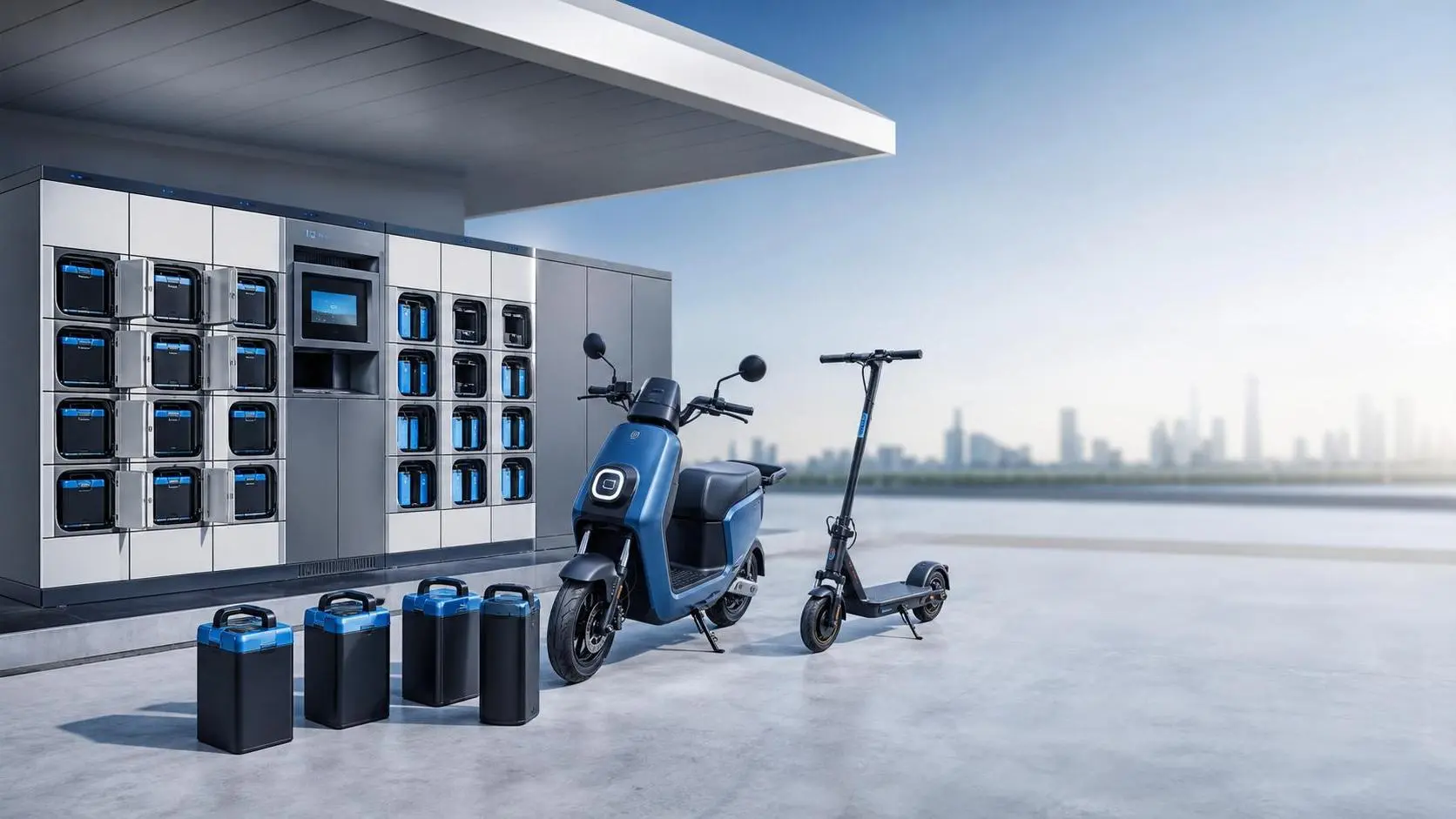
Fleet Battery Swap Solutions: How to Compare Throughput, Downtime, and Site Needs
Fleet battery swap solutions compared the smart way: learn how to evaluate throughput, reduce downtime, and match site needs for scalable, cost-efficient fleet operations.

Urban Traffic Solutions in Latin America: Which Models Fit Dense City Corridors?
Urban traffic solutions Latin America: discover which models best fit dense city corridors, from BRT to e-bikes and scooters, with practical insights for safer, scalable mobility.

Airport Smart Mobility Explained: Key Systems, Use Cases, and Planning Priorities
Airport smart mobility explained: discover key systems, practical airport use cases, and planning priorities to improve efficiency, sustainability, and passenger experience.
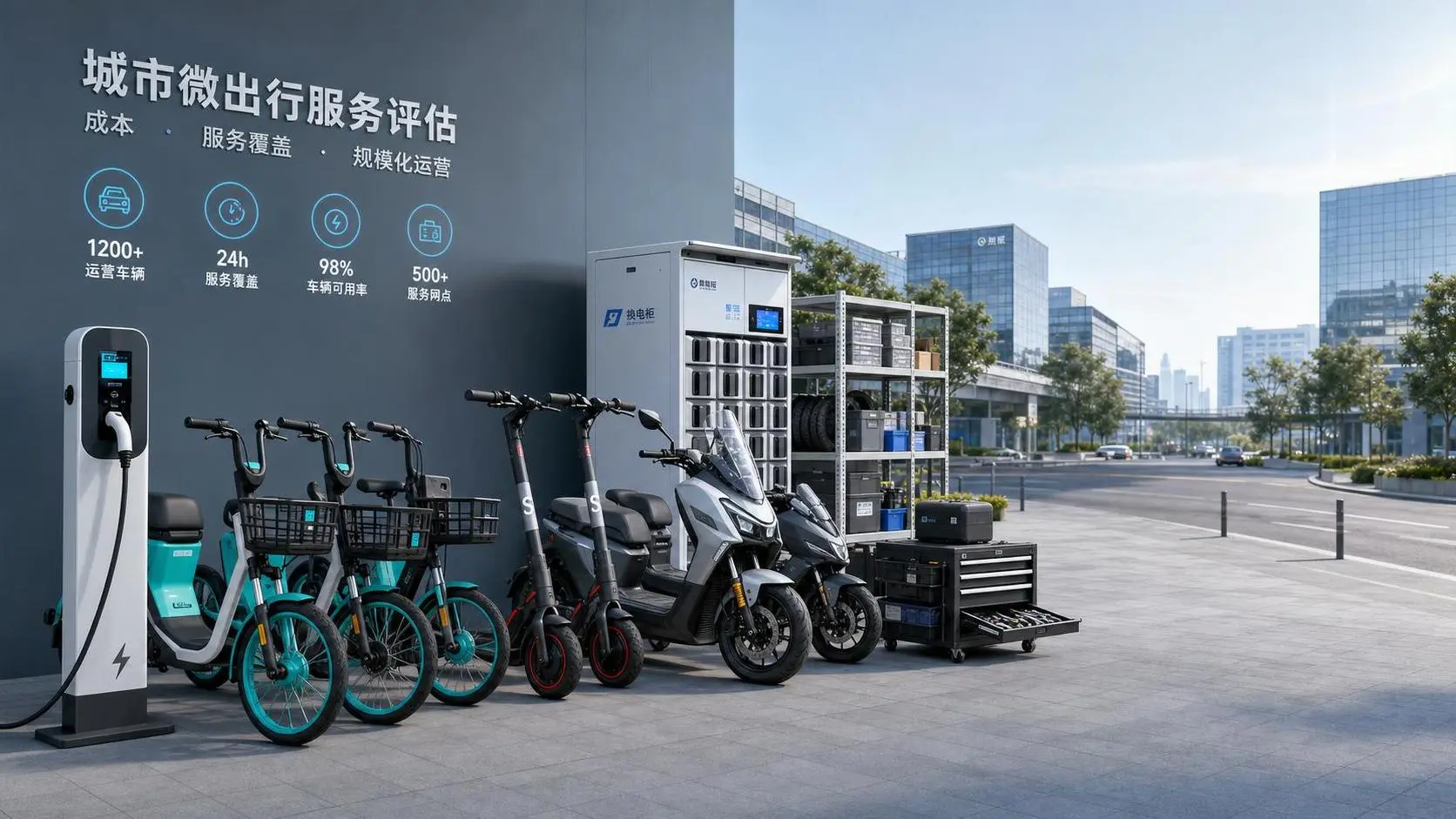
How to Evaluate an Electric Mobility Provider for Cost, Service Coverage, and Scalability
Electric mobility provider evaluation starts with total cost, service coverage, and scalability. Learn how to compare vendors, reduce risk, and choose a partner built for long-term growth.

Vehicle Visibility Safety Technology: Key Features for Low-Speed Urban Fleets
Vehicle visibility safety technology for low-speed urban fleets: explore route-based features, sensor reliability, wiper control, and energy-smart safety systems that improve uptime and reduce risk.

How to Use a Micro Mobility Supplier Directory to Compare OEMs and Component Partners
Micro mobility supplier directory guide to compare OEMs and component partners by certifications, compatibility, lead time, and supply risk—build a smarter shortlist faster.
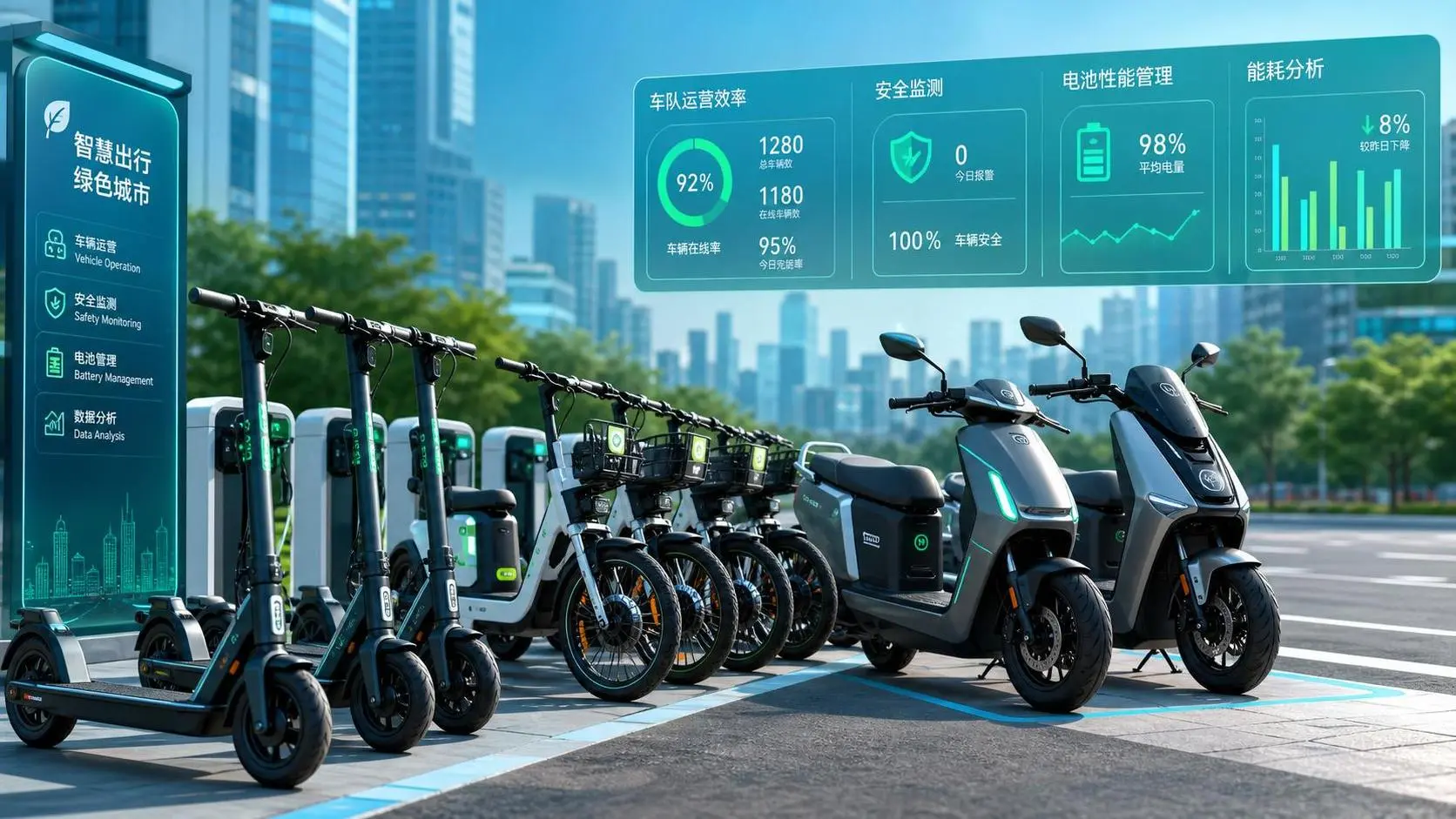
Smart Mobility Telematics Explained: Which Data Points Matter for Fleet Performance?
Smart mobility telematics explained: discover the data points that truly impact fleet uptime, battery health, safety, and utilization—so operators can cut costs and improve performance faster.

Micro-Mobility Trends: How Battery Swapping Is Reshaping Shared Scooter Operations
Micro-mobility trends battery swapping are transforming shared scooter operations by boosting uptime, cutting charging friction, and improving fleet efficiency. Explore the key business drivers.