
Related News
- 00
0000-00
How to Evaluate an Electric Mobility Provider for Cost, Service Coverage, and Scalability - 00
0000-00
How to Use a Micro Mobility Supplier Directory to Compare OEMs and Component Partners - 00
0000-00
Smart Mobility Telematics Explained: Which Data Points Matter for Fleet Performance? - 00
0000-00
How to Evaluate a Green Two-Wheelers Supplier for Quality Control and Delivery Stability - 00
0000-00
How Electric Mobility Components Shape Range, Reliability, and Maintenance Planning
Ms. Elena Rodriguez
Weekly Insights
Stay ahead with our curated technology reports delivered every Monday.
How to Evaluate an Electric Mobility Provider for Cost, Service Coverage, and Scalability





Choosing an electric mobility provider is no longer a simple price exercise. In micro-mobility, cost, service reach, uptime, compliance, and expansion capacity shape the real value of a partnership over time.
That matters even more as e-bikes, smart e-scooters, high-speed e-motorcycles, and connected component systems move into mainstream urban transport planning. A provider that looks efficient in one city can become expensive, slow, or operationally weak across multiple regions.
For businesses tracking the last-mile transition, the right assessment method should connect commercial logic with technical reality. This is where structured market intelligence, such as the perspective developed by UMMS, becomes useful.
What an electric mobility provider really delivers
An electric mobility provider may supply vehicles, fleet operations, charging support, battery services, software platforms, spare parts, or regional maintenance networks. In many cases, the offer is a bundled operating model rather than a single product.
That distinction is important. A low unit cost for scooters or e-bikes means little if the provider cannot support battery health, telematics integration, parts replacement, or local compliance.
In the broader UMMS view, the market is shaped by tightly linked systems. Vehicle visibility safety, drivetrain precision, battery logic, and urban regulation all influence operating performance.
A credible electric mobility provider therefore needs more than inventory. It needs technical depth, service discipline, and the ability to adapt across changing use cases.
Why evaluation standards are getting stricter
Urban mobility is under pressure from congestion, carbon targets, subsidy changes, and local access rules. These factors make provider selection more strategic than it was a few years ago.
Shared scooter programs depend on right-of-way rules. E-bike demand shifts with incentive programs. High-speed e-motorcycles rely on charging or battery-swapping networks. Even component quality affects maintenance intervals and user safety.
Because of this, evaluation teams cannot isolate procurement from operations. The chosen electric mobility provider must fit the policy environment, the vehicle category, and the expected scale of deployment.
More attention is also going to data. Providers that cannot report utilization, fault rates, battery degradation, and service response times create blind spots that become costly later.
Start with total cost, not headline pricing
The first screen is usually price, but total cost should lead the analysis. A practical review looks at acquisition cost, operating expense, support cost, and replacement cycles together.
For an electric mobility provider, total cost often depends on battery life, charger efficiency, software licensing, service call frequency, warranty scope, and spare part availability.
A provider with a higher upfront quote may still produce a lower cost per active vehicle day. That usually happens when downtime is low and service turnaround is predictable.
A useful comparison method is to model cost across twelve to thirty-six months. This makes weak assumptions visible before the contract is signed.
Service coverage is more than geography
Coverage is often described by map presence, but that is too shallow. A capable electric mobility provider should be evaluated on operational density, not just listed locations.
The key question is whether service capability exists where demand, regulations, and failure risk actually occur. Urban cores, suburban commuter corridors, campuses, ports, and tourism zones behave differently.
Coverage should include workshop access, technician response, battery logistics, local spare parts, and compliance support. Without those elements, a nominal footprint has limited business value.
Signals that service coverage is credible
- Documented response times by city or region
- Named maintenance partners or owned service teams
- Stock planning for high-failure components
- Clear escalation process for software and hardware faults
- Evidence of local rule tracking for permits, parking, and safety standards
This is particularly relevant in micro-mobility segments where usage intensity changes rapidly. Seasonal peaks can expose weak service networks within weeks.
Scalability depends on systems, not promises
Many providers claim they can scale. The real test is whether their operating architecture can absorb volume without degrading service quality.
For an electric mobility provider, scalability includes supply chain stability, battery sourcing resilience, digital fleet management, and repeatable maintenance standards across markets.
It also includes technical standardization. If every city deployment requires a new charger setup, a custom firmware layer, or non-interchangeable parts, growth becomes slow and expensive.
UMMS consistently highlights the system side of this market. Battery management logic, wireless control reliability, thermal behavior, and urban operating rules all influence whether expansion remains efficient.
Questions that reveal true scalability
- Can the provider support multiple vehicle classes under one operating framework?
- How quickly can new regions be activated with service and compliance in place?
- Are parts, batteries, and software versions standardized across fleets?
- What utilization drop appears during expansion phases?
- How is data shared for performance tracking and future planning?
Different mobility categories require different evaluation lenses
Not every electric mobility provider should be judged with the same weighting. The critical factors change by vehicle type and operating purpose.
That is why cross-category intelligence matters. A provider strong in shared scooters may not be equally strong in performance motorcycles or premium bicycle systems.
How to structure a practical evaluation process
A workable process usually starts with a clear operating scenario. Define geography, expected usage intensity, asset type, compliance constraints, and service expectations before comparing vendors.
Next, build a weighted scorecard. Cost, coverage, reliability, technical compatibility, and scalability should each have measurable indicators. This reduces the influence of polished sales language.
Pilot testing is often the most valuable stage. A short deployment reveals actual battery performance, maintenance burden, software visibility, and user friction.
Reference checks also need depth. Ask about failure handling, parts delays, contract flexibility, and what happened when deployment volume changed unexpectedly.
A concise review framework
- Model total cost over the full operating period
- Verify service capacity at the local level
- Test data transparency and reporting quality
- Measure uptime during a controlled pilot
- Review expansion readiness across additional markets
Where the next decision should go
A strong electric mobility provider should fit current needs without limiting future options. The best choice is rarely the cheapest offer or the widest headline footprint.
A better decision comes from linking commercial assumptions to operational evidence. In this market, battery behavior, service execution, policy shifts, and component reliability all shape long-term returns.
The next step is to translate internal priorities into a scorecard, compare providers against actual deployment conditions, and keep market intelligence close to the process. That approach makes the selection of an electric mobility provider more defensible, and more useful once scaling begins.
Related News

Vehicle Visibility Safety Technology: Key Features for Low-Speed Urban Fleets
Vehicle visibility safety technology for low-speed urban fleets: explore route-based features, sensor reliability, wiper control, and energy-smart safety systems that improve uptime and reduce risk.

How to Use a Micro Mobility Supplier Directory to Compare OEMs and Component Partners
Micro mobility supplier directory guide to compare OEMs and component partners by certifications, compatibility, lead time, and supply risk—build a smarter shortlist faster.

Smart Mobility Telematics Explained: Which Data Points Matter for Fleet Performance?
Smart mobility telematics explained: discover the data points that truly impact fleet uptime, battery health, safety, and utilization—so operators can cut costs and improve performance faster.

Micro-Mobility Trends: How Battery Swapping Is Reshaping Shared Scooter Operations
Micro-mobility trends battery swapping are transforming shared scooter operations by boosting uptime, cutting charging friction, and improving fleet efficiency. Explore the key business drivers.

Why Green Scooter Demand Is Rising in Shared Mobility and Last-Mile Delivery
Green scooter demand is rising fast in shared mobility and last-mile delivery. See what drives this shift, how cities and fleets benefit, and where the biggest growth opportunities are.

Smart Urban Travel Options Explained: Which Electric Commuter Setup Fits Daily City Use?
Smart urban travel made simple: compare e-bikes, smart e-scooters, and high-speed e-motorcycles to find the best fit for daily city commuting, cost, comfort, and convenience.

How to Evaluate a Green Two-Wheelers Supplier for Quality Control and Delivery Stability
Green two-wheelers supplier evaluation starts with quality control and delivery stability. Learn how to assess compliance, traceability, and factory reliability before you source.
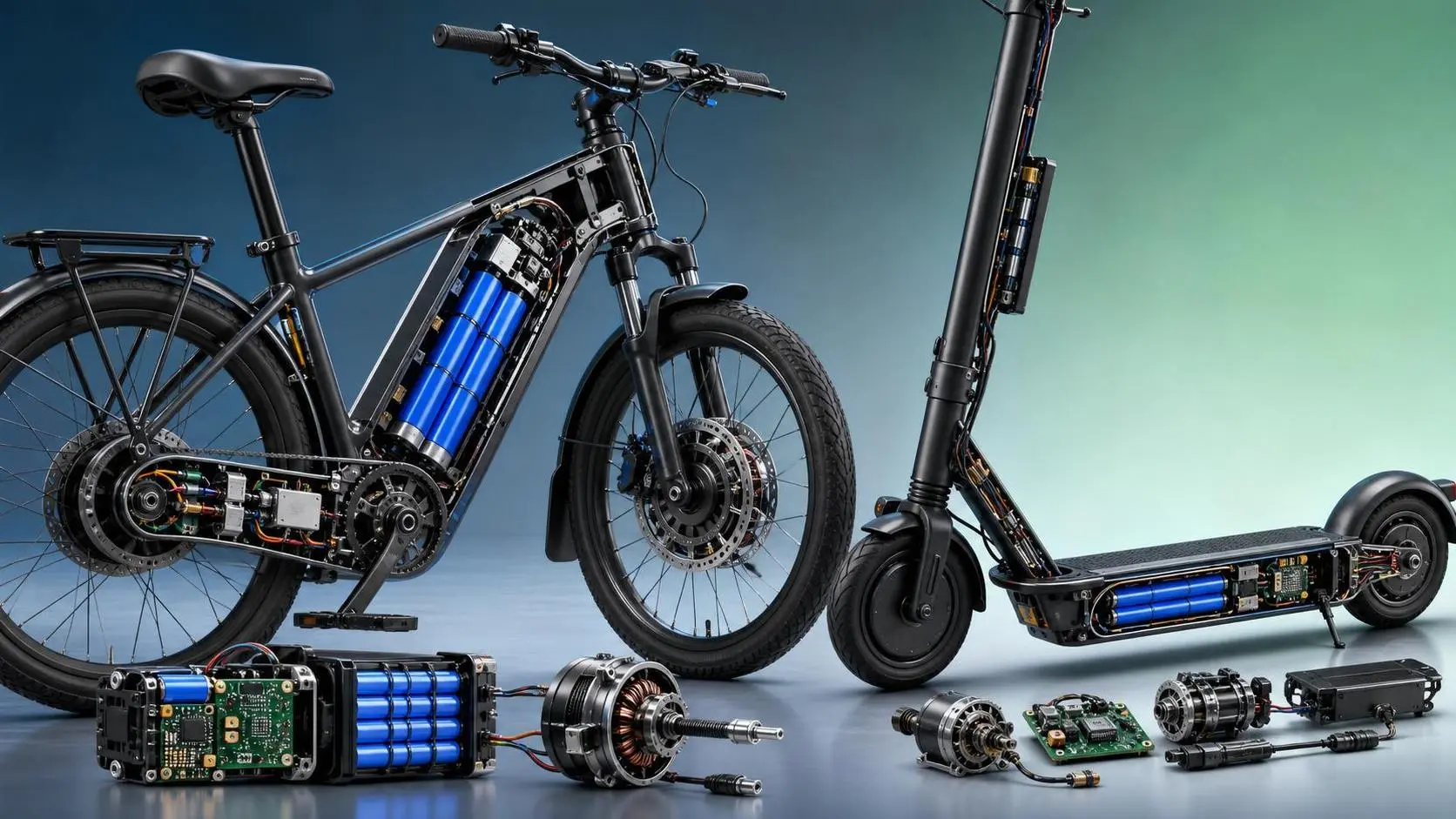
How Electric Mobility Components Shape Range, Reliability, and Maintenance Planning
Electric mobility components shape real-world range, reliability, and maintenance costs. Learn how batteries, motors, controllers, and sensors affect fleet uptime and smarter service planning.

Precision Drivetrain Market: What Buyers Should Track in Cost, Lead Times, and Supply Risk
Precision drivetrain market buyers must look beyond unit price. Learn how to track true cost, lead times, and supply risk to protect margins and choose more reliable suppliers.