
Related News
- 00
0000-00
Micro-Mobility Trends: How Battery Swapping Is Reshaping Shared Scooter Operations - 00
0000-00
Urban Electric Vehicles Market: Key Growth Drivers and Adoption Challenges - 00
0000-00
Two Wheeler Electrification Trends: What Is Driving Adoption in Urban Mobility? - 00
0000-00
Electric Torque Trends in E-Mobility: How Peak vs Continuous Output Affects Ride Performance - 00
0000-00
Electric Two-Wheeler Market Size Explained: What Drives Growth by Region and Vehicle Type
Prof. Marcus Chen
Weekly Insights
Stay ahead with our curated technology reports delivered every Monday.
Micro-Mobility Trends: How Battery Swapping Is Reshaping Shared Scooter Operations





Micro-mobility trends battery swapping are moving from operational experiment to strategic infrastructure. In shared scooter operations, the model changes how fleets stay available, how energy is managed, and how growth is planned across dense urban networks.
That shift matters because shared scooters no longer compete on vehicle count alone. They compete on uptime, charging discipline, regulatory fit, labor efficiency, and the ability to serve more trips without expanding friction on city streets.
Across the wider two-wheeler ecosystem tracked by UMMS, battery logic now connects e-bikes, smart e-scooters, and high-speed e-motorcycles. Shared scooters sit at the center of that transition because they turn battery performance into a daily operating decision.
Why battery swapping is gaining momentum
In a conventional charging model, vehicles are collected, transported, charged, and redeployed. That process creates downtime, warehouse pressure, extra handling, and uneven fleet distribution during peak hours.
Battery swapping replaces that cycle with field service. A depleted pack is removed, a charged pack is inserted, and the scooter returns to service faster than a full charging rotation would allow.
This is why micro-mobility trends battery swapping have become a serious boardroom topic. The value is not only technical. It affects route density, fleet productivity, service level consistency, and cash efficiency.
Cities are also asking harder questions about curb use, clutter, lifecycle emissions, and sidewalk availability. A better energy workflow can support a cleaner answer to those questions.
What battery swapping really changes in operations
At a basic level, swapping separates vehicle availability from charging time. That sounds simple, but it changes the operating stack from top to bottom.
Fleet uptime becomes more predictable
A scooter with a removable battery can stay in circulation longer during high-demand windows. Operators can prioritize the battery state of charge instead of removing the entire vehicle from service.
Charging shifts from vehicle handling to energy handling
The focus moves to pack inventory, charging cabinets, battery health, and dispatch timing. That often creates a more controllable process than transporting full scooters through crowded urban areas.
Data quality becomes more important
Swapping only works well when telematics, battery management systems, and field routing are aligned. Operators need accurate battery state, location intelligence, and failure alerts in near real time.
This is one reason UMMS places battery management logic alongside vehicle electrification. In practice, the battery is no longer a passive component. It becomes an active operational asset.
Where the business case is strongest
Not every city or fleet profile benefits equally. The strongest use cases usually combine dense trip demand, repeated short rides, limited depot space, and high pressure to improve asset utilization.
Micro-mobility trends battery swapping are therefore most compelling where every hour of scooter inactivity carries a measurable revenue penalty. In those settings, operational friction quickly becomes a margin issue.
The wider industry signals behind the trend
Shared scooters are not evolving in isolation. Battery swapping is also showing up in high-speed e-motorcycles, where fast energy turnover is critical. That crossover matters because scale often starts in adjacent categories.
E-bike exports, scooter sharing, and connected urban mobility are increasingly shaped by the same pressures: decarbonization goals, congestion, tighter safety expectations, and demand for smarter vehicle telemetry.
UMMS follows these signals across components, systems, and policy. That perspective is useful because battery swapping decisions should not be judged only by hardware cost. They should be judged by ecosystem readiness.
A city with favorable right-of-way rules, stable charging access, and acceptance of swappable battery logistics will look very different from a city where storage rules, labor costs, or fire codes tighten the model.
Operational risks that deserve attention
Battery swapping is not automatically efficient. It can introduce new complexity if pack design, software integration, or field execution are weak.
- Battery standardization remains uneven across fleets and suppliers.
- Thermal management and charging safety need disciplined monitoring.
- Pack theft, damage, and traceability can erode expected savings.
- Field teams need well-designed routes, tools, and handling protocols.
- Forecasting pack demand by district is harder than it first appears.
The most common mistake is treating swapping as a battery purchase decision. In reality, it is an operating model decision involving vehicle architecture, IoT visibility, charging infrastructure, and service governance.
That is why micro-mobility trends battery swapping should be evaluated through both engineering and commercial lenses. A technically elegant pack can still fail if dispatch economics do not hold.
How to evaluate battery swapping in practice
A useful starting point is to compare current charging workflows with a swap-enabled scenario at district level. The goal is to identify where downtime, labor, and missed rides actually originate.
Map the real unit economics
Measure energy cost per ride, labor time per recovered scooter, pack cycle life, failed deployment rates, and depot handling intensity. Swapping should improve the whole chain, not one isolated metric.
Check system compatibility early
Assess battery management software, lock-and-release mechanisms, connector durability, and data integration with the fleet platform. Weak interfaces often create hidden service costs later.
Review local policy conditions
Battery storage, charging cabinets, sidewalk servicing, and transportation of lithium packs may all be regulated differently. Compliance is part of the operating model, not an afterthought.
Pilot by route cluster, not citywide
A limited pilot reveals swap frequency, pack losses, service timing, and rider impact. It also shows whether micro-mobility trends battery swapping truly translate into local advantage.
What the next phase may look like
The next step is likely deeper integration between removable batteries, predictive maintenance, and fleet rebalancing software. Operators will increasingly optimize energy and vehicle placement together.
There is also a broader strategic question. As batteries become swappable, ownership of the energy layer may gain more importance than ownership of the scooter itself.
That possibility connects shared scooters to a larger mobility architecture already visible in e-bikes and electric motorcycles. The same intelligence layer can eventually shape procurement, servicing, and cross-platform battery strategies.
For anyone tracking micro-mobility trends battery swapping, the practical next move is clear: establish a decision framework that combines uptime gains, battery health visibility, labor redesign, compliance exposure, and city-specific demand patterns.
Where those elements align, battery swapping can become more than an operational fix. It can become a durable advantage in shared scooter operations, and a meaningful signal of where urban two-wheeler systems are heading next.
Related News

How to Evaluate an Electric Mobility Provider for Cost, Service Coverage, and Scalability
Electric mobility provider evaluation starts with total cost, service coverage, and scalability. Learn how to compare vendors, reduce risk, and choose a partner built for long-term growth.

Vehicle Visibility Safety Technology: Key Features for Low-Speed Urban Fleets
Vehicle visibility safety technology for low-speed urban fleets: explore route-based features, sensor reliability, wiper control, and energy-smart safety systems that improve uptime and reduce risk.

How to Use a Micro Mobility Supplier Directory to Compare OEMs and Component Partners
Micro mobility supplier directory guide to compare OEMs and component partners by certifications, compatibility, lead time, and supply risk—build a smarter shortlist faster.

Smart Mobility Telematics Explained: Which Data Points Matter for Fleet Performance?
Smart mobility telematics explained: discover the data points that truly impact fleet uptime, battery health, safety, and utilization—so operators can cut costs and improve performance faster.

Why Green Scooter Demand Is Rising in Shared Mobility and Last-Mile Delivery
Green scooter demand is rising fast in shared mobility and last-mile delivery. See what drives this shift, how cities and fleets benefit, and where the biggest growth opportunities are.
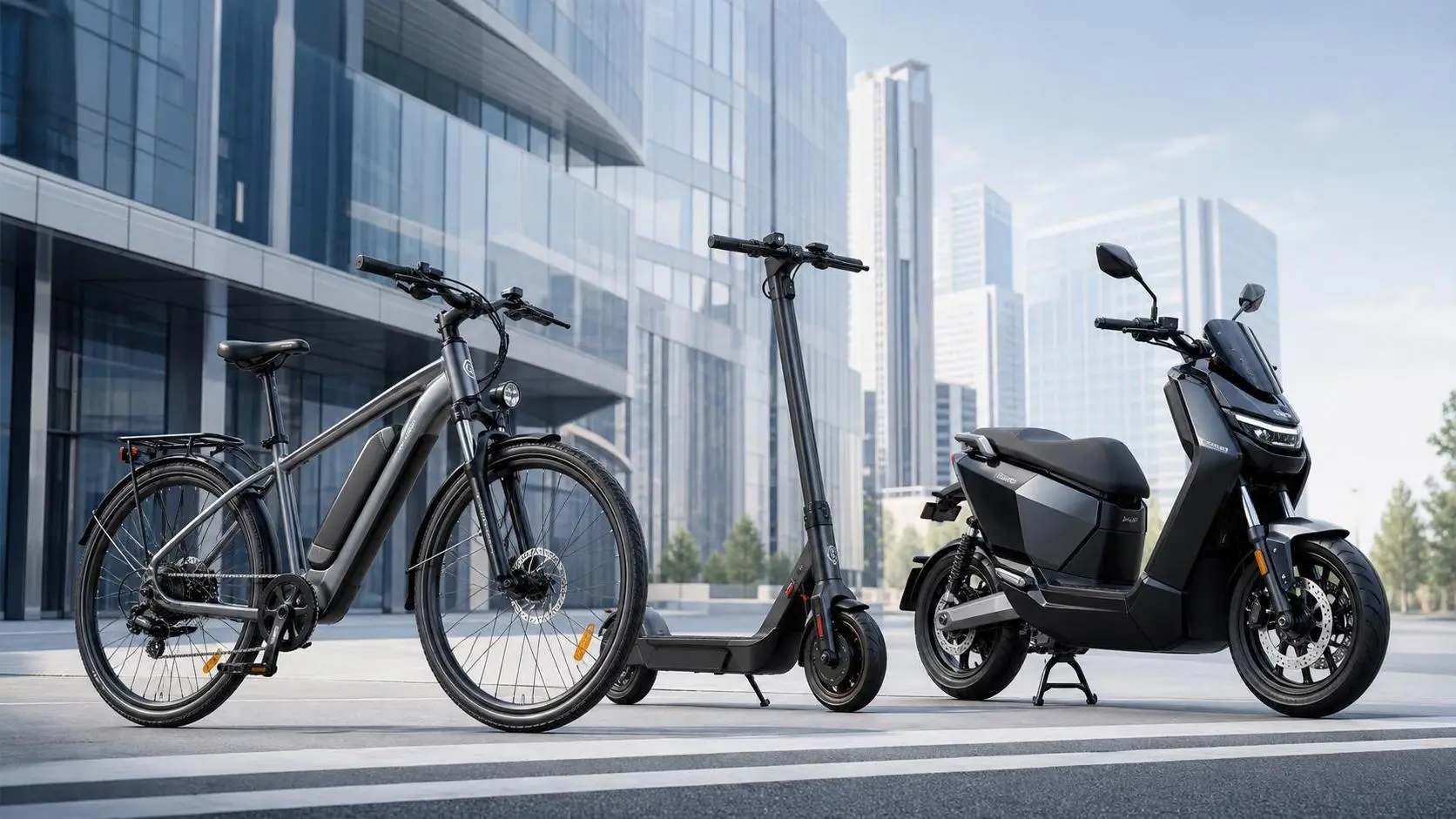
Smart Urban Travel Options Explained: Which Electric Commuter Setup Fits Daily City Use?
Smart urban travel made simple: compare e-bikes, smart e-scooters, and high-speed e-motorcycles to find the best fit for daily city commuting, cost, comfort, and convenience.

How to Evaluate a Green Two-Wheelers Supplier for Quality Control and Delivery Stability
Green two-wheelers supplier evaluation starts with quality control and delivery stability. Learn how to assess compliance, traceability, and factory reliability before you source.

How Electric Mobility Components Shape Range, Reliability, and Maintenance Planning
Electric mobility components shape real-world range, reliability, and maintenance costs. Learn how batteries, motors, controllers, and sensors affect fleet uptime and smarter service planning.

Precision Drivetrain Market: What Buyers Should Track in Cost, Lead Times, and Supply Risk
Precision drivetrain market buyers must look beyond unit price. Learn how to track true cost, lead times, and supply risk to protect margins and choose more reliable suppliers.