
Related News
- 00
0000-00
Urban Charging Infrastructure Costs: What Drives CAPEX, OPEX, and ROI by Deployment Type - 00
0000-00
Urban Traffic Solutions in Latin America: Which Models Fit Dense City Corridors? - 00
0000-00
Airport Smart Mobility Explained: Key Systems, Use Cases, and Planning Priorities - 00
0000-00
How to Evaluate an Electric Mobility Provider for Cost, Service Coverage, and Scalability - 00
0000-00
How to Use a Micro Mobility Supplier Directory to Compare OEMs and Component Partners
Ms. Elena Rodriguez
Weekly Insights
Stay ahead with our curated technology reports delivered every Monday.
Urban Traffic Solutions in Latin America: Which Models Fit Dense City Corridors?





Dense corridors change the logic of urban traffic solutions Latin America
Urban traffic solutions Latin America now sit at the center of mobility planning because congestion, air quality pressure, and budget limits are hitting the same corridors at once.
In dense districts, the real issue is rarely mode popularity. It is corridor fit. A model that works in one avenue can fail two kilometers away.
That matters across public transport, micro-mobility, fleet access, and street design. It also matters for technology choices linked to e-bikes, smart e-scooters, and electric two-wheel systems.
UMMS follows this intersection closely because last-mile performance depends on more than vehicles. It depends on control logic, energy management, right-of-way rules, and component reliability.
In Latin American metros, corridor density amplifies every weakness. Narrow sidewalks, informal loading activity, rainfall events, and mixed traffic can erase the value of an otherwise strong design.
So when comparing urban traffic solutions Latin America, the useful question is practical: which model can carry high volumes, protect turnover, and still remain maintainable over time?
Why similar streets often need different models
Two corridors may look alike on a map and still require different interventions. Demand patterns, slope, climate, curb behavior, and enforcement quality can shift performance dramatically.
A bus-heavy commercial axis needs fast boarding and protected intersections. A university corridor may benefit more from e-bike access, scooter parking control, and lower-speed crossing design.
This is where urban traffic solutions Latin America become less about copying global best practice and more about matching local friction points with the right operating model.
In practical deployment, corridor decisions should weigh three layers together: passenger throughput, street-space competition, and operational discipline after launch.
The first filter is not technology but street behavior
Smart devices and electrified fleets help, but they do not fix unmanaged curb access. Dense corridors usually fail first at junctions, loading bays, and transfer nodes.
That is why data-led corridor management often performs better than isolated hardware upgrades. The system has to observe where friction appears during peak and off-peak shifts.
When BRT remains the backbone, micro-mobility has to support it
On high-demand radial corridors, bus rapid transit still carries the strongest case. It uses scarce road space efficiently and can move large passenger volumes predictably.
But dense Latin American corridors rarely succeed with BRT alone. The weak link is often the first and last kilometer around stations.
This is where urban traffic solutions Latin America need tighter integration with e-bikes and smart e-scooters. Access modes should reduce feeder dependence without creating sidewalk disorder.
Protected bike lanes near stations work best when they continue through conflict points. Short fragments look good on plans but underperform in real commuting flows.
Scooter integration needs geofenced parking, speed governance, and charging discipline. Without those controls, the corridor gains flexibility but loses public acceptance.
UMMS tracking shows that vehicle-level intelligence matters here. Battery management, IoT lock stability, and drivetrain durability shape uptime more than launch-day fleet size.
Commercial centers need turnover, not just movement
Historic centers and retail corridors present a different test. Passenger flow matters, but delivery cycles, curb turnover, and pedestrian density often dominate street performance.
In these areas, urban traffic solutions Latin America usually work best when they combine low-speed access, timed logistics windows, and strong separation between walking and riding zones.
E-bikes are often better than cars for short retail trips because they reduce dwell-space pressure. Yet they need secure parking and visible route continuity.
High-speed e-motorcycles can support delivery density, especially where slopes or longer trip lengths weaken bicycle efficiency. The tradeoff is safety management at intersections and curb arrival points.
Rain exposure also changes equipment requirements. Visibility systems, sensor reliability, and braking consistency become more important in corridors with seasonal storm intensity.
University belts and mixed residential corridors behave differently
In education districts and inner residential belts, trip lengths are shorter and departure times are more scattered. That changes the best mix of urban traffic solutions Latin America.
Here, heavy infrastructure may be less urgent than network continuity. Riders want safe crossings, direct links, and reliable parking more than high-capacity trunk design.
Smart e-scooters can perform well in this setting, especially for short hops between transit stations, campuses, and housing clusters. The risk is unmanaged fleet spillover.
E-bikes often offer a better long-term balance because they absorb moderate gradients, extend travel radius, and remain practical for daily commuting in hot climates.
Where routes are longer, component quality starts to matter more. Precision drivetrains, durable braking systems, and stable battery thermal control directly affect repeat use.
That is consistent with the UMMS view of micro-mobility: corridor success depends on both street design and electromechanical reliability across repeated urban duty cycles.
Different scenarios create different decision criteria
A common mistake is to compare all modes with one metric. Dense corridors need a more selective decision frame because each street pattern imposes a different operational burden.
- If right-of-way is highly constrained, prioritize passenger throughput and transfer efficiency before adding lane diversity.
- If the corridor suffers from last-mile gaps, evaluate e-bike and scooter access with parking, charging, and enforcement included.
- If terrain is uneven, compare torque delivery, battery stress, and rider safety rather than nominal fleet range alone.
- If weather volatility is high, check visibility systems, waterproofing, and maintenance intervals across the full corridor network.
- If delivery demand is intense, separate passenger movement from commercial arrival patterns before expanding shared mobility fleets.
This is why urban traffic solutions Latin America should be judged as corridor systems, not as isolated mode purchases or short-term pilots.
Where project teams often misread corridor fit
Several repeat errors appear across dense-city deployments. The first is assuming that a successful central corridor can be copied into outer districts without redesign.
The second is focusing on acquisition cost while underestimating maintenance effort. Shared scooters, e-bikes, and electric motorcycles all depend on uptime discipline.
Another weak point is treating weather resilience as secondary. In many Latin American cities, heavy rain quickly exposes weak sensor housings, poor braking setups, and low-visibility operations.
There is also a planning bias toward visible assets. Protected lanes, stations, and charging points matter, but software rules and fleet telemetry often determine daily reliability.
UMMS intelligence around battery systems, wireless controls, and vehicle sensing is useful here because dense corridors punish technical inconsistency faster than low-intensity networks do.
A practical way to choose urban traffic solutions Latin America
A workable selection process starts with corridor typing. Separate trunk passenger corridors, retail streets, residential connectors, and delivery-heavy mixed-use routes.
Then test each corridor against five questions: who competes for space, when peaks occur, how weather disrupts flow, what maintenance capacity exists, and where transfers fail.
From there, match the model. Use BRT where throughput is decisive. Use protected e-bike access where feeder gaps dominate. Use smart scooters where short transfers matter and parking can be controlled.
Reserve high-speed e-motorcycle support for routes that need stronger range, hill performance, or logistics productivity, and only where safety controls are robust.
The stronger path is usually phased. Start with corridor evidence, define fit standards, and compare lifetime operating demands before scale-up.
That approach keeps urban traffic solutions Latin America grounded in real street conditions rather than in imported assumptions. It also makes future expansion easier to defend and maintain.
Related News

Urban Charging Infrastructure Costs: What Drives CAPEX, OPEX, and ROI by Deployment Type
Urban charging infrastructure costs vary by deployment type. Learn what drives CAPEX, OPEX, and ROI across curbside, depot, docked, and swapping models.

Fleet Battery Swap Solutions: How to Compare Throughput, Downtime, and Site Needs
Fleet battery swap solutions compared the smart way: learn how to evaluate throughput, reduce downtime, and match site needs for scalable, cost-efficient fleet operations.
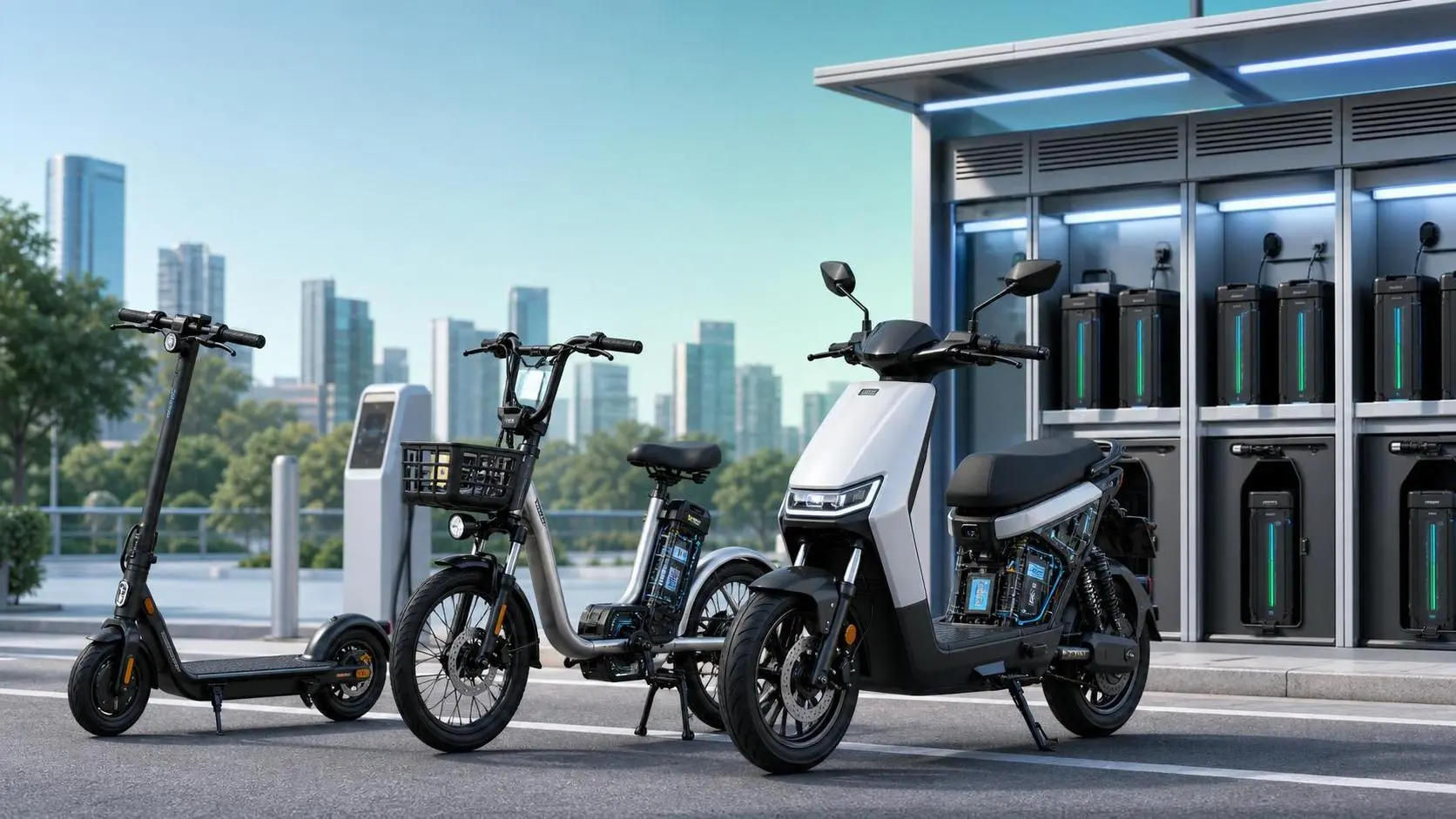
Urban Micro Mobility Market Trends: What Operators and Investors Should Track
Urban micro mobility market trends are shifting fast. Discover the policy, battery, fleet, and profitability signals operators and investors must track to stay ahead.
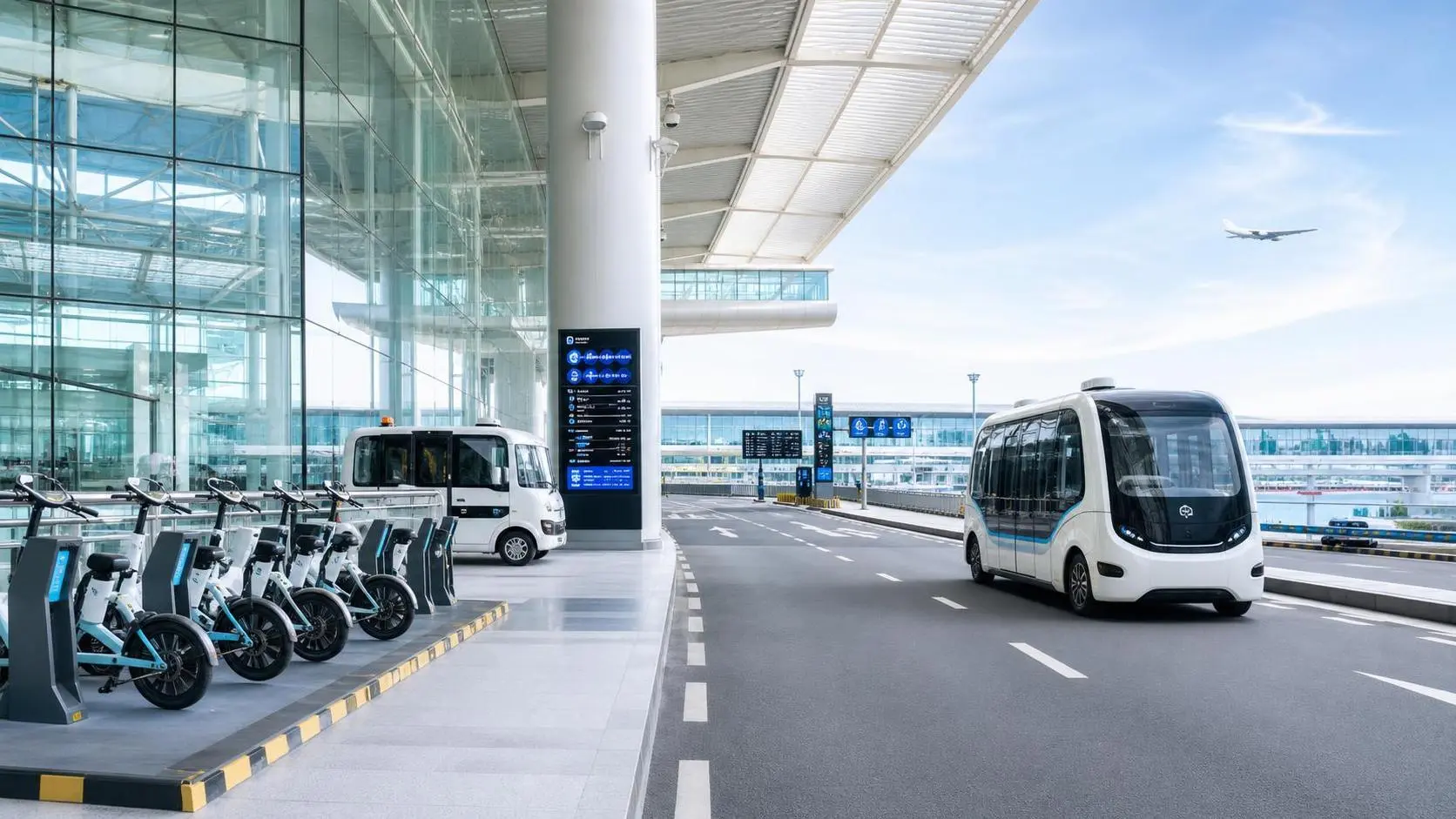
Airport Smart Mobility Explained: Key Systems, Use Cases, and Planning Priorities
Airport smart mobility explained: discover key systems, practical airport use cases, and planning priorities to improve efficiency, sustainability, and passenger experience.
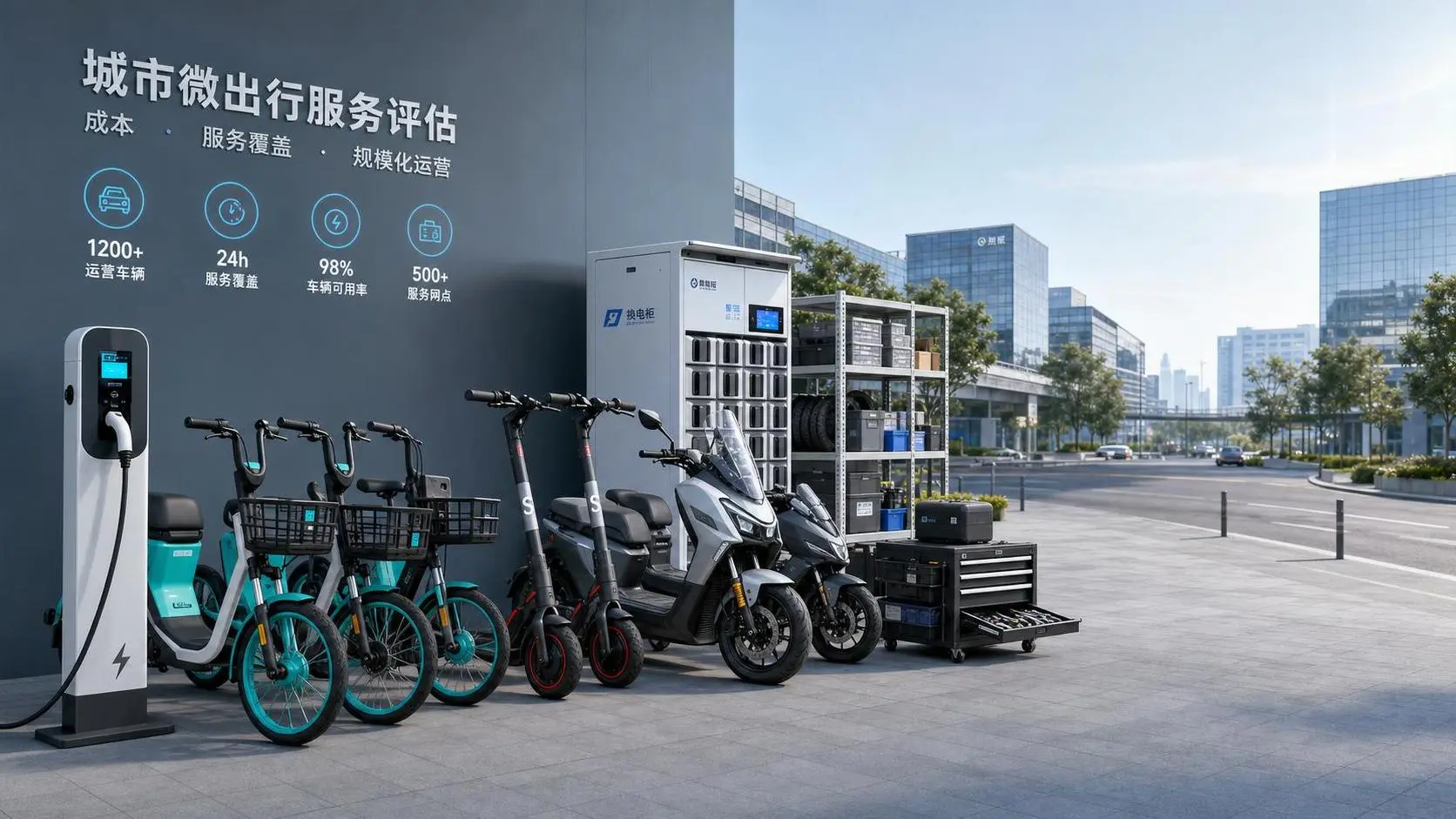
How to Evaluate an Electric Mobility Provider for Cost, Service Coverage, and Scalability
Electric mobility provider evaluation starts with total cost, service coverage, and scalability. Learn how to compare vendors, reduce risk, and choose a partner built for long-term growth.

Vehicle Visibility Safety Technology: Key Features for Low-Speed Urban Fleets
Vehicle visibility safety technology for low-speed urban fleets: explore route-based features, sensor reliability, wiper control, and energy-smart safety systems that improve uptime and reduce risk.

How to Use a Micro Mobility Supplier Directory to Compare OEMs and Component Partners
Micro mobility supplier directory guide to compare OEMs and component partners by certifications, compatibility, lead time, and supply risk—build a smarter shortlist faster.
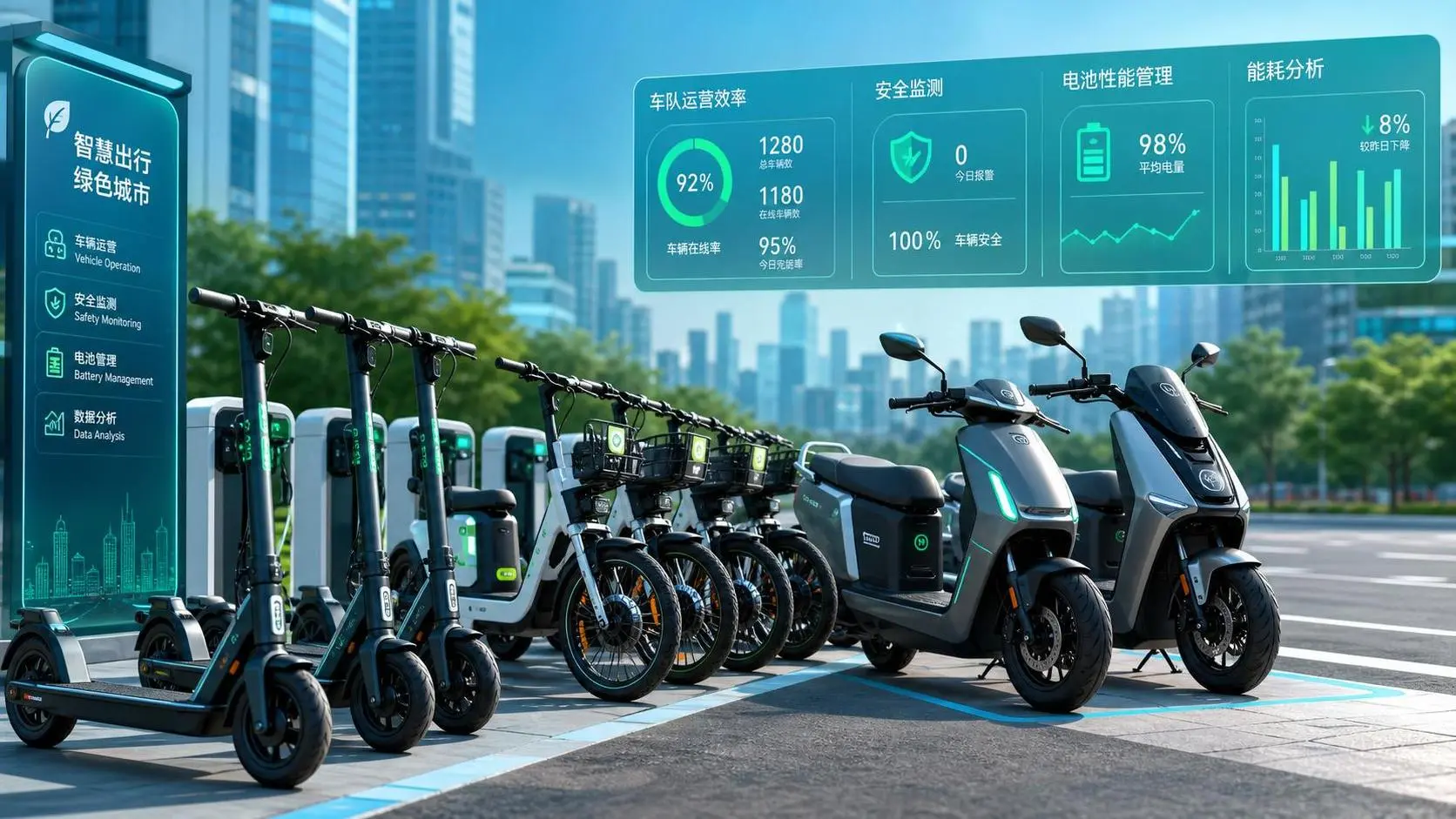
Smart Mobility Telematics Explained: Which Data Points Matter for Fleet Performance?
Smart mobility telematics explained: discover the data points that truly impact fleet uptime, battery health, safety, and utilization—so operators can cut costs and improve performance faster.

Micro-Mobility Trends: How Battery Swapping Is Reshaping Shared Scooter Operations
Micro-mobility trends battery swapping are transforming shared scooter operations by boosting uptime, cutting charging friction, and improving fleet efficiency. Explore the key business drivers.