
Related News
- 00
0000-00
Urban Charging Infrastructure Costs: What Drives CAPEX, OPEX, and ROI by Deployment Type - 00
0000-00
Urban Traffic Solutions in Latin America: Which Models Fit Dense City Corridors? - 00
0000-00
Airport Smart Mobility Explained: Key Systems, Use Cases, and Planning Priorities - 00
0000-00
How to Evaluate an Electric Mobility Provider for Cost, Service Coverage, and Scalability - 00
0000-00
How to Use a Micro Mobility Supplier Directory to Compare OEMs and Component Partners
Ms. Elena Rodriguez
Weekly Insights
Stay ahead with our curated technology reports delivered every Monday.
Core component suppliers diversifying away from single-OEM dependence: case study of Japanese thermal module vendor





As global micro-mobility OEMs intensify supply chain resilience efforts, core component suppliers are actively diversifying beyond single-OEM dependence—a strategic shift now exemplified by a leading Japanese thermal module vendor. This case study unpacks how shifting from captive to multi-client engagement enhances technical agility, accelerates R&D ROI, and aligns with UMMS’s five-pillar framework—especially in high-speed e-motorcycles and smart e-scooters where thermal management directly impacts battery longevity, safety certification, and urban deployment scalability. For procurement officers navigating volatile geopolitical and regulatory landscapes, this evolution signals both risk mitigation and new sourcing intelligence opportunities.
Why Are Core Component Suppliers Redefining OEM Relationships?
Historically, many Japanese thermal module vendors operated as tier-two suppliers embedded within OEM ecosystems—designing, validating, and manufacturing modules exclusively for one client. That model delivered deep integration but limited scalability.
Today’s market demands flexibility. E-bike battery packs operate at 45–65°C under urban stop-start cycles. High-speed e-motorcycles require sub-3°C delta-T control across 120-cell modules during sustained 80 km/h runs. Smart e-scooter fleets need modular cooling that survives 500+ charge cycles in humid coastal climates.
No single OEM can absorb the full spectrum of such thermal challenges. Diversification allows core component suppliers to pool cross-platform learnings—accelerating failure-mode analysis, material selection, and control algorithm refinement.
How Does This Shift Impact Thermal Performance Across Micro-Mobility Segments?
The Japanese vendor in focus now serves three distinct clients: a European high-speed e-motorcycle OEM, a US-based shared e-scooter platform, and a Taiwanese e-bike drivetrain integrator.
- For e-motorcycles: It adapted its vapor chamber + micro-channel cold plate design to meet UN-ECE R136 crash-safe thermal isolation requirements.
- For shared scooters: It co-developed a passive-phase-change hybrid module—cutting fan noise by 92% while maintaining 55°C max cell temperature across 30°C ambient swings.
- For premium e-bikes: It integrated wireless temperature telemetry into its aluminum extrusion frame—enabling real-time thermal mapping via Bluetooth LE without adding wiring harness weight.
Each application feeds back into a unified thermal simulation library—reducing new-platform validation time by 37% year-on-year.
What Strategic Risks Do Single-OEM Dependencies Pose?
Over-reliance on one client creates four structural vulnerabilities:
- Volume volatility: A 20% production cut by one OEM can erase 60% of annual revenue—and delay ROI on new vacuum brazing lines.
- Technology lock-in: Proprietary CAN bus protocols or mechanical mounting interfaces hinder reuse across platforms.
- Margin compression: Negotiation power shifts decisively toward OEMs during contract renewals.
- Regulatory exposure: One client’s non-compliance with EU Battery Regulation (EU) 2023/1542 triggers cascading audit liabilities.
Diversification mitigates all four—not through dilution, but through disciplined platformization.
How Do Core Component Suppliers Maintain Technical Credibility While Scaling Clients?
Credibility hinges on three non-negotiables:
- ISO/IEC 17025-accredited in-house thermal cycling labs (−40°C to +105°C, 1,500-cycle endurance).
- Open architecture firmware—supporting CAN FD, UDS, and MQTT—ensuring seamless integration without OEM-specific forks.
- Modular mechanical interfaces: standardized M4 mounting, ±0.1mm flatness tolerance, and IP67-rated quick-disconnect coolant couplings.
This approach transforms thermal modules from black-box subsystems into interoperable building blocks—directly supporting UMMS’s vision of “intelligent, interconnected, decarbonized” two-wheelers.
Key Decision Factors When Evaluating Core Component Suppliers
Conclusion & Next Steps
The pivot by Japanese thermal module vendors—from captive enablers to platform-agnostic core component suppliers—reflects a broader industry maturation. It signals that thermal management is no longer an afterthought, but a strategic differentiator across e-bikes, smart e-scooters, and high-speed e-motorcycles.
For stakeholders tracking micro-mobility supply chains, this trend offers concrete leverage points: shorter validation timelines, shared compliance infrastructure, and accelerated adoption of next-gen thermal architectures like bidirectional heat pumps and solid-state thermal interface materials.
UMMS recommends initiating cross-segment thermal benchmarking—comparing module performance not just against OEM specs, but across the five pillars: wiper systems (ambient sensor cooling), e-bikes (pedal-assist motor thermal decay), smart e-scooters (fleet-scale thermal telemetry), high-speed e-motorcycles (crash-integrated thermal containment), and derailleur electronics (wireless shift actuator thermal throttling).
Core component suppliers who master this balance will define the next decade of intelligent urban mobility—not as vendors, but as indispensable system architects.
Related News

Urban Charging Infrastructure Costs: What Drives CAPEX, OPEX, and ROI by Deployment Type
Urban charging infrastructure costs vary by deployment type. Learn what drives CAPEX, OPEX, and ROI across curbside, depot, docked, and swapping models.
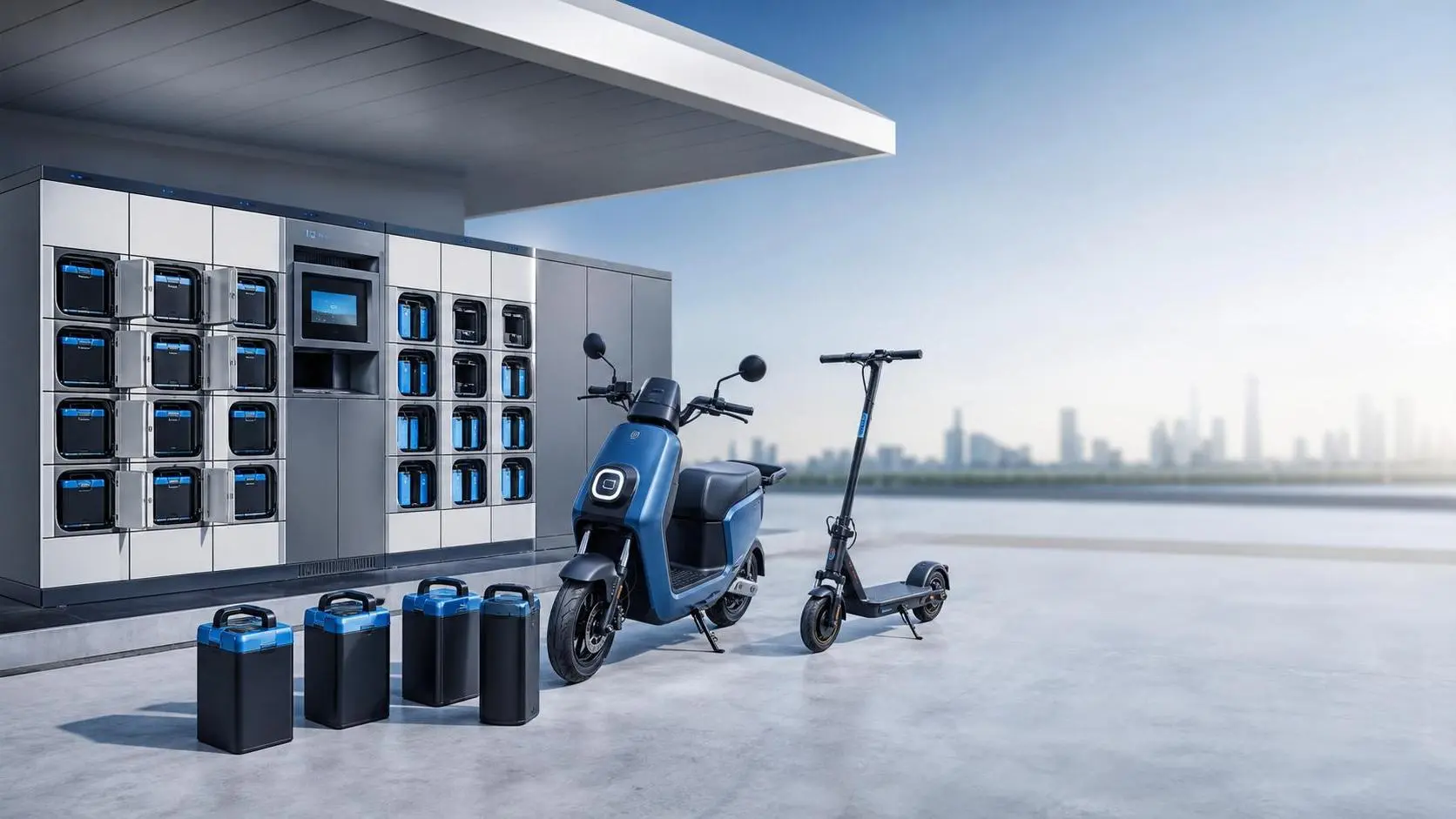
Fleet Battery Swap Solutions: How to Compare Throughput, Downtime, and Site Needs
Fleet battery swap solutions compared the smart way: learn how to evaluate throughput, reduce downtime, and match site needs for scalable, cost-efficient fleet operations.

Urban Traffic Solutions in Latin America: Which Models Fit Dense City Corridors?
Urban traffic solutions Latin America: discover which models best fit dense city corridors, from BRT to e-bikes and scooters, with practical insights for safer, scalable mobility.
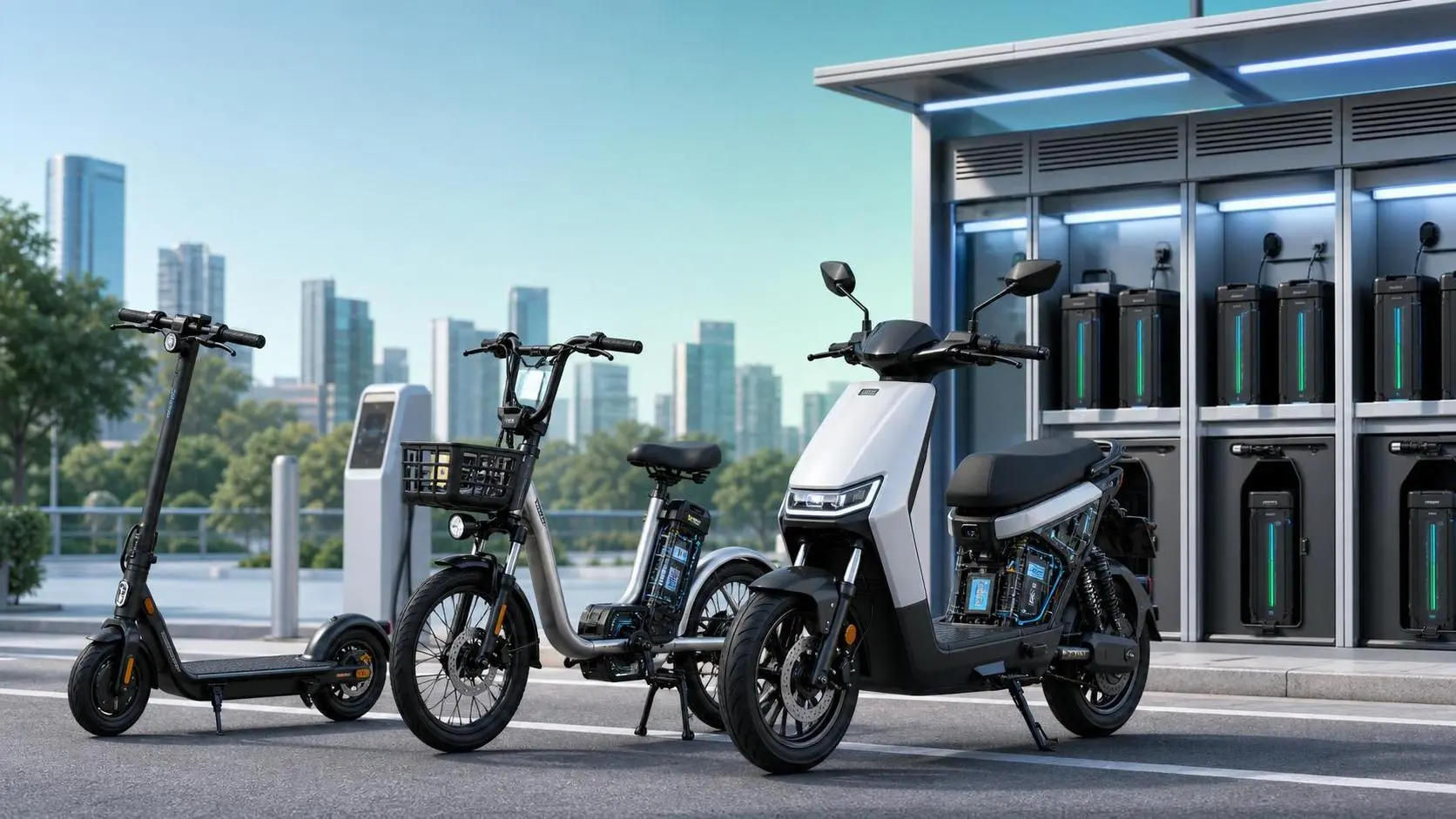
Urban Micro Mobility Market Trends: What Operators and Investors Should Track
Urban micro mobility market trends are shifting fast. Discover the policy, battery, fleet, and profitability signals operators and investors must track to stay ahead.

Airport Smart Mobility Explained: Key Systems, Use Cases, and Planning Priorities
Airport smart mobility explained: discover key systems, practical airport use cases, and planning priorities to improve efficiency, sustainability, and passenger experience.

How to Evaluate an Electric Mobility Provider for Cost, Service Coverage, and Scalability
Electric mobility provider evaluation starts with total cost, service coverage, and scalability. Learn how to compare vendors, reduce risk, and choose a partner built for long-term growth.

Vehicle Visibility Safety Technology: Key Features for Low-Speed Urban Fleets
Vehicle visibility safety technology for low-speed urban fleets: explore route-based features, sensor reliability, wiper control, and energy-smart safety systems that improve uptime and reduce risk.

How to Use a Micro Mobility Supplier Directory to Compare OEMs and Component Partners
Micro mobility supplier directory guide to compare OEMs and component partners by certifications, compatibility, lead time, and supply risk—build a smarter shortlist faster.
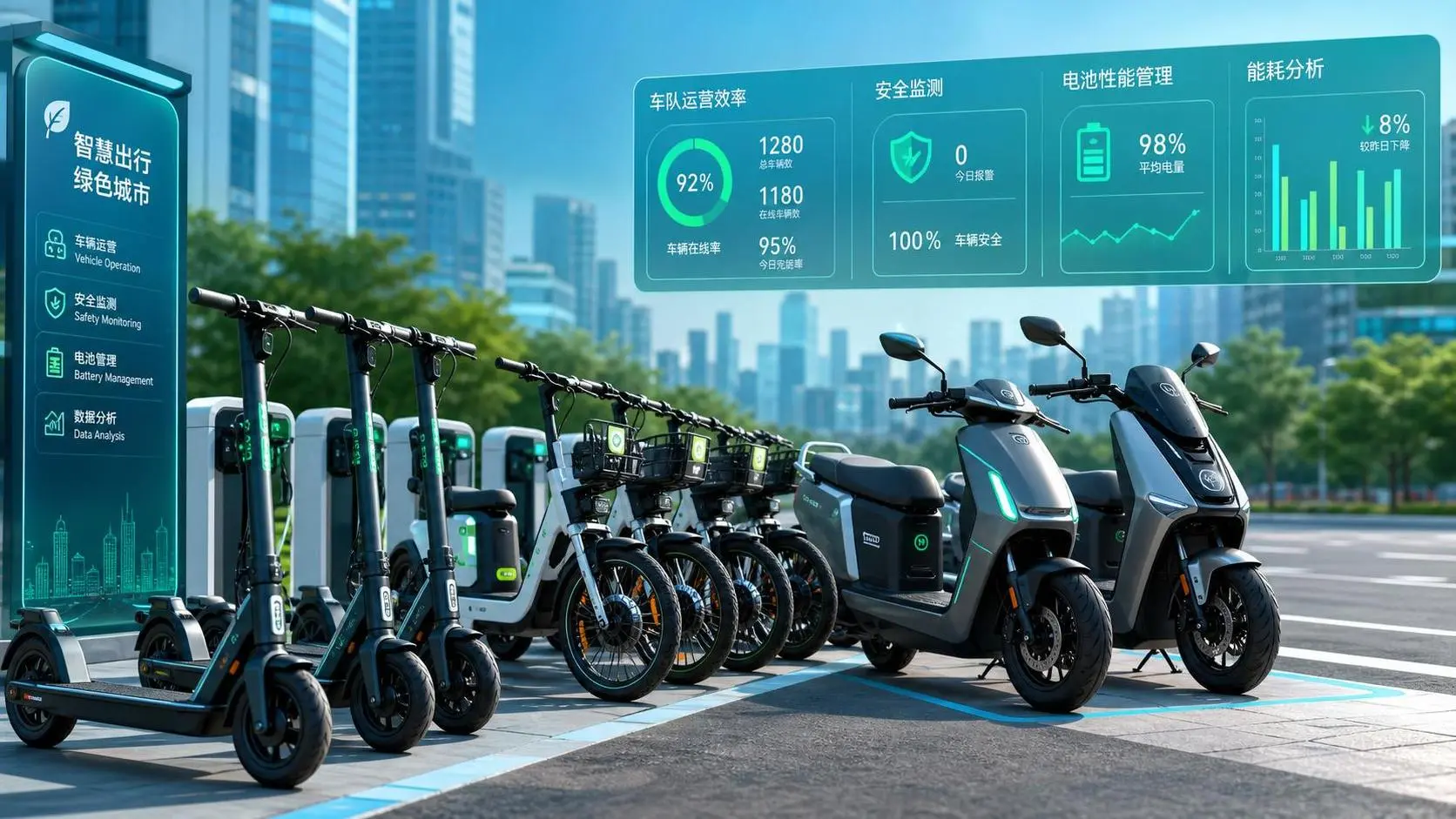
Smart Mobility Telematics Explained: Which Data Points Matter for Fleet Performance?
Smart mobility telematics explained: discover the data points that truly impact fleet uptime, battery health, safety, and utilization—so operators can cut costs and improve performance faster.