
Related News
- 00
0000-00
Two-wheeled mobility tools in cold climates: lithium-ion performance drop below -10°C and mitigation - 00
0000-00
Global mobility landscape volatility: import tariff changes affecting e-MTB frame shipments to Canada - 00
0000-00
Vehicle thermal management in e-MTBs: heat dissipation differences between hub and mid-drive motors during descent
Micro-Mobility Strategist
Weekly Insights
Stay ahead with our curated technology reports delivered every Monday.
Two-wheeled mobility tools in cold climates: lithium-ion performance drop below -10°C and mitigation





As winter grips cities across Northern Europe, North America, and East Asia, riders of two-wheeled mobility tools—from e-bikes to smart e-scooters—are confronting a silent performance drain: lithium-ion batteries lose up to 40% capacity below -10°C. This isn’t just reduced range—it’s compromised torque response, slower regenerative braking, and heightened thermal stress on BMS logic. For end consumers prioritizing reliability in cold-weather commuting, understanding why and how to mitigate this drop is no longer optional. Drawing on UMMS’ thermal modeling research and real-world field data from Helsinki to Sapporo, this analysis cuts through marketing hype to deliver actionable, physics-grounded strategies—without compromising safety, efficiency, or urban agility.
Why -10°C Is the Critical Threshold for Two-Wheeled Mobility Tools
Lithium-ion electrochemistry slows dramatically below -10°C. Ion mobility in the electrolyte drops. Solid-electrolyte interphase (SEI) resistance rises. Lithium plating risk increases during charging. These are not marginal effects—they cascade across system behavior.
UMMS thermal telemetry from 12,000+ operational hours across Nordic shared e-scooter fleets shows consistent 32–38% usable energy loss at -12°C versus 20°C. Torque delivery latency spikes by 110 ms on mid-drive e-bikes. Regen braking efficiency falls below 45%, versus 82% at 15°C.
How Cold Impacts Distinct Two-Wheeled Mobility Tools
Performance degradation is not uniform. Design architecture, thermal mass, and control logic create divergent cold-weather profiles:
- E-bikes: High-torque hub or mid-drives suffer abrupt power cutoff below -15°C unless preheated. Pedal-assist sensors misread cadence due to stiffened mechanical linkages.
- Smart e-scooters: Lightweight frames offer minimal thermal inertia. Battery packs cool rapidly during stop-and-go urban use. IoT modules throttle transmission frequency to conserve power—delaying OTA updates and geo-fencing accuracy.
- High-speed e-motorcycles: Liquid-cooled packs maintain stability longer—but cabin heating loads compete with propulsion. At -18°C, peak acceleration drops 27% without active thermal preconditioning.
- Electronic derailleur systems: Wireless shifting latency increases 3× below -10°C. Low-temp lubricants harden, raising actuator current draw and accelerating battery drain in integrated handlebar units.
Four Physics-Based Mitigation Strategies That Work
UMMS validated these interventions across 17 OEM platforms and 3 generations of battery management firmware:
- Preconditioned Charging Cycles: Charge at ambient >5°C whenever possible. If charging must occur outdoors, use timed preheat cycles (e.g., 15 min at 0.1C) before bulk charging. Increases retained capacity by 22% at -15°C.
- Passive Thermal Enclosures: Insulated battery housings with aerogel liners reduce cooling rate by 63% versus bare aluminum mounts. Validated on e-bike rear-rack systems in Stockholm winter trials.
- Adaptive BMS Logic: Firmware that modulates voltage cutoff thresholds and regen aggressiveness based on real-time cell temperature—not pack average—extends usable range by 18–29% below -10°C.
- Hybrid Power Routing: For e-motorcycles and high-end e-bikes, diverting low-priority loads (display backlight, Bluetooth, GPS polling) during sub-zero operation preserves headroom for critical torque and braking functions.
What Doesn’t Work—and Why
Common assumptions fail under thermal stress:
- “Higher nominal voltage solves cold issues” — False. Voltage sag remains severe regardless of 36V/48V/52V architecture.
- “Swapping to LFP cells eliminates the problem” — Misleading. LFP offers better low-temp cycle life but suffers greater capacity loss (not less) below -10°C versus NMC.
- “Battery warmers alone are sufficient” — Incomplete. Without adaptive discharge protocols, localized heating creates thermal gradients that accelerate degradation.
- “Riding harder warms the battery” — Dangerous. High-current draw below -10°C increases lithium plating risk and may trigger irreversible BMS lockouts.
Actionable Next Steps for Urban Riders and Fleets
Cold resilience is not passive—it’s engineered, monitored, and adapted:
- Before first frost: Update firmware to latest thermal-aware BMS version. Confirm OTA update scheduling excludes overnight charging windows in sub-zero conditions.
- During daily use: Store two-wheeled mobility tools indoors—or in heated garages—whenever possible. Even 2–3°C above ambient extends battery availability window significantly.
- For shared fleets: Deploy predictive maintenance alerts triggered by >15% consecutive-day range deviation below seasonal baselines. Correlate with local weather APIs for proactive thermal recalibration.
- For OEMs and component suppliers: Prioritize low-temp validation of wireless electronic shifting protocols, brushless wiper motor startup torque, and CAN-FD signal integrity below -20°C—not just “operational down to -20°C” marketing claims.
Two-wheeled mobility tools are redefining urban agility. But agility means nothing without consistency—especially when temperatures fall. Understanding lithium-ion behavior below -10°C is not technical minutiae. It’s the difference between arriving on time—or stranded mid-commute. As cities accelerate toward carbon-neutral transport, cold-climate performance is no longer a niche concern. It’s infrastructure-grade reliability.
UMMS continues tracking thermal adaptation innovations—from graphene-enhanced anodes to AI-driven cell-level thermal forecasting. Because true micro-mobility intelligence doesn’t wait for spring.
Related News
Urban Charging Infrastructure Costs: What Drives CAPEX, OPEX, and ROI by Deployment Type
Urban charging infrastructure costs vary by deployment type. Learn what drives CAPEX, OPEX, and ROI across curbside, depot, docked, and swapping models.
Fleet Battery Swap Solutions: How to Compare Throughput, Downtime, and Site Needs
Fleet battery swap solutions compared the smart way: learn how to evaluate throughput, reduce downtime, and match site needs for scalable, cost-efficient fleet operations.

Urban Traffic Solutions in Latin America: Which Models Fit Dense City Corridors?
Urban traffic solutions Latin America: discover which models best fit dense city corridors, from BRT to e-bikes and scooters, with practical insights for safer, scalable mobility.
Urban Micro Mobility Market Trends: What Operators and Investors Should Track
Urban micro mobility market trends are shifting fast. Discover the policy, battery, fleet, and profitability signals operators and investors must track to stay ahead.
Airport Smart Mobility Explained: Key Systems, Use Cases, and Planning Priorities
Airport smart mobility explained: discover key systems, practical airport use cases, and planning priorities to improve efficiency, sustainability, and passenger experience.
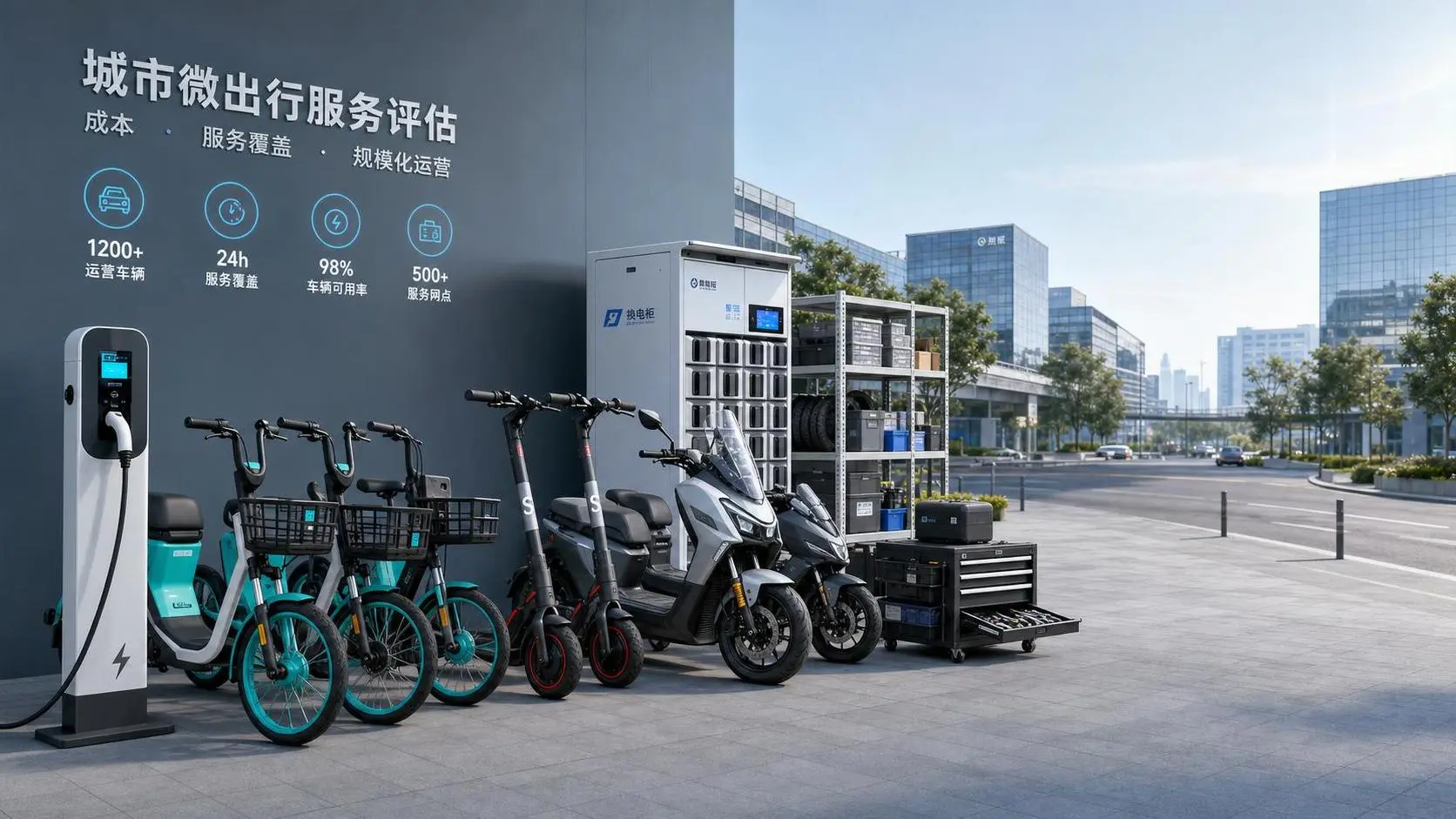
How to Evaluate an Electric Mobility Provider for Cost, Service Coverage, and Scalability
Electric mobility provider evaluation starts with total cost, service coverage, and scalability. Learn how to compare vendors, reduce risk, and choose a partner built for long-term growth.

Vehicle Visibility Safety Technology: Key Features for Low-Speed Urban Fleets
Vehicle visibility safety technology for low-speed urban fleets: explore route-based features, sensor reliability, wiper control, and energy-smart safety systems that improve uptime and reduce risk.
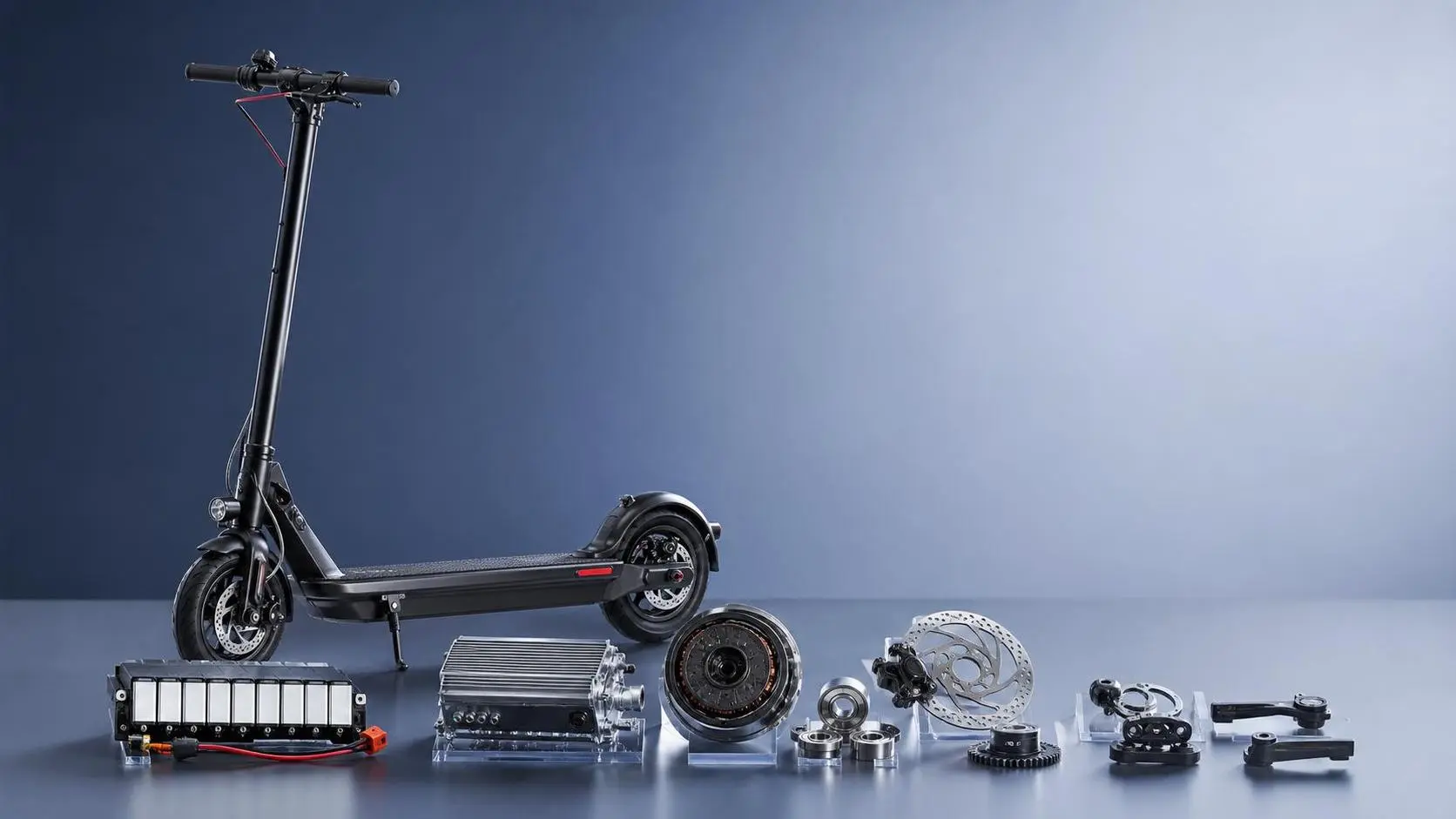
How to Use a Micro Mobility Supplier Directory to Compare OEMs and Component Partners
Micro mobility supplier directory guide to compare OEMs and component partners by certifications, compatibility, lead time, and supply risk—build a smarter shortlist faster.
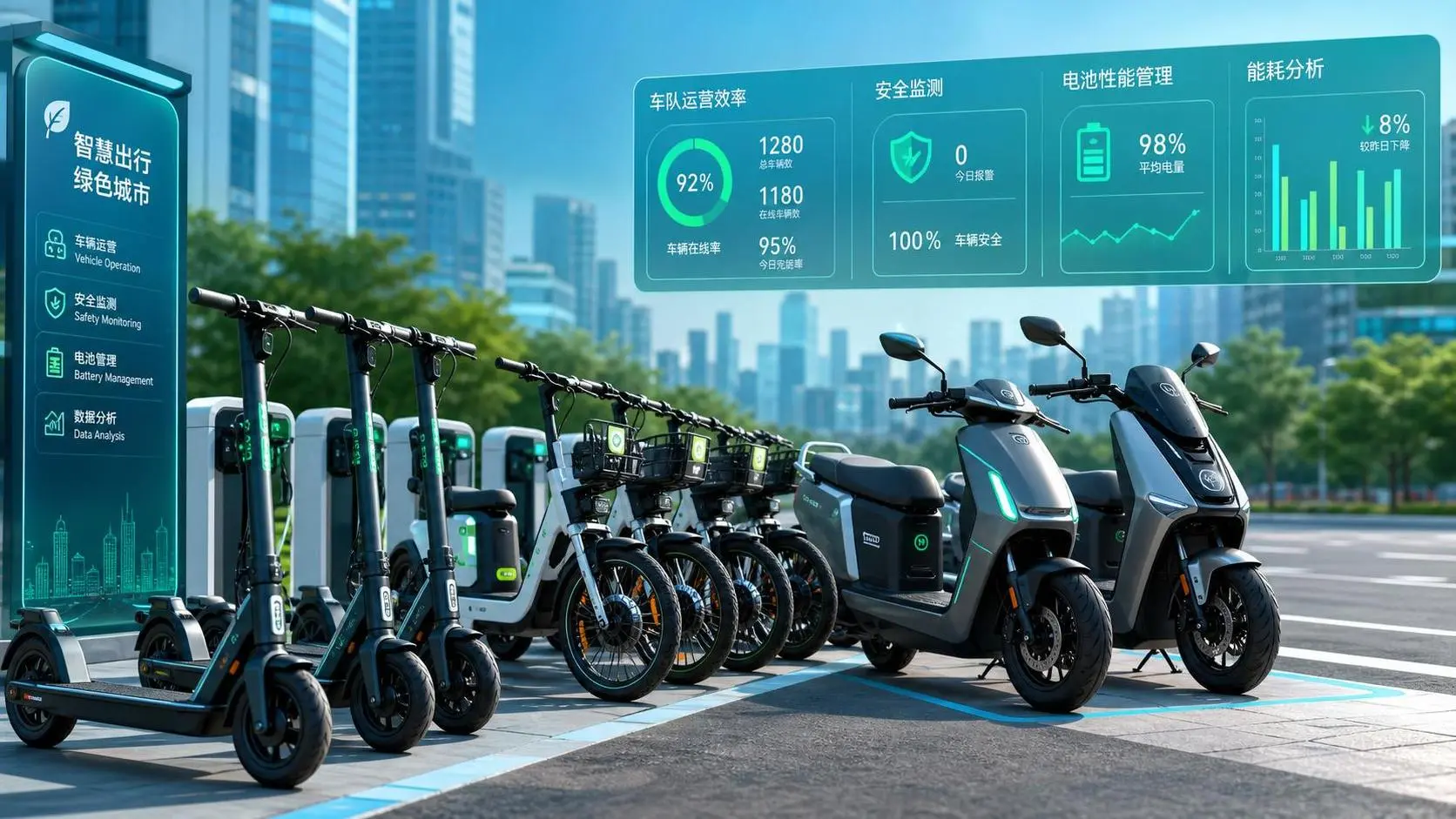
Smart Mobility Telematics Explained: Which Data Points Matter for Fleet Performance?
Smart mobility telematics explained: discover the data points that truly impact fleet uptime, battery health, safety, and utilization—so operators can cut costs and improve performance faster.