
Related News
- 00
0000-00
Urban Charging Infrastructure Costs: What Drives CAPEX, OPEX, and ROI by Deployment Type - 00
0000-00
Urban Traffic Solutions in Latin America: Which Models Fit Dense City Corridors? - 00
0000-00
Airport Smart Mobility Explained: Key Systems, Use Cases, and Planning Priorities - 00
0000-00
How to Evaluate an Electric Mobility Provider for Cost, Service Coverage, and Scalability - 00
0000-00
How to Use a Micro Mobility Supplier Directory to Compare OEMs and Component Partners
Ms. Elena Rodriguez
Weekly Insights
Stay ahead with our curated technology reports delivered every Monday.
Core component suppliers adapting to OEM market share consolidation: vertical integration moves in thermal modules





Why Thermal Module Integration Is Now a Strategic Imperative for Core Component Suppliers
As OEM market share consolidation accelerates across global micro-mobility, core component suppliers face mounting pressure to future-proof their value proposition — and thermal management is now a decisive battleground.
E-motorcycles demand ultra-precise battery thermal modules. Smart e-scooters require compact, high-efficiency heat dissipation. Even high-end e-bikes increasingly embed active thermal logic into mid-drive motor housings.
This isn’t incremental engineering. It’s a structural shift from tiered outsourcing to strategic vertical integration — driven by OEMs’ tightening system-level specifications, battery-swapping interoperability mandates, and EU/UK regulatory timelines for thermal runaway prevention.
Core component suppliers who delay integration risk commoditization. Those who anchor R&D in thermal logic gain co-development rights, IP leverage, and direct influence over OEM electrification roadmaps.
Three Divergent Thermal Realities Across Micro-Mobility Segments
Thermal requirements are not uniform. They fracture sharply by vehicle class, use case, and regulatory jurisdiction — demanding distinct integration strategies for core component suppliers.
- High-speed e-motorcycles: Require liquid-cooled battery modules with real-time cell-level temperature mapping, integrated with CAN FD thermal arbitration protocols.
- Smart e-scooters (shared & personal): Prioritize passive-dissipative thermal architecture — ultra-thin vapor chambers, phase-change composites, and thermally conductive frame-integrated heatsinks.
- Precision e-bikes (urban & performance): Need hybrid thermal logic — ambient-adaptive fan control, motor winding temperature modeling, and wireless thermal telemetry synced to electronic derailleur firmware.
Each segment imposes unique constraints on weight, volume, cost envelope, and serviceability — making “one-size-fits-all” thermal solutions technically obsolete and commercially unsustainable.
Where Vertical Integration Delivers Highest System-Level ROI
Vertical integration is not about owning every manufacturing step. It’s about controlling the thermal intelligence layer that binds hardware, software, and safety compliance.
Leading core component suppliers now integrate at three critical nodes:
- Material science layer: In-house development of graphene-enhanced thermal interface materials (TIMs) and anisotropic graphite films — reducing interfacial resistance by up to 38% versus off-the-shelf alternatives.
- Control logic layer: Embedded thermal firmware with predictive algorithms trained on real-world battery degradation curves — enabling dynamic derating without sacrificing peak torque delivery.
- System validation layer: ISO 16750-4-compliant thermal cycling labs, UL 2580 battery module abuse testing, and UN 38.3 thermal shock certification capacity — cutting OEM validation cycles by 40–60%.
These capabilities directly translate into faster time-to-market, stronger contractual terms, and eligibility for Tier-1 OEM thermal architecture co-design programs.
Critical Thermal Integration Trade-Offs by Application Context
Common Missteps in Thermal Strategy Execution
- Treating thermal modules as mechanical subassemblies — ignoring firmware co-design, data logging interfaces, and OTA update pathways.
- Optimizing only for steady-state conditions — neglecting transient thermal spikes during regenerative braking or hill-climb assist.
- Assuming OEM thermal specs are static — failing to track evolving EN 15194:2023 Annex ZA updates on battery thermal runaway thresholds.
- Over-investing in proprietary cooling tech without ensuring cross-platform compatibility — limiting scalability across OEM portfolios.
Actionable Next Steps for Core Component Suppliers
The window for reactive adaptation has closed. Proactive thermal integration is now table stakes. Here’s how to begin:
- Conduct a thermal architecture audit: Map current thermal dependencies across all customer platforms — identify single points of failure and third-party firmware lock-ins.
- Prioritize one integration node: Start with control logic layer — develop modular thermal firmware SDKs compatible with leading BMS and motor controller stacks (e.g., STSPIN, Infineon EiceDRIVER).
- Secure joint validation access: Negotiate lab time at key OEM thermal test centers — aligning your material characterization data with their abuse-test failure modes.
- Embed thermal KPIs into commercial contracts: Define SLAs for thermal derating response time, cell delta-T consistency, and post-warranty thermal performance decay rates.
For core component suppliers, thermal integration is no longer a technical option — it’s the primary vector for sustaining relevance amid OEM consolidation. The suppliers who win will be those whose thermal modules don’t just dissipate heat — they speak the language of system intelligence, regulatory certainty, and sustainable performance.
Visioning Micro-Mobility, Intelligence Driving New Cities.
Related News

Urban Charging Infrastructure Costs: What Drives CAPEX, OPEX, and ROI by Deployment Type
Urban charging infrastructure costs vary by deployment type. Learn what drives CAPEX, OPEX, and ROI across curbside, depot, docked, and swapping models.
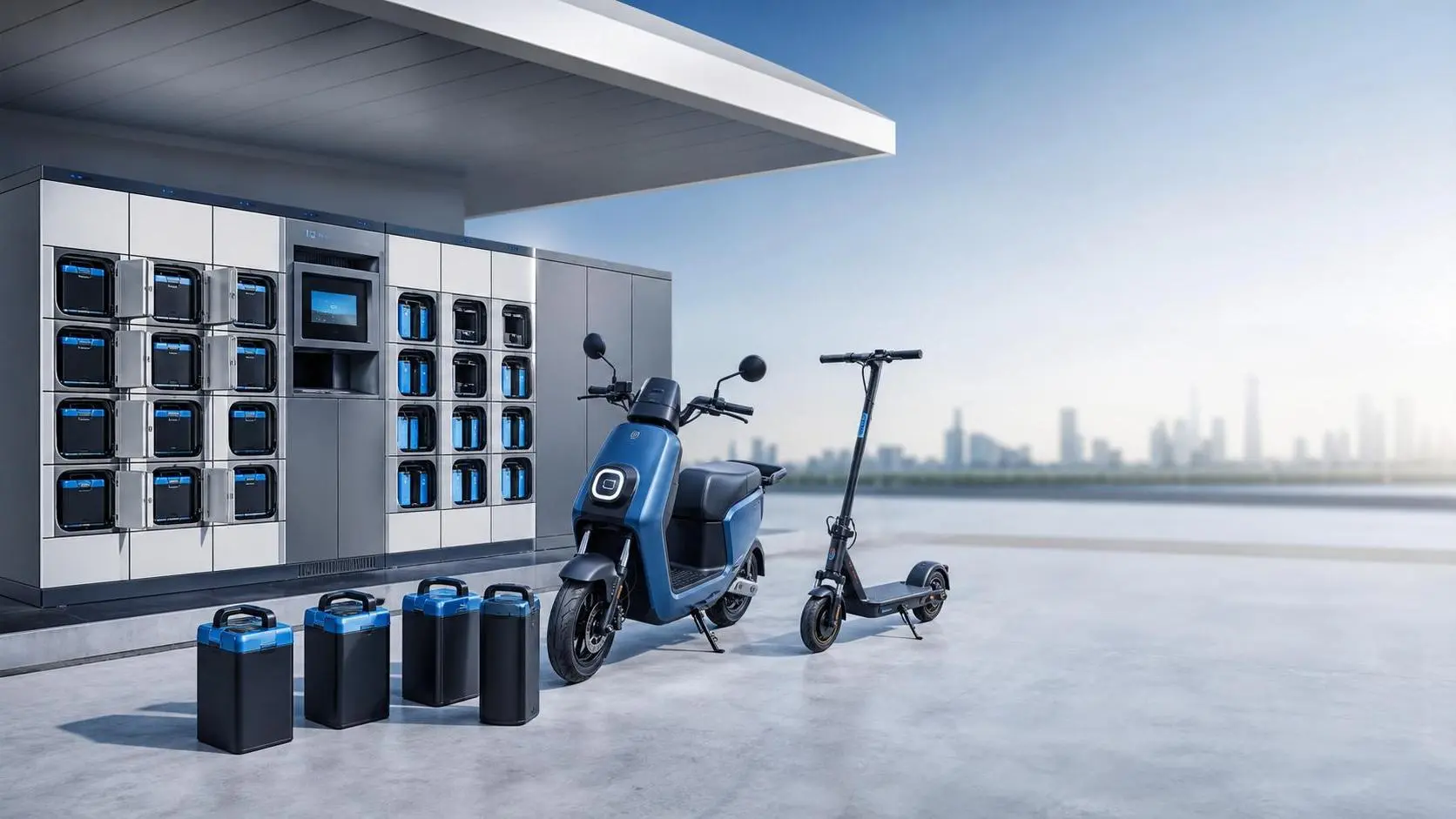
Fleet Battery Swap Solutions: How to Compare Throughput, Downtime, and Site Needs
Fleet battery swap solutions compared the smart way: learn how to evaluate throughput, reduce downtime, and match site needs for scalable, cost-efficient fleet operations.

Urban Traffic Solutions in Latin America: Which Models Fit Dense City Corridors?
Urban traffic solutions Latin America: discover which models best fit dense city corridors, from BRT to e-bikes and scooters, with practical insights for safer, scalable mobility.
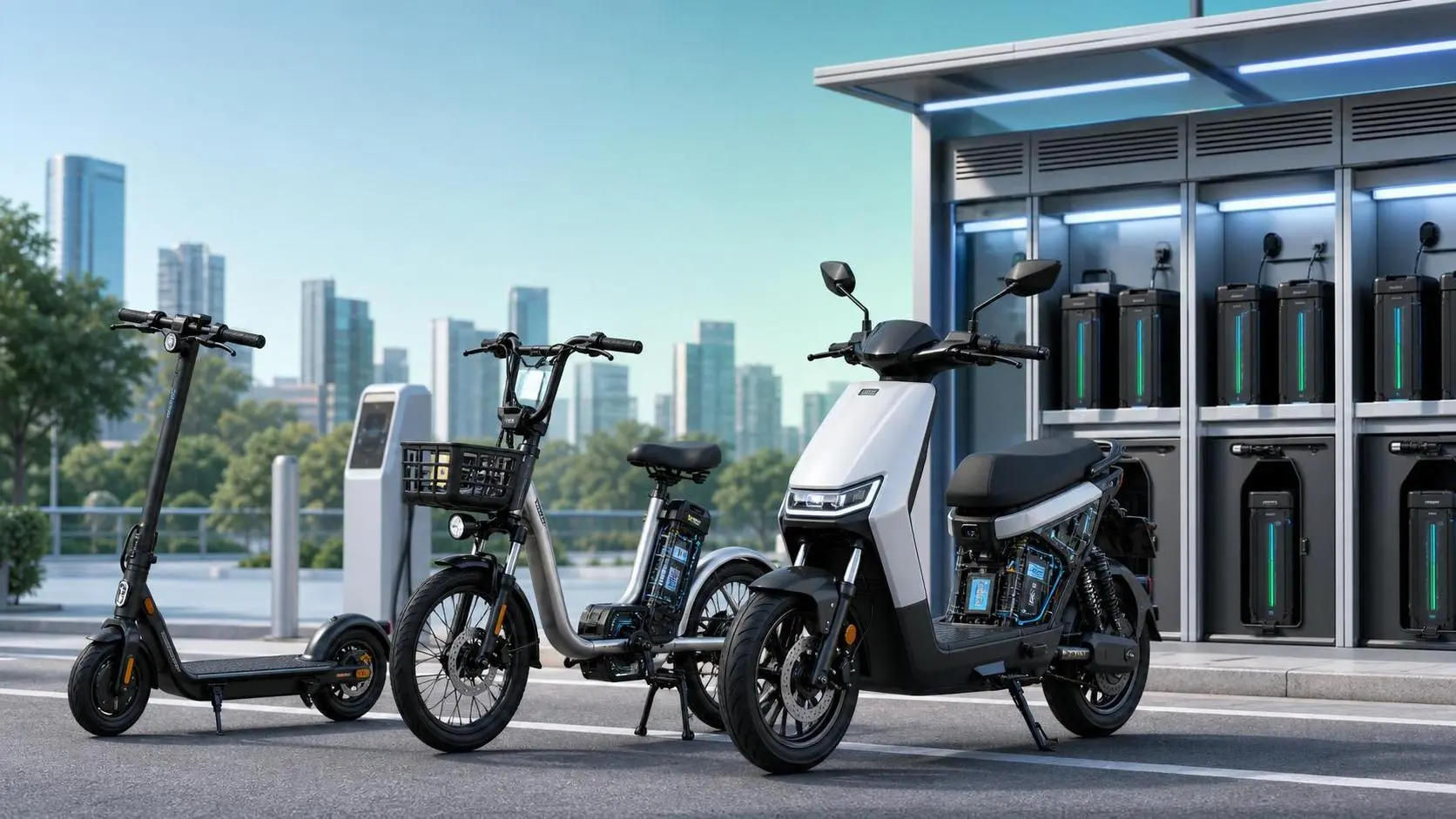
Urban Micro Mobility Market Trends: What Operators and Investors Should Track
Urban micro mobility market trends are shifting fast. Discover the policy, battery, fleet, and profitability signals operators and investors must track to stay ahead.

Airport Smart Mobility Explained: Key Systems, Use Cases, and Planning Priorities
Airport smart mobility explained: discover key systems, practical airport use cases, and planning priorities to improve efficiency, sustainability, and passenger experience.

How to Evaluate an Electric Mobility Provider for Cost, Service Coverage, and Scalability
Electric mobility provider evaluation starts with total cost, service coverage, and scalability. Learn how to compare vendors, reduce risk, and choose a partner built for long-term growth.

Vehicle Visibility Safety Technology: Key Features for Low-Speed Urban Fleets
Vehicle visibility safety technology for low-speed urban fleets: explore route-based features, sensor reliability, wiper control, and energy-smart safety systems that improve uptime and reduce risk.

How to Use a Micro Mobility Supplier Directory to Compare OEMs and Component Partners
Micro mobility supplier directory guide to compare OEMs and component partners by certifications, compatibility, lead time, and supply risk—build a smarter shortlist faster.
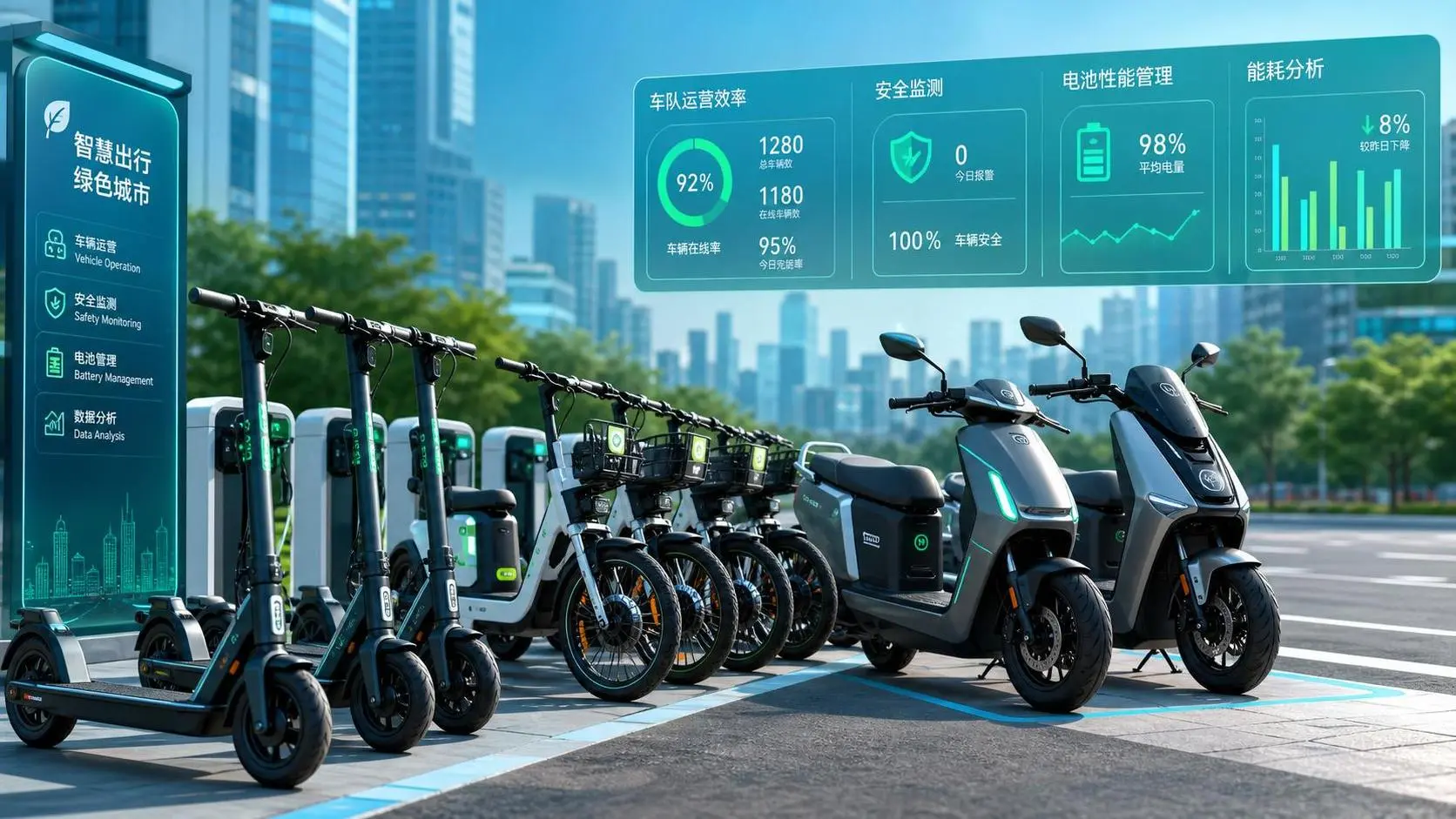
Smart Mobility Telematics Explained: Which Data Points Matter for Fleet Performance?
Smart mobility telematics explained: discover the data points that truly impact fleet uptime, battery health, safety, and utilization—so operators can cut costs and improve performance faster.