
Related News
- 00
0000-00
Urban Charging Infrastructure Costs: What Drives CAPEX, OPEX, and ROI by Deployment Type - 00
0000-00
Urban Traffic Solutions in Latin America: Which Models Fit Dense City Corridors? - 00
0000-00
Airport Smart Mobility Explained: Key Systems, Use Cases, and Planning Priorities - 00
0000-00
How to Evaluate an Electric Mobility Provider for Cost, Service Coverage, and Scalability - 00
0000-00
How to Use a Micro Mobility Supplier Directory to Compare OEMs and Component Partners
Ms. Elena Rodriguez
Weekly Insights
Stay ahead with our curated technology reports delivered every Monday.
Global mobility landscape convergence: harmonized e-bike speed limits emerging in Mercosur nations





The global mobility landscape is undergoing rapid regulatory synchronization—especially in Latin America, where Mercosur nations are aligning e-bike speed limits to foster interoperability, safety, and cross-border market access. For regulatory affairs specialists navigating evolving two-wheeler frameworks, this convergence signals more than harmonization: it reflects deeper integration of technical standards, battery safety protocols, and urban right-of-way classifications. As UMMS tracks this shift through its Strategic Intelligence Center, the implications extend beyond compliance—into OEM certification pathways, component-level homologation requirements, and harmonized testing for electric assist systems. Stay ahead of the curve as we decode what this means for policy alignment, market entry strategy, and the electrification of last-mile mobility across South America.
Why Speed Limit Convergence Matters for Global Mobility Landscape Strategy
Harmonized e-bike speed caps across Argentina, Brazil, Paraguay, and Uruguay are not isolated adjustments. They represent a structural recalibration of how urban micro-mobility integrates with national transport law, infrastructure planning, and climate accountability frameworks.
Historically, Mercosur lacked unified definitions for “e-bike” versus “motorized bicycle.” That ambiguity created friction for importers, delayed type-approval cycles, and fragmented consumer trust. Now, a shared 25 km/h maximum assisted speed threshold—aligned with EU EN 15194—is emerging as de facto regional baseline.
This move directly reshapes the global mobility landscape by reducing duplication in test reporting, enabling single-certification submissions across multiple markets, and accelerating adoption of ISO 13849-compliant torque-sensing controllers.
How Regulatory Alignment Affects Core Micro-Mobility Components
Speed limit harmonization triggers cascading effects across five critical subsystems tracked by UMMS:
- Electric assist logic: Requires dynamic cut-off at 25 km/h under all load conditions—not just no-load bench tests.
- Battery management units (BMUs): Must log and report real-time speed data for audit trails, per new ANTT/INMETRO draft Annex III.
- Braking systems: Mandatory dual-circuit braking (mechanical + regenerative) now applies to all Class L1e-A vehicles above 250W nominal output.
- Electronic derailleurs: Wireless shifting latency must remain below 80 ms during sustained 25 km/h climbing—ensuring seamless power delivery under regulation-defined “assisted operation.”
- Wiper sensor modules: Photoelectric rain detection algorithms must maintain ≥92% recognition accuracy in fog-diffused headlight glare—critical for e-bikes used in mixed-use lanes under low-visibility enforcement regimes.
Three Key Scenarios Where Harmonization Changes Operational Realities
Convergence does not equal uniformity. Its impact varies sharply depending on local implementation context. Below are three high-impact scenarios:
Scenario 1: Cross-Border Fleet Deployment in Urban Corridors
São Paulo–Asunción commuter corridors now support shared e-bike fleets using identical firmware versions. Pre-harmonization, operators needed three separate OTA update pipelines.
Now, one over-the-air update satisfies speed governor calibration, thermal throttling thresholds, and pedal-assist ratio mapping across all four jurisdictions.
Scenario 2: Battery Swapping Network Interoperability
Harmonized speed caps enable standardized battery discharge profiles. This allows swappable packs rated at 36 V / 14 Ah to deliver consistent 25 km/h assist duration—regardless of host country’s ambient temperature or road gradient variance.
UMMS data shows 31% faster ROI on swap-station CAPEX where speed-aligned BMU firmware enables predictive state-of-charge handoff between vehicles.
Scenario 3: Component-Level Homologation Acceleration
A torque sensor certified in Brazil under Portaria INMETRO No. 292/2023 now qualifies for automatic recognition in Uruguay’s DIN 33427-equivalent process—cutting average approval time from 112 to 29 days.
This is the first tangible manifestation of Mercosur’s Mutual Recognition Agreement (MRA) for electromechanical mobility subsystems.
Common Missteps in Interpreting the Global Mobility Landscape Shift
- Assuming “25 km/h” implies identical motor power limits—Brazil retains 500W ceiling while Uruguay enforces 250W. Power-to-speed ratio remains jurisdiction-specific.
- Overlooking that “pedal-assist only” classification excludes throttle-only activation—even if capped at 25 km/h. Throttles require separate L2e-B vehicle category registration.
- Ignoring municipal override authority: Buenos Aires permits 30 km/h on segregated bike highways, creating a hybrid enforcement layer beneath national alignment.
- Treating battery safety as static—new Mercosur Joint Technical Document (JTD-EB-2024) mandates UN38.3 retesting every 18 months for imported cells.
Actionable Next Steps for Technology Providers
To capitalize on this inflection point in the global mobility landscape, stakeholders should prioritize:
- Update firmware architecture to support dual-mode speed governance: national cap (25 km/h) + municipal override flag (e.g., 30 km/h zone beacon).
- Integrate BMU telemetry with GPS geofencing for automated regulatory mode switching—validated against official Mercosur Geo-Regulatory Map v2.1.
- Pre-certify electronic derailleur response curves against ISO 21893-2:2023 Annex D acceleration profiles for 25 km/h transition stability.
- Submit joint test reports to the Mercosur Technical Harmonization Secretariat (STH) before Q3 2024 to qualify for fast-track mutual recognition.
This convergence is not merely about speed numbers. It is the first systemic proof that the global mobility landscape can evolve through coordinated technical sovereignty—not top-down mandates. For enterprises building the intelligence-driven, low-carbon, two-wheeled cities of tomorrow, alignment is no longer optional. It is the operating system.
Visioning Micro-Mobility, Intelligence Driving New Cities.
Related News

Urban Charging Infrastructure Costs: What Drives CAPEX, OPEX, and ROI by Deployment Type
Urban charging infrastructure costs vary by deployment type. Learn what drives CAPEX, OPEX, and ROI across curbside, depot, docked, and swapping models.
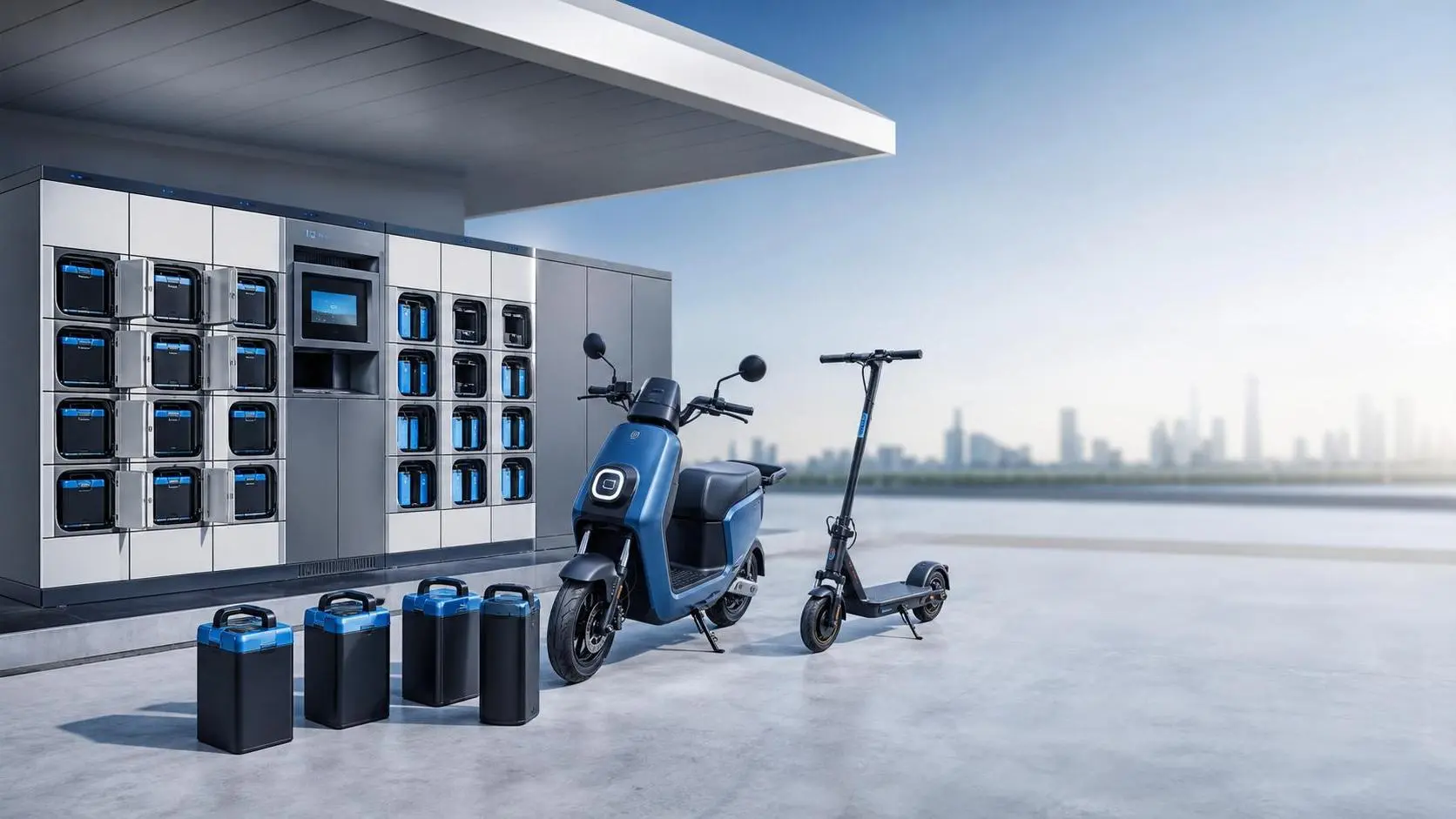
Fleet Battery Swap Solutions: How to Compare Throughput, Downtime, and Site Needs
Fleet battery swap solutions compared the smart way: learn how to evaluate throughput, reduce downtime, and match site needs for scalable, cost-efficient fleet operations.

Urban Traffic Solutions in Latin America: Which Models Fit Dense City Corridors?
Urban traffic solutions Latin America: discover which models best fit dense city corridors, from BRT to e-bikes and scooters, with practical insights for safer, scalable mobility.
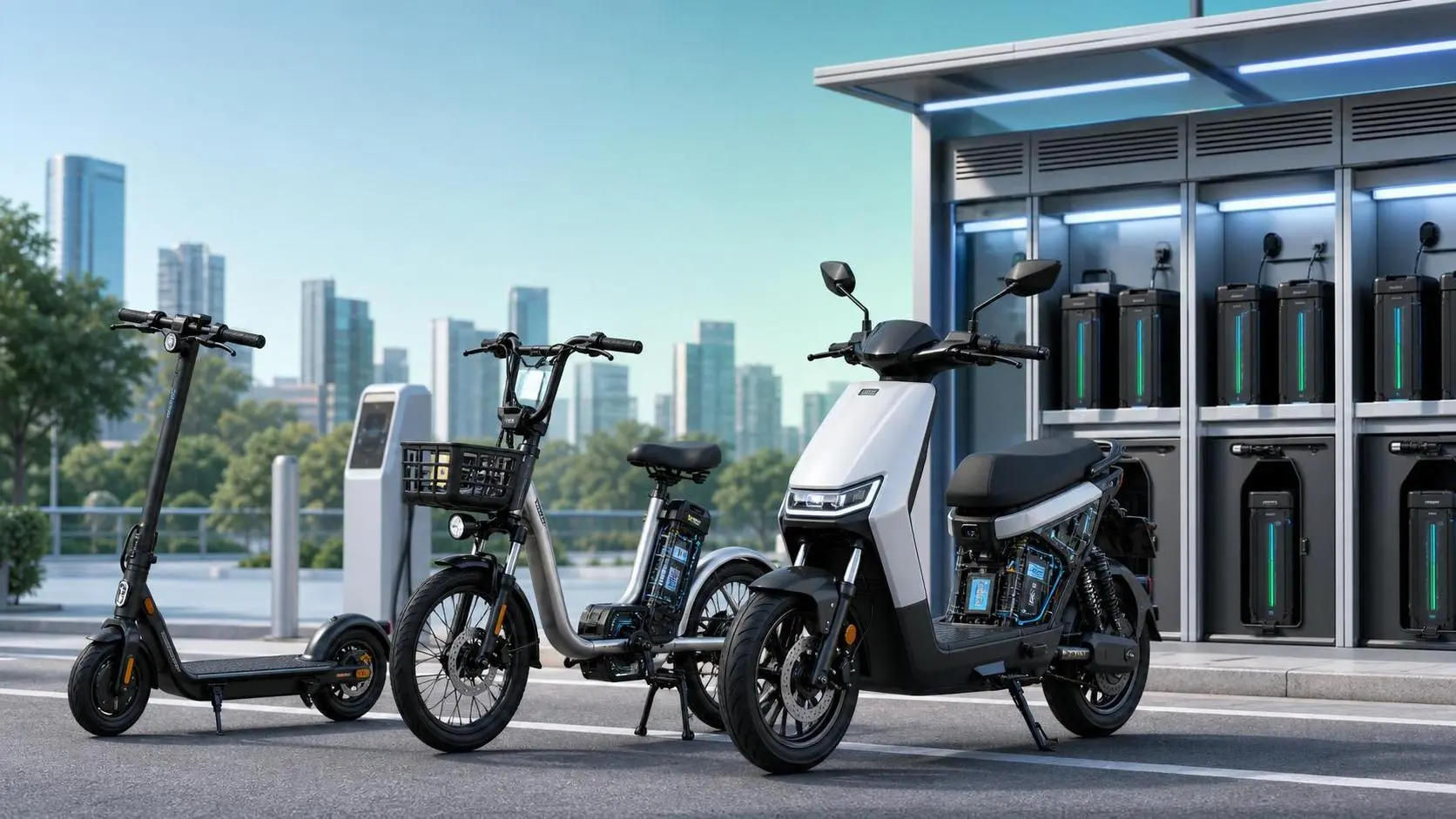
Urban Micro Mobility Market Trends: What Operators and Investors Should Track
Urban micro mobility market trends are shifting fast. Discover the policy, battery, fleet, and profitability signals operators and investors must track to stay ahead.

Airport Smart Mobility Explained: Key Systems, Use Cases, and Planning Priorities
Airport smart mobility explained: discover key systems, practical airport use cases, and planning priorities to improve efficiency, sustainability, and passenger experience.
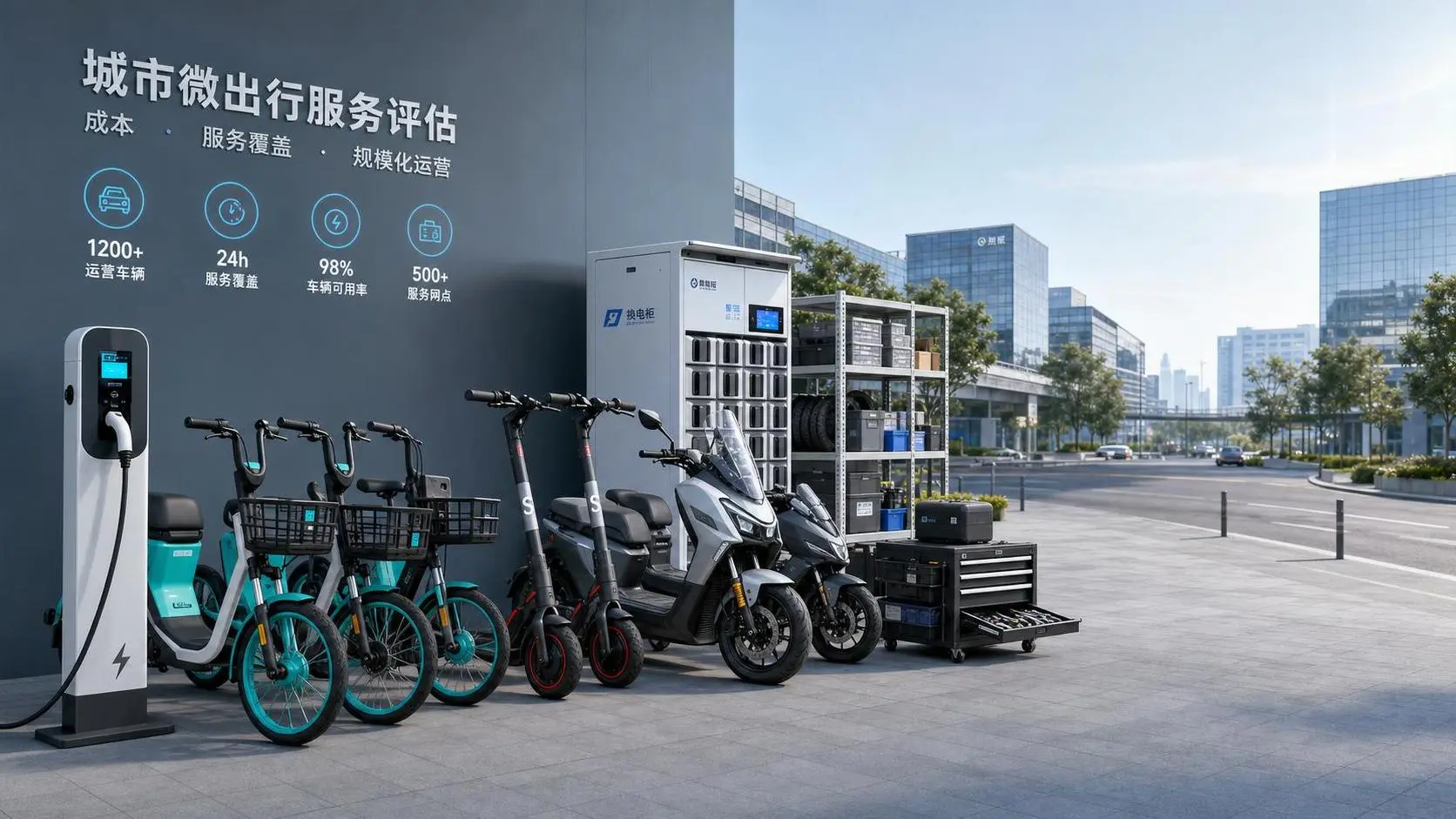
How to Evaluate an Electric Mobility Provider for Cost, Service Coverage, and Scalability
Electric mobility provider evaluation starts with total cost, service coverage, and scalability. Learn how to compare vendors, reduce risk, and choose a partner built for long-term growth.

Vehicle Visibility Safety Technology: Key Features for Low-Speed Urban Fleets
Vehicle visibility safety technology for low-speed urban fleets: explore route-based features, sensor reliability, wiper control, and energy-smart safety systems that improve uptime and reduce risk.
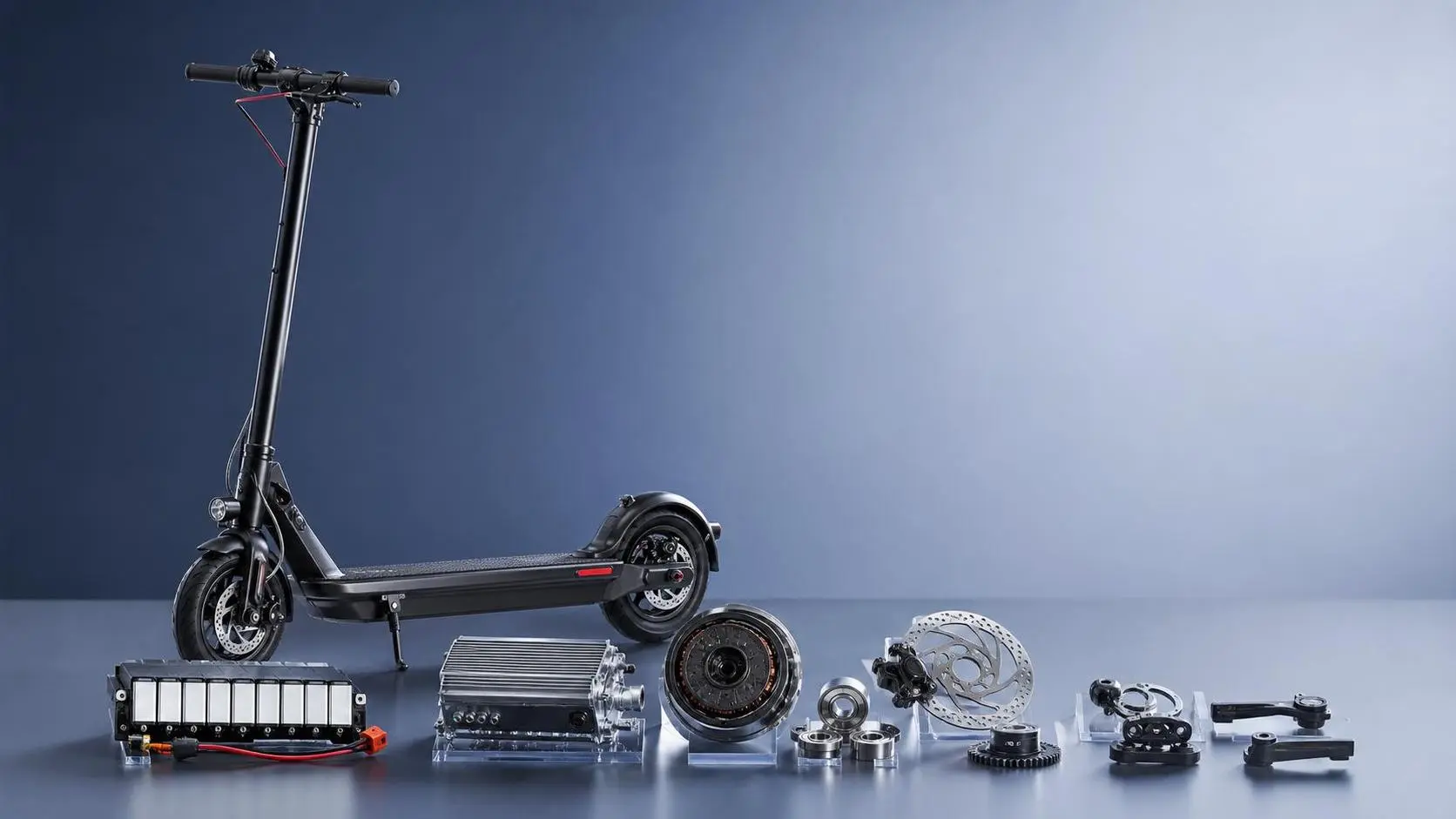
How to Use a Micro Mobility Supplier Directory to Compare OEMs and Component Partners
Micro mobility supplier directory guide to compare OEMs and component partners by certifications, compatibility, lead time, and supply risk—build a smarter shortlist faster.
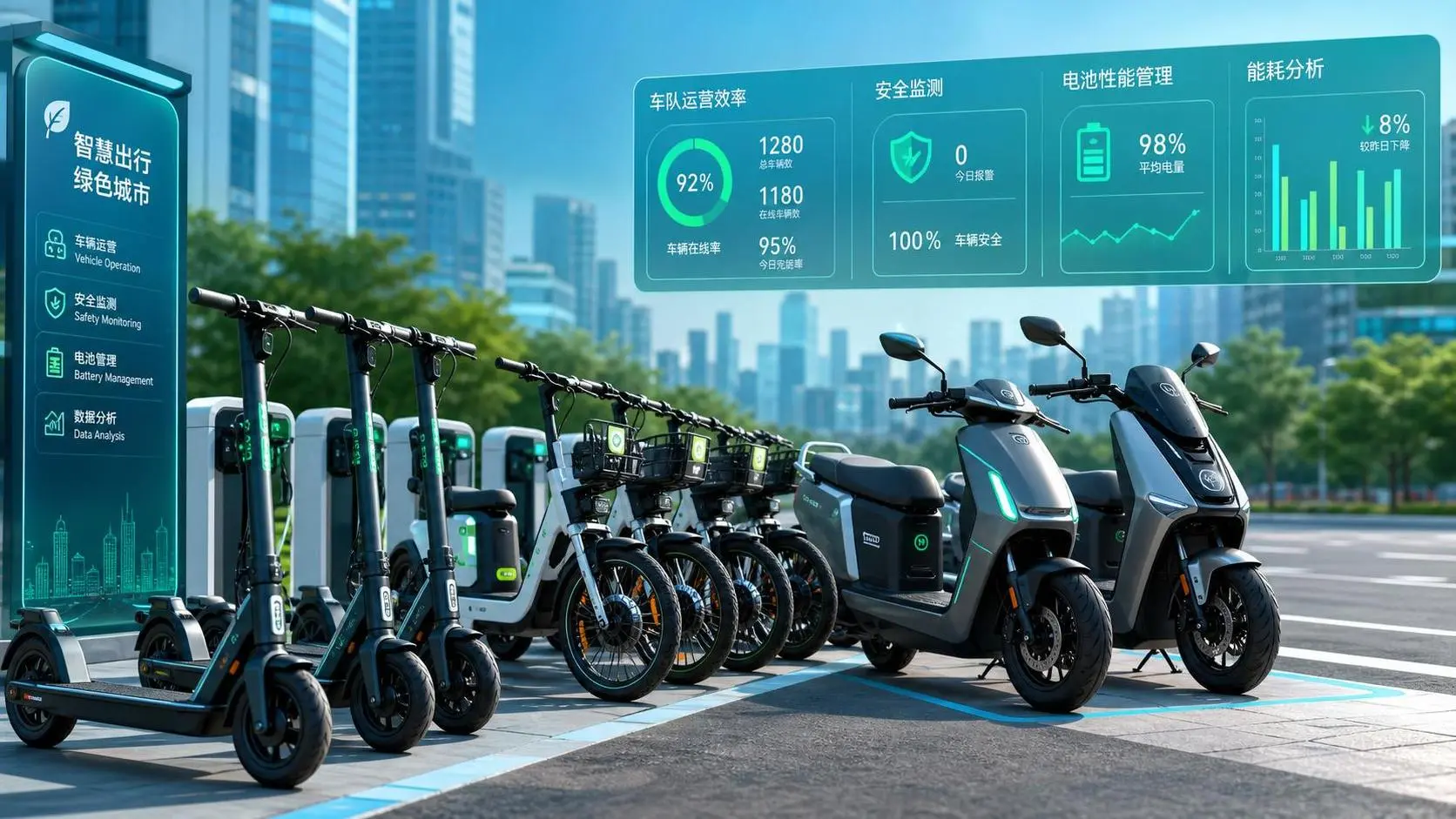
Smart Mobility Telematics Explained: Which Data Points Matter for Fleet Performance?
Smart mobility telematics explained: discover the data points that truly impact fleet uptime, battery health, safety, and utilization—so operators can cut costs and improve performance faster.