
Related News
- 00
0000-00
Urban Charging Infrastructure Costs: What Drives CAPEX, OPEX, and ROI by Deployment Type - 00
0000-00
Urban Traffic Solutions in Latin America: Which Models Fit Dense City Corridors? - 00
0000-00
Airport Smart Mobility Explained: Key Systems, Use Cases, and Planning Priorities - 00
0000-00
How to Evaluate an Electric Mobility Provider for Cost, Service Coverage, and Scalability - 00
0000-00
How to Use a Micro Mobility Supplier Directory to Compare OEMs and Component Partners
Ms. Elena Rodriguez
Weekly Insights
Stay ahead with our curated technology reports delivered every Monday.
Core component suppliers facing margin pressure as OEM market share consolidates





Why Margin Pressure on Core Component Suppliers Is Now Structural, Not Cyclical
OEM consolidation is no longer a regional anomaly—it’s the defining architecture of global micro-mobility markets. In Europe, three e-bike OEMs now command over 62% of premium segment volume. In North America, two shared-scooter platforms control 78% of fleet deployments. High-speed e-motorcycle production has concentrated into four vertically integrated players—each sourcing >90% of drivetrain and battery management components from fewer than five tier-1 suppliers.
This structural shift reshapes power asymmetry. Where once procurement was distributed across dozens of mid-sized OEMs with differentiated technical roadmaps, today’s top-tier buyers demand standardized interfaces, accelerated NPI timelines, and zero-defect thermal validation—all while enforcing annual cost-down targets averaging 4.3%. Crucially, R&D co-investment remains rare: only 12% of current OEM-supplier contracts include shared IP development clauses for next-gen wireless shifting protocols or photonic wiper sensor calibration.
Margin pressure thus stems not from temporary demand softness—but from eroded negotiation leverage, rising compliance overhead, and unrecouped innovation costs. For core component suppliers, resilience requires moving beyond cost accounting to value-layered positioning.
Seven Non-Negotiable Checks for Core Component Suppliers
- Audit your thermal derating curves against OEM-defined ambient + load profiles—not lab-only specs—to verify real-world motor controller and battery BMS co-location viability.
- Validate electromagnetic compatibility (EMC) of wireless electronic derailleur modules under simultaneous 5G/Bluetooth/WiFi interference—using actual urban IoT signal maps, not generic CISPR-25 test benches.
- Map every wiper system brushless actuator’s stall torque decay against ISO 16750-4 vibration spectra—especially at resonant frequencies induced by carbon-fiber fork harmonics.
- Require OEMs to disclose full vehicle-level battery cell chemistry, SOC windowing, and charge termination logic before signing battery management IC supply agreements.
- Embed traceable firmware versioning in all e-powertrain firmware updates—enabling granular recall scope containment when thermal runaway models diverge from OEM validation reports.
- Contractually lock in minimum order quantities (MOQs) tied to validated vehicle platform lifecycles—not calendar years—to prevent forced obsolescence during OEM model transitions.
- Demand access to OEM’s real-world field failure telemetry dashboards—not just aggregated MTBF summaries—to calibrate predictive maintenance algorithms for precision drivetrain components.
Scenario-Specific Implications
E-bike OEMs focused on EU subsidy compliance: Margins compress most acutely on mid-power (250W) mid-drive systems where CE EN 15194 certification now mandates sub-2°C/W junction-to-case thermal resistance. Suppliers failing to demonstrate validated heat pipe integration with aluminum crankset housings face automatic disqualification—even with superior efficiency metrics.
Shared-scooter platforms scaling rapidly in LATAM: Here, wiper system suppliers confront divergent priorities: OEMs prioritize ultra-low standby current (<5µA) over rain-sensing accuracy—because fleet uptime depends on battery longevity across 300+ daily ride cycles. Yet local regulations increasingly mandate ISO 16750-2 cold-start performance at -5°C. Balancing both demands requires re-engineering sensor biasing circuits—not just firmware tuning.
High-speed e-motorcycle OEMs adopting swappable battery architectures: Core component suppliers must redesign motor controllers to tolerate ±15% voltage transients during hot-swap events—while maintaining ASIL-B functional safety integrity. Fewer than 19% of existing e-motor controllers meet this requirement without hardware revision.
Three Commonly Overlooked Risks
Suppliers routinely underestimate the contractual risk embedded in “compliance pass-through” clauses. When an OEM mandates adherence to UNECE Regulation 138 (e-scooter lighting), suppliers inherit full liability for third-party lab testing costs—even if the OEM changes lens geometry post-validation.
Another blind spot: software bill-of-materials (SBOM) obligations. Under EU Cyber Resilience Act (CRA) enforcement starting 2027, every firmware update for electronic derailleurs or wiper ECUs must include machine-readable SBOMs. Suppliers lacking automated build pipelines face non-compliance penalties exceeding €15M per product line.
Finally, geographic diversification is misapplied. Shifting production from China to Vietnam reduces tariff exposure but introduces new thermal validation gaps: identical motor windings exhibit 8.2% higher copper loss at Ho Chi Minh City’s 32°C/85% RH ambient versus Shenzhen’s 28°C/70% RH baseline—requiring revised derating tables and updated OEM documentation.
Actionable Execution Steps
Start with a cross-functional “Margin Defense Workshop”: bring together thermal engineers, EMC test leads, regulatory affairs, and commercial contracting teams to map each core component’s exposure across the seven checklist items above.
Next, renegotiate one high-volume contract using data-driven leverage: present OEMs with side-by-side thermal simulation results showing how your motor controller’s junction temperature stays 4.7°C below their spec limit at peak load—then propose a 2.1% price premium for guaranteed thermal headroom that extends inverter lifespan by 37%.
Finally, embed “compliance cost recovery” into all new RFQ responses: quote separately for certification labor, third-party lab fees, and CRA-mandated SBOM toolchain licensing—making these visible, negotiable line items rather than absorbed overhead.
Conclusion: From Cost Center to Value Anchor
Core component suppliers are no longer passive price-takers in consolidated OEM ecosystems. Their technical depth—the ability to solve thermal, electromagnetic, and regulatory convergence problems—is the only defensible moat. Margin pressure will persist. But those who translate engineering rigor into auditable, contract-enforceable value layers will command pricing power, co-development rights, and platform-level influence.
The next phase isn’t about surviving consolidation. It’s about becoming indispensable within it—by making every watt, every millisecond, and every decibel of electromagnetic noise verifiably count.
Related News

Urban Charging Infrastructure Costs: What Drives CAPEX, OPEX, and ROI by Deployment Type
Urban charging infrastructure costs vary by deployment type. Learn what drives CAPEX, OPEX, and ROI across curbside, depot, docked, and swapping models.
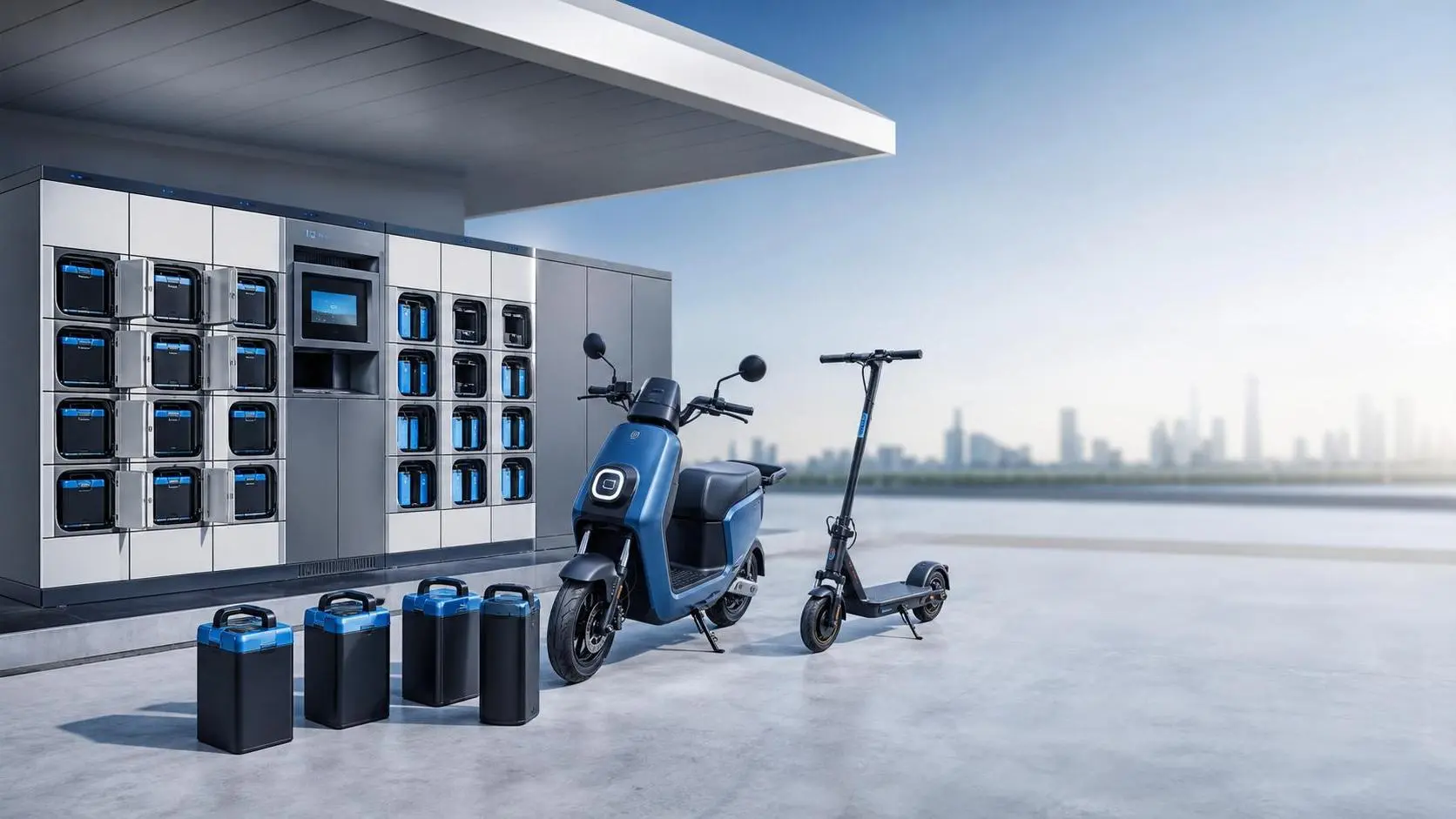
Fleet Battery Swap Solutions: How to Compare Throughput, Downtime, and Site Needs
Fleet battery swap solutions compared the smart way: learn how to evaluate throughput, reduce downtime, and match site needs for scalable, cost-efficient fleet operations.

Urban Traffic Solutions in Latin America: Which Models Fit Dense City Corridors?
Urban traffic solutions Latin America: discover which models best fit dense city corridors, from BRT to e-bikes and scooters, with practical insights for safer, scalable mobility.
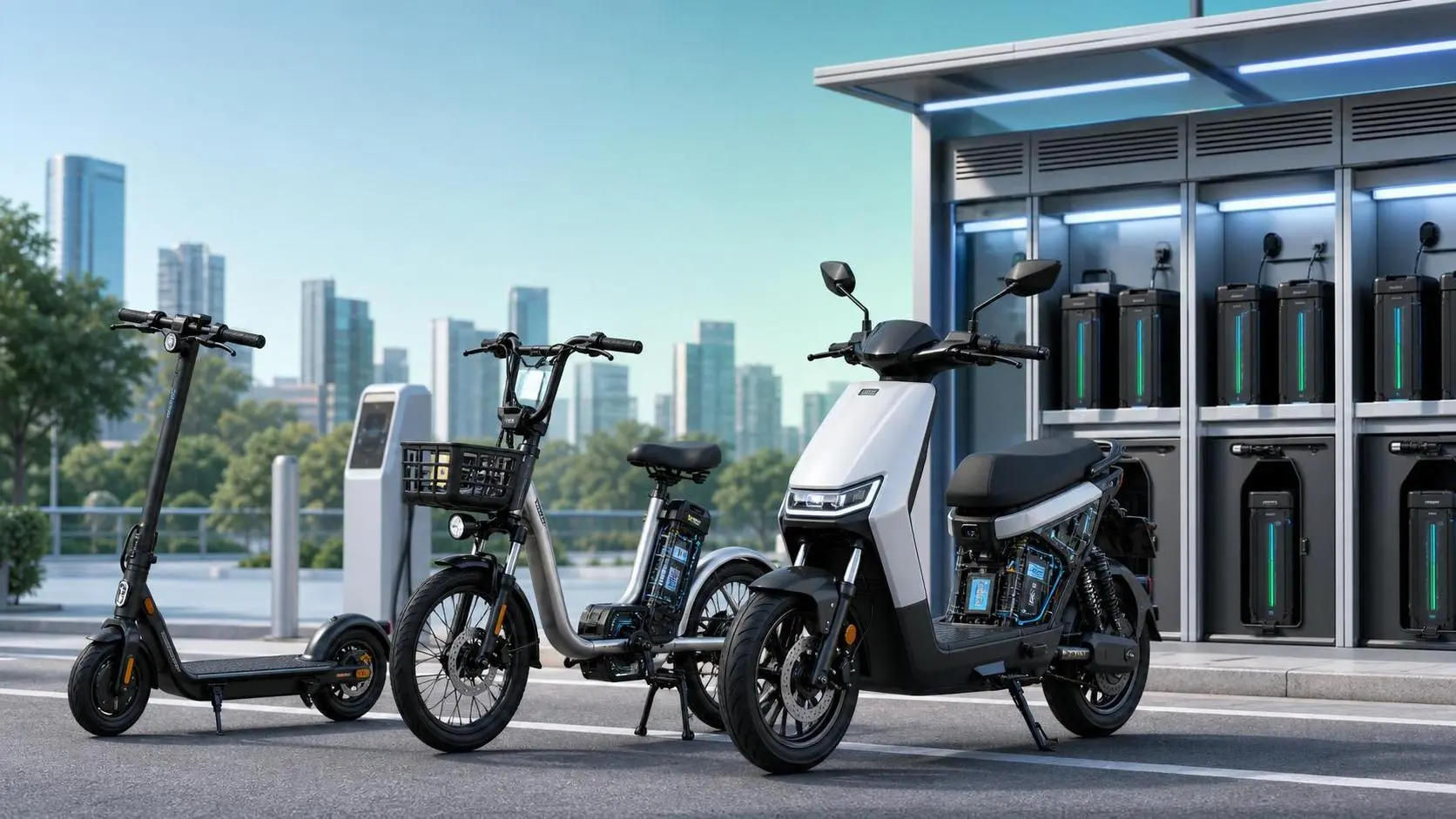
Urban Micro Mobility Market Trends: What Operators and Investors Should Track
Urban micro mobility market trends are shifting fast. Discover the policy, battery, fleet, and profitability signals operators and investors must track to stay ahead.

Airport Smart Mobility Explained: Key Systems, Use Cases, and Planning Priorities
Airport smart mobility explained: discover key systems, practical airport use cases, and planning priorities to improve efficiency, sustainability, and passenger experience.
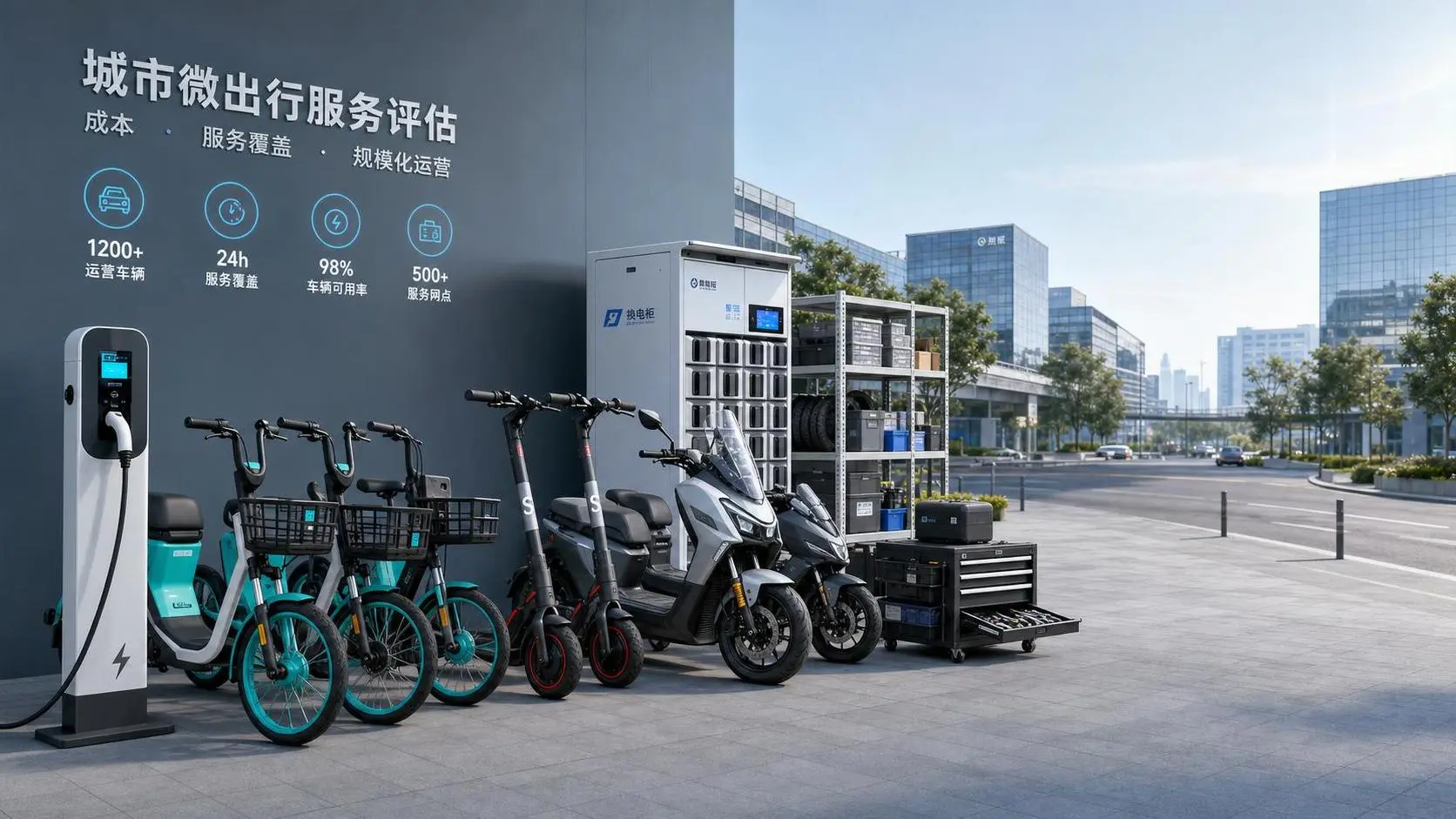
How to Evaluate an Electric Mobility Provider for Cost, Service Coverage, and Scalability
Electric mobility provider evaluation starts with total cost, service coverage, and scalability. Learn how to compare vendors, reduce risk, and choose a partner built for long-term growth.

Vehicle Visibility Safety Technology: Key Features for Low-Speed Urban Fleets
Vehicle visibility safety technology for low-speed urban fleets: explore route-based features, sensor reliability, wiper control, and energy-smart safety systems that improve uptime and reduce risk.

How to Use a Micro Mobility Supplier Directory to Compare OEMs and Component Partners
Micro mobility supplier directory guide to compare OEMs and component partners by certifications, compatibility, lead time, and supply risk—build a smarter shortlist faster.
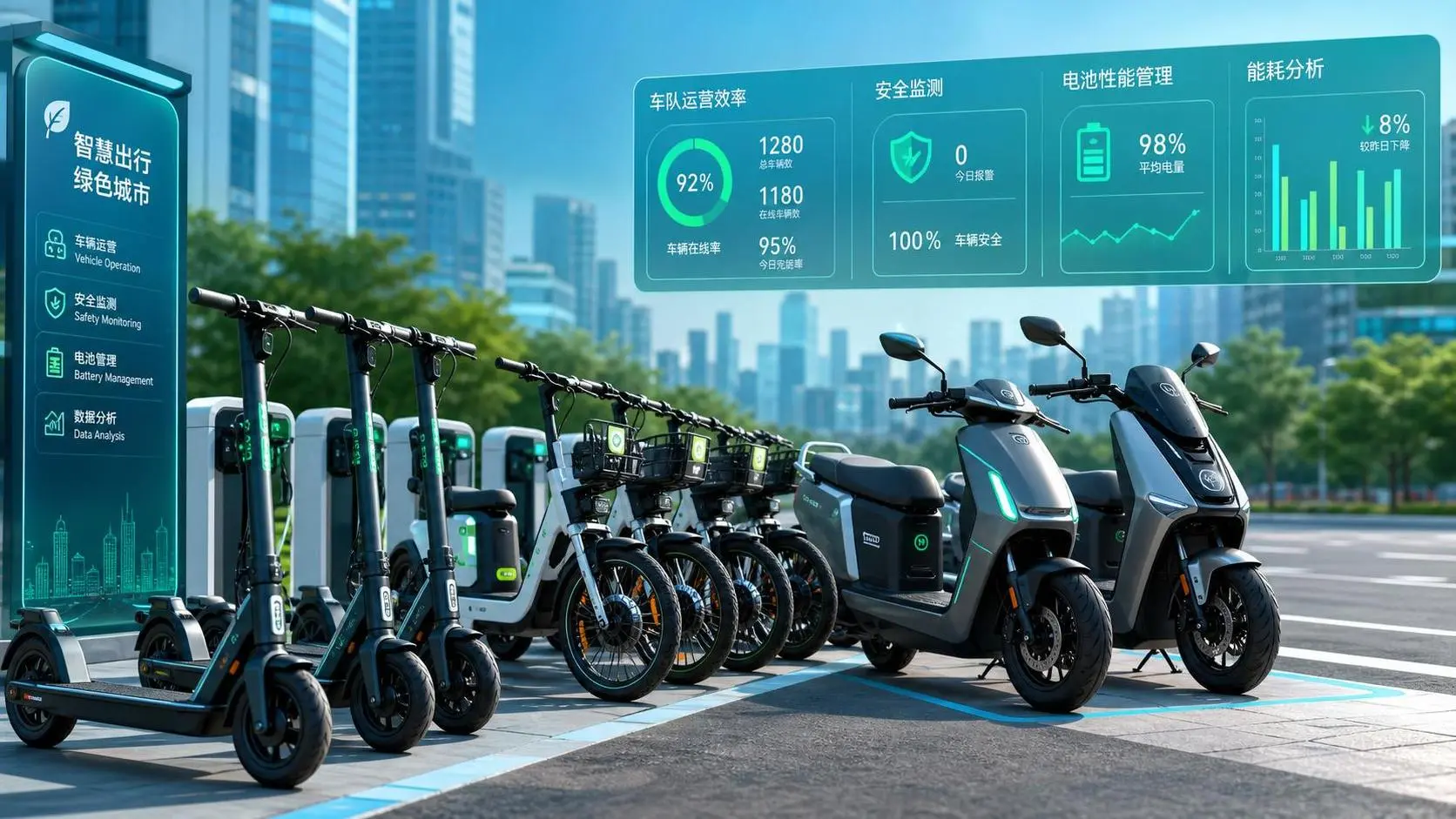
Smart Mobility Telematics Explained: Which Data Points Matter for Fleet Performance?
Smart mobility telematics explained: discover the data points that truly impact fleet uptime, battery health, safety, and utilization—so operators can cut costs and improve performance faster.