
Urban Transit Fellow
Weekly Insights
Stay ahead with our curated technology reports delivered every Monday.
Vehicle thermal management in off-road scooters: performance trade-offs above 45°C ambient





Why Thermal Constraints Demand Systematic Evaluation Above 45°C
Ambient temperatures exceeding 45°C are no longer outliers—they define operational baselines across the Middle East, North Africa, South Asia, and expanding urban corridors in Latin America. In off-road scooters, where sustained throttle application, aggressive regenerative braking, and frequent stop-start cycles compound heat generation, vehicle thermal management becomes the decisive factor separating functional operation from rapid degradation.
Unlike urban shared scooters operating under ISO 16750-3 profiles, off-road variants face unstructured thermal loads: gravel-induced chassis vibration disrupting thermal interface integrity, dust-clogged heatsinks reducing effective surface area by up to 37%, and ambient humidity below 15% accelerating localized hot-spot formation on MOSFETs and battery cell tabs. These conditions expose latent compromises baked into standard thermal architectures—compromises that only manifest under real-world desert-cycle validation (SAE J2380-compliant 96-hour thermal soak + dynamic load cycling).
Core Thermal Trade-off Checklist for Off-Road Scooter Engineers
- Measure motor winding temperature rise at 85% continuous torque output—not just peak rating—to identify insulation system saturation thresholds before irreversible enamel breakdown occurs.
- Validate BMS cell-level voltage sampling latency against thermal gradient: a 5°C delta between top and bottom cells must not induce >12ms delay in overvoltage cutoff response during fast charging above 40°C ambient.
- Quantify regenerative braking energy recapture loss per 10°C ambient increase above 35°C—empirical data shows average 9.2% drop in usable kWh/km due to IGBT derating and DC-link capacitor ESR rise.
- Test coolant flow rate vs. pump energy draw trade-off: increasing flow by 40% yields only 11% lower motor junction temp but consumes 28% more battery energy—directly eroding range-per-kWh efficiency.
- Evaluate heatsink mass penalty against structural damping: aluminum extrusions >1.8kg add torsional rigidity but reduce suspension responsiveness on loose terrain—requiring recalibration of suspension kinematics and damping curves.
- Verify thermal sensor placement fidelity: thermistors mounted on module casings underestimate actual silicon junction temperature by 18–23°C under pulsed load; direct die-attach sensors remain essential for accurate closed-loop control.
- Assess phase-change material (PCM) integration viability: paraffin-based PCM pads improve transient thermal buffering but degrade after 120 thermal cycles above 60°C—invalidating long-term warranty assumptions without accelerated aging validation.
Scenario-Specific Thermal Behavior Patterns
In high-altitude desert operations (e.g., Atacama, 3,000m elevation), reduced air density cuts convective cooling efficiency by 31% versus sea-level testing—even with identical heatsink geometry. This necessitates active airflow augmentation via ducted fans, not passive fin redesign alone.
During extended downhill descents with full regen engagement, battery pack inlet air temperature can exceed ambient by 22°C due to motor-to-inverter-to-battery thermal cascade—rendering traditional “ambient-referenced” thermal shutdown logic dangerously inaccurate. Real-time thermal path modeling is mandatory.
Commonly Overlooked Risk Vectors
Thermal interface material (TIM) performance degrades non-linearly above 65°C: silicone-based greases lose 62% of thermal conductivity after 500 hours at 70°C—yet most OEMs validate TIM only at 55°C for 1,000 hours. This creates false confidence in long-term reliability.
Battery cell tab weld resistance increases exponentially above 50°C ambient—causing localized Joule heating that accelerates SEI growth even during rest periods. Standard BMS state-of-charge algorithms fail to detect this parasitic degradation pathway.
Motor hall-effect sensor drift exceeds ±3.5° electrical angle error at 95°C junction temp—inducing torque ripple >8% and compromising traction control stability on loose surfaces. Sensor redundancy or active compensation is non-negotiable.
Actionable Implementation Guidance
Integrate thermal boundary conditions into early-stage component selection—not as a late-stage verification step. Require vendors to supply thermal resistance (Rth) curves across −20°C to 105°C—not just nominal 25°C values.
Deploy dual-mode thermal logging: high-frequency (100Hz) for transient events (e.g., launch, hard regen), and low-frequency (1Hz) for long-duration soak analysis. Merge with GPS and IMU data to correlate thermal behavior with terrain profile and rider inputs.
Conclusion & Next Steps
Vehicle thermal management in off-road scooters above 45°C ambient is not a subsystem optimization—it is a system-level constraint governing powertrain longevity, safety-critical response fidelity, and real-world energy economics. The trade-offs are neither linear nor independent; they cascade across mechanical, electrical, and electrochemical domains.
Begin by executing the seven-point checklist against your current validation protocol. Cross-reference each item with empirical desert-cycle test data—not lab chamber results. Then, re-evaluate thermal interface specifications, sensor placement physics, and BMS control loop architecture using the scenario-specific patterns outlined above. Finally, mandate vendor-supplied accelerated thermal aging reports covering all critical interfaces—validated per ASTM E1640, not internal standards.
Thermal resilience is no longer a differentiator. It is the baseline requirement for market access in 42% of global micro-mobility growth corridors. Prioritize it accordingly.
Related News

Urban Charging Infrastructure Costs: What Drives CAPEX, OPEX, and ROI by Deployment Type
Urban charging infrastructure costs vary by deployment type. Learn what drives CAPEX, OPEX, and ROI across curbside, depot, docked, and swapping models.
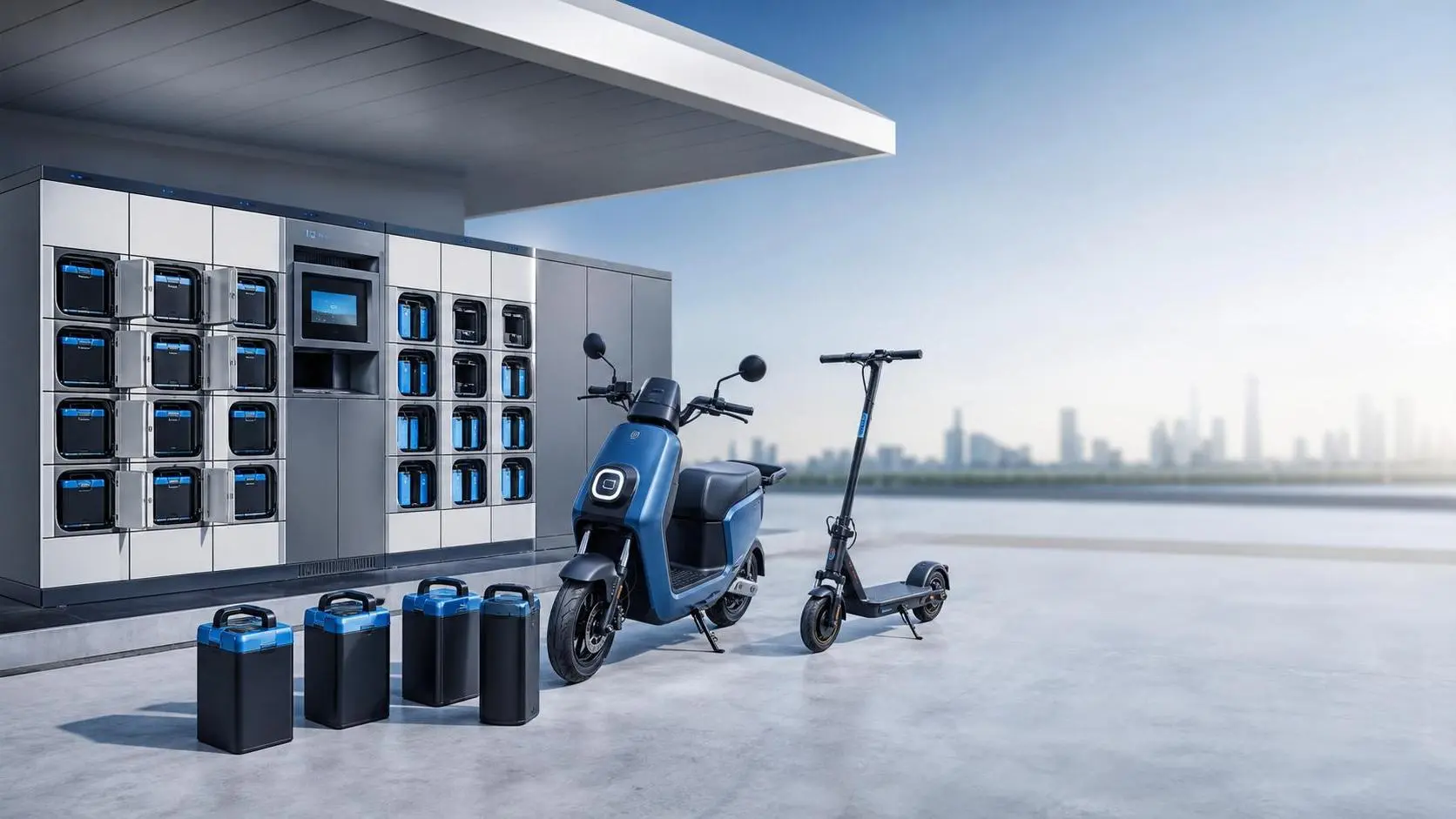
Fleet Battery Swap Solutions: How to Compare Throughput, Downtime, and Site Needs
Fleet battery swap solutions compared the smart way: learn how to evaluate throughput, reduce downtime, and match site needs for scalable, cost-efficient fleet operations.

Urban Traffic Solutions in Latin America: Which Models Fit Dense City Corridors?
Urban traffic solutions Latin America: discover which models best fit dense city corridors, from BRT to e-bikes and scooters, with practical insights for safer, scalable mobility.

Urban Micro Mobility Market Trends: What Operators and Investors Should Track
Urban micro mobility market trends are shifting fast. Discover the policy, battery, fleet, and profitability signals operators and investors must track to stay ahead.

Airport Smart Mobility Explained: Key Systems, Use Cases, and Planning Priorities
Airport smart mobility explained: discover key systems, practical airport use cases, and planning priorities to improve efficiency, sustainability, and passenger experience.
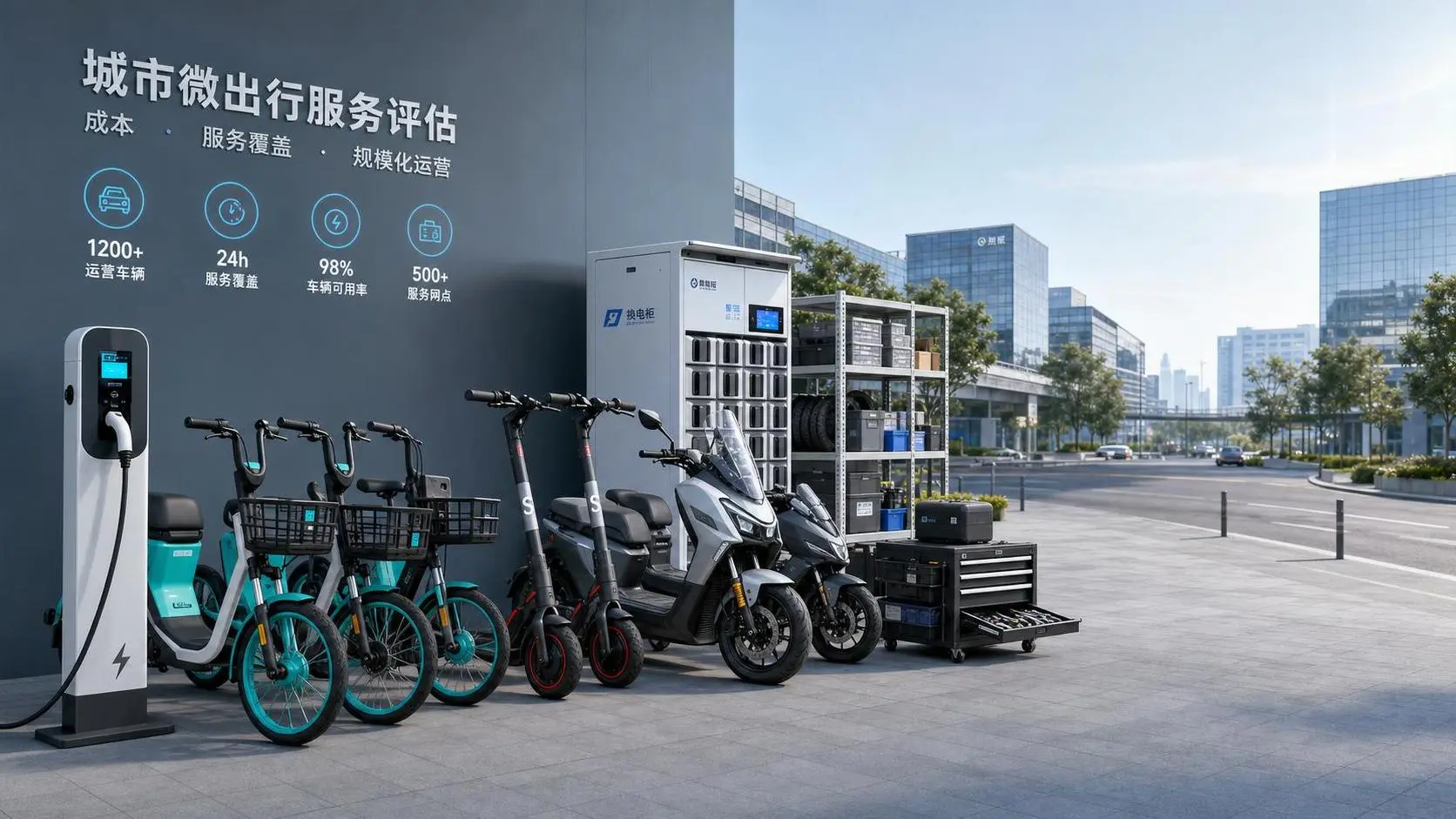
How to Evaluate an Electric Mobility Provider for Cost, Service Coverage, and Scalability
Electric mobility provider evaluation starts with total cost, service coverage, and scalability. Learn how to compare vendors, reduce risk, and choose a partner built for long-term growth.

Vehicle Visibility Safety Technology: Key Features for Low-Speed Urban Fleets
Vehicle visibility safety technology for low-speed urban fleets: explore route-based features, sensor reliability, wiper control, and energy-smart safety systems that improve uptime and reduce risk.

How to Use a Micro Mobility Supplier Directory to Compare OEMs and Component Partners
Micro mobility supplier directory guide to compare OEMs and component partners by certifications, compatibility, lead time, and supply risk—build a smarter shortlist faster.

Smart Mobility Telematics Explained: Which Data Points Matter for Fleet Performance?
Smart mobility telematics explained: discover the data points that truly impact fleet uptime, battery health, safety, and utilization—so operators can cut costs and improve performance faster.