
Related News
- 00
0000-00
Vehicle Visibility Safety for Motorcycles: Common Blind-Spot Risks and Fixes - 00
0000-00
How to Use a Smart Mobility Supplier Directory to Compare OEM Partners - 00
0000-00
Bicycle Supplier Reference Guide: How to Compare OEM Capacity, QC, and Lead Times - 00
0000-00
What Makes a Last-Mile Revolution Provider Worth Evaluating for Urban Delivery Projects? - 00
0000-00
E Scooter Resort Applications: Best Use Cases for Guest Mobility and Staff Transport
Ms. Elena Rodriguez
Weekly Insights
Stay ahead with our curated technology reports delivered every Monday.
How to Use a Smart Mobility Supplier Directory to Compare OEM Partners





Why does a smart mobility supplier directory matter before you compare quotes?
Price sheets rarely tell the full story in micro-mobility sourcing.
An OEM for e-bikes, smart e-scooters, or high-speed e-motorcycles may look competitive on paper, yet fail on compliance, battery integration, or delivery stability.
That is where a smart mobility supplier directory becomes useful.
Instead of collecting fragmented supplier data from trade shows, search engines, and informal referrals, the directory creates a structured comparison view.
It helps verify who builds complete vehicles, who specializes in precision bicycle components, and who can support regulated export programs.
In practical terms, this reduces the time spent filtering weak candidates.
It also improves the quality of supplier shortlists, especially when the sourcing scope crosses batteries, drivetrains, IoT modules, brake systems, and smart safety parts.
For the urban micro-mobility sector, supplier evaluation is rarely just about assembly.
It often involves thermal management, wireless shifting reliability, brushless motor performance, software compatibility, and market-specific certification readiness.
That broader view aligns with how UMMS tracks the last-mile revolution.
The value is not only in listing companies, but in connecting technology depth, policy shifts, and commercial feasibility into one sourcing picture.
What should you actually compare inside a supplier directory?
A useful directory is not just a contact database.
The better approach is to compare suppliers across a fixed decision grid.
That keeps early-stage sourcing from becoming a price-only exercise.
The following areas usually matter most when screening OEM partners in micro-mobility.
A smart mobility supplier directory becomes more valuable when it helps compare these points side by side.
Without that structure, sourcing teams often overrate attractive unit pricing and underrate risk hidden in tooling, testing, or integration gaps.
When does a directory give more insight than direct supplier outreach?
Direct outreach is still necessary, but it works better later in the process.
At the start, a smart mobility supplier directory helps establish market context.
That matters most in three situations.
- When entering a new product class, such as shifting from e-bike sourcing into high-speed e-motorcycles.
- When comparing suppliers across regions with different certification, subsidy, or import conditions.
- When a program includes both vehicle assembly and specialist parts, such as derailleurs, smart controllers, or wiper-related safety systems.
In those cases, raw supplier messaging tends to be inconsistent.
Some suppliers emphasize capacity.
Others highlight patents, test labs, or export experience.
The challenge is that each company frames its strengths differently.
A directory gives a neutral starting point, especially when paired with intelligence on urban mobility regulation, technology shifts, and category demand.
UMMS is relevant here because it follows both product mechanics and strategic signals.
That includes battery management logic, wireless shifting evolution, scooter right-of-way regulation, and commercial demand linked to low-carbon transport policy.
A supplier directory gains real decision value when it is informed by that wider market intelligence.
How do you tell whether an OEM partner is strong, or simply well presented?
This is one of the most common sourcing mistakes.
A polished catalog can hide weak process control.
A lower-profile supplier can sometimes outperform on engineering discipline.
A smart mobility supplier directory should therefore be used as a screening tool, not as final proof.
More reliable judgment usually comes from a short list of verification questions.
Signals worth testing early
- Can the OEM explain failure modes, not just product features?
- Do battery, motor, and controller teams coordinate under one validation process?
- Is there evidence of market-specific design adjustments for Europe, North America, or shared fleet use?
- Can the supplier discuss component substitutions without weakening compliance or performance?
- How quickly can it return engineering clarifications, drawings, or test records?
In actual sourcing work, technical responsiveness often predicts execution quality better than a low opening quote.
This is especially true for smart e-scooters and connected two-wheelers, where software and hardware issues overlap.
For precision bicycle systems, the same logic applies to tolerance control, shifting reliability, and anti-interference performance.
The directory helps narrow the field.
The final distinction comes from how the OEM answers pressure-test questions.
What cost and lead-time issues are easy to miss during comparison?
The visible quote is only part of the sourcing cost.
A smart mobility supplier directory can help identify where hidden cost usually appears.
The pattern is common across e-bikes, scooters, and e-motorcycles.
More often than expected, the cheapest quote becomes the most expensive program.
That happens when rework, compliance gaps, and shipping delays start compounding.
Using a smart mobility supplier directory early helps surface those pressure points before negotiation hardens around the wrong baseline.
How should you turn directory research into a final supplier shortlist?
The strongest sourcing process moves from broad scanning to narrow validation.
A practical sequence keeps the workload manageable and the comparisons fair.
- Define the non-negotiables first, including product class, target market, compliance scope, annual volume, and key components.
- Use the smart mobility supplier directory to build a long list based on actual capability, not just visibility.
- Score each supplier on manufacturing depth, certification fit, engineering response, and supply continuity.
- Request clarification on hidden-cost areas before asking for final quotes.
- Shortlist only those suppliers that show both technical credibility and commercial discipline.
This process works particularly well in fast-evolving mobility categories.
That includes connected scooters, export e-bikes, battery-swapping motorcycles, and high-precision drivetrain systems.
The role of intelligence platforms such as UMMS is useful at this stage.
They help interpret technical signals and market shifts that a static supplier list cannot explain on its own.
A good directory tells you who is present.
A better one helps explain who is actually ready for the program you need to place.
Used that way, a smart mobility supplier directory becomes less of a catalog and more of a decision framework.
The next step is simple.
Map your technical requirements, target market rules, and cost assumptions before reaching out.
Then compare OEM partners against the same checklist, so the final decision reflects execution risk as much as quoted price.
- urban micro-mobility
- e-bikes
- smart e-scooters
- high-speed e-motorcycles
- last-mile revolution
- battery management
- thermal management
- precision drivetrain
- IoT modules
- smart mobility
- technical credibility
- bicycle components
- micro-mobility
- smart mobility supplier
- wireless shifting reliability
- wireless shifting
- precision bicycle components
- precision drivetrain systems
- smart mobility supplier directory
Related News

Smart E-Scooter Systems With GPS for Shared Fleets: Features That Matter Most
Smart e-scooter systems with GPS help shared fleets improve compliance, recovery, uptime, and battery planning. See which features matter most before you scale.

Vehicle Visibility Safety for Motorcycles: Common Blind-Spot Risks and Fixes
Vehicle visibility safety for motorcycles explained: discover common blind-spot risks in city, wet, cargo, and high-speed riding, plus practical fixes that improve safety and fleet performance.
Flat Wiper Blades Europe: What to Check Before Choosing OEM or Aftermarket Options
Flat wiper blades Europe buyers should look beyond price. Learn how to compare OEM and aftermarket options by fit, compliance, durability, and supply consistency.
Automatic Smart Wiper Systems Explained: Sensors, Control Logic, and Failure Points
Automatic smart wiper systems explained clearly: explore sensors, control logic, key failure points, and what really determines safer, more reliable windshield visibility.

Carbon Neutrality for Fleets: How to Measure Emissions and Prioritize Upgrades
Carbon neutrality for fleets starts with accurate emissions measurement. Learn how to baseline data, uncover hidden energy losses, and prioritize upgrades that cut costs and carbon faster.

Smart E-Scooter Systems in North America: What Fleet Buyers Should Evaluate First
Smart e-scooter systems North America buyers should first assess connectivity, battery strategy, compliance, durability, and support to reduce risk and build scalable fleets.

E-Bike Application Guide: Which Frame, Motor, and Battery Setup Fits Your Use Case?
E-bike application guide for choosing the right frame, motor, and battery by commute, hills, cargo, or mixed terrain. Find the setup that saves cost, weight, and hassle.
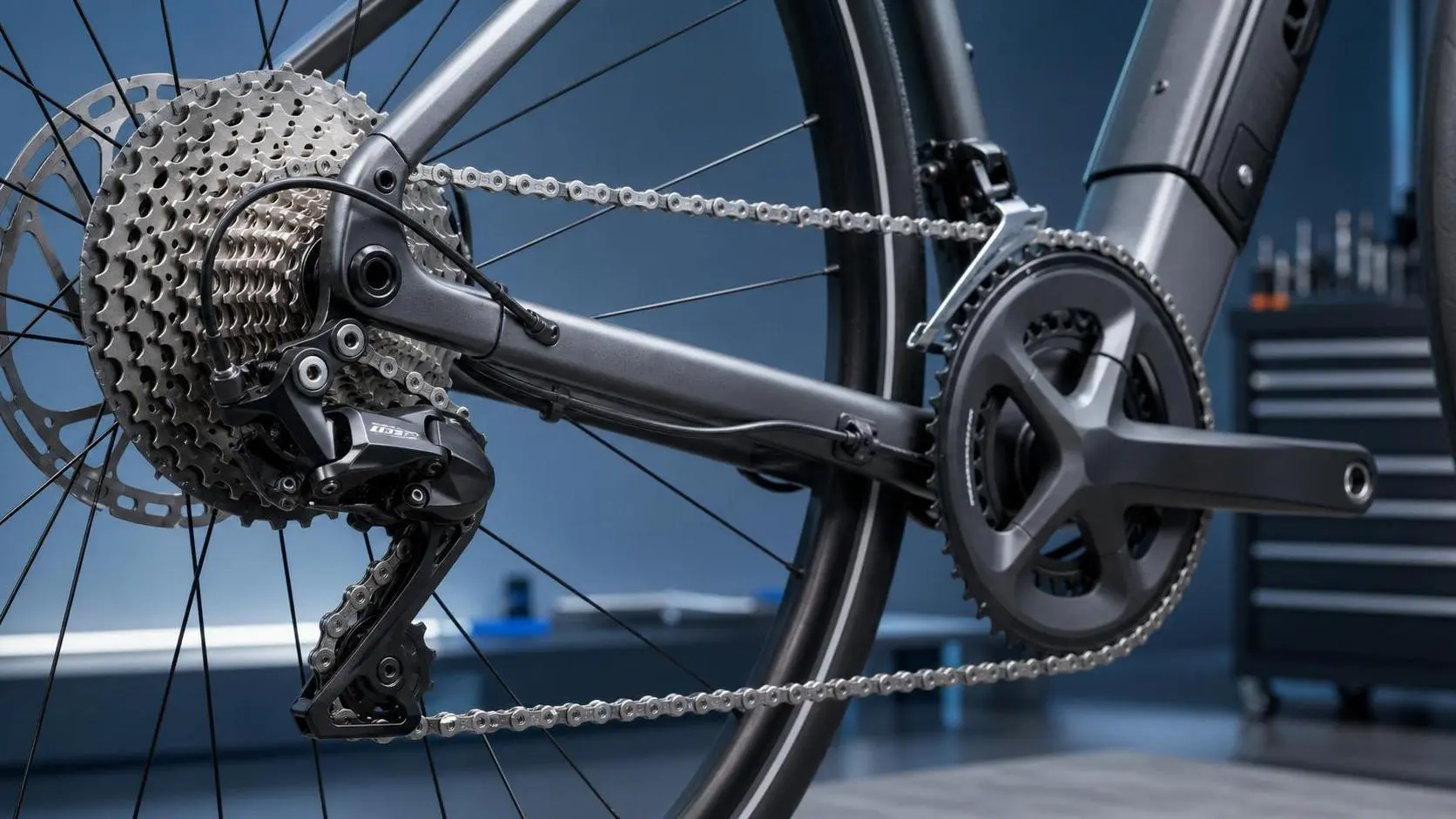
Precision Drivetrain Tuning Explained: Key Adjustments for Smoother Shifting
Precision drivetrain tuning explained: learn the key adjustments behind smoother shifting, fewer drivetrain issues, and better e-bike and urban bike performance.

Bicycle Supplier Reference Guide: How to Compare OEM Capacity, QC, and Lead Times
Bicycle supplier reference guide for sourcing teams: compare OEM capacity, QC systems, and lead-time reliability to reduce risk, improve vendor selection, and make smarter purchasing decisions.