
Related News
- 00
0000-00
IoT Scooter Tracking System Explained: GPS Accuracy, Battery Use, and Data Integration - 00
0000-00
Urban Transport Scooters for Campuses: What to Consider for Safety, Charging, and Fleet Size - 00
0000-00
How to Evaluate an E Scooter Sourcing Factory for OEM Quality and Lead Time - 00
0000-00
Utility Maximization for Shared Fleets: Which Data Inputs Matter Most? - 00
0000-00
Smart E-Scooter Systems With GPS for Shared Fleets: Features That Matter Most
Urban Transit Fellow
Weekly Insights
Stay ahead with our curated technology reports delivered every Monday.
IoT Scooter Tracking System Explained: GPS Accuracy, Battery Use, and Data Integration





An IoT scooter tracking system has moved far beyond basic map visibility. In urban micro-mobility, it now acts as an operating layer that connects vehicle location, battery status, rider behavior, and service workflows.
That shift matters because shared scooters and connected personal vehicles operate in dense, unpredictable city conditions. A tracking stack that looks acceptable in a product demo can fail under weak signals, harsh weather, parking clutter, or patchy mobile coverage.
For organizations following the last-mile transition, including the broader intelligence lens promoted by UMMS, scooter tracking is no isolated feature. It sits inside a larger micro-mobility system where energy efficiency, hardware reliability, and data interoperability affect commercial performance.
Why tracking has become a strategic system layer
A modern IoT scooter tracking system supports several decisions at once. It helps locate vehicles, reduce loss, guide rebalancing, confirm parking compliance, and improve maintenance timing.
In fleet settings, location data also feeds dispatch logic, battery swap planning, and incident review. For connected two-wheelers, the value comes from combining telematics with operational context, not from GPS coordinates alone.
This is one reason technical evaluation has become more demanding. The useful question is no longer whether tracking exists, but whether the full system stays trustworthy at scale.
What an IoT scooter tracking system really includes
At minimum, the stack includes a GNSS receiver, a communication module, a power strategy, firmware, and a cloud endpoint. Many deployments also add inertial sensors, geofencing logic, and event-based reporting.
The onboard device collects position, speed, movement state, battery signals, and sometimes tamper events. That data is then transmitted through cellular or LPWAN channels to a platform used for monitoring and downstream analysis.
The practical distinction is important. An IoT scooter tracking system is not only hardware on the vehicle. It is the interaction between edge electronics, network behavior, and software integration rules.
Core layers to evaluate
- Positioning layer: GNSS quality, cold-start time, urban canyon performance, and fallback behavior.
- Connectivity layer: network availability, packet loss, latency, and roaming stability.
- Power layer: current draw in active, idle, and sleep states.
- Data layer: payload structure, API quality, timestamp integrity, and integration readiness.
GPS accuracy is more nuanced than a single meter value
GPS accuracy is often presented as a headline number, but city use introduces several distortions. Tall buildings, covered parking, reflective surfaces, and dense curbside traffic all affect positional confidence.
A reliable IoT scooter tracking system should therefore be judged by scenario. Open-sky accuracy may look strong, while the same device drifts noticeably near stations, under trees, or beside glass-heavy buildings.
What matters in operations is not just absolute error. It is whether the reported location is good enough for vehicle recovery, parking validation, zone enforcement, and route reconstruction.
Key sources of location error
- Multipath interference from buildings and metal surfaces.
- Weak antenna placement inside compact scooter frames.
- Delayed fixes after sleep mode or underground storage.
- Clock drift or poor timestamp alignment in transmitted records.
In practice, assisted GNSS, sensor fusion, and map-aware filtering can improve stability. However, aggressive smoothing may hide true movement edges, which can become a problem during incident investigation.
Battery use is a design tradeoff, not a secondary metric
Battery consumption shapes the real economics of connected scooters. Frequent reporting improves visibility, yet every position fix, network wake-up, and cloud handshake consumes energy.
For a shared fleet, this affects service intervals and operational cost. For privately owned vehicles, it influences user satisfaction and the perceived quality of the connected product.
An effective IoT scooter tracking system balances reporting precision with intelligent power states. It should not treat all moments equally. A parked scooter does not need the same telemetry rate as a moving scooter.
Where energy is usually spent
More mature designs use motion-triggered updates, variable upload intervals, and scheduled health reporting. Those methods reduce unnecessary traffic without losing the events that matter.
Connectivity stability often decides field performance
Even with good positioning hardware, poor connectivity can break the user-facing result. A scooter may know where it is, but if data arrives late or not at all, dispatch and compliance systems still fail.
This is especially relevant in mixed urban environments. Underground parking, transport hubs, waterfront areas, and city edges produce very different signal conditions within a single operating zone.
An IoT scooter tracking system should therefore be reviewed for network behavior under weak coverage. Retry storms, duplicate messages, or delayed uploads can quietly damage platform accuracy.
Useful field checks
- Compare reported timestamps with actual event time.
- Test roaming behavior across carrier boundaries.
- Review packet ordering after temporary network loss.
- Measure how quickly the device reconnects after deep sleep.
Data integration is where tracking becomes business infrastructure
Location data gains value when it connects to operational systems. This can include fleet management dashboards, maintenance software, battery management tools, insurance workflows, and city reporting interfaces.
Within the wider UMMS perspective, that integration issue mirrors a larger trend across e-bikes, smart scooters, and electric motorcycles. Connected mobility products are increasingly judged by how well their subsystems exchange usable, consistent information.
A strong IoT scooter tracking system should provide structured APIs, clear event schemas, versioned documentation, and durable identifiers for vehicles, batteries, and trips. Without that discipline, data becomes difficult to trust across teams.
Integration questions that deserve attention
- Are coordinates, timestamps, and status codes standardized across endpoints?
- Can the platform separate live telemetry from corrected historical data?
- Does battery information align with the main vehicle control system?
- Are geofence events exposed in a way that downstream tools can automate?
Typical use cases show where value and risk really sit
Vehicle recovery is the most visible use case, but it is not the only one. Operators also depend on tracking for curb compliance, rebalancing, demand analysis, and preventive service planning.
For example, persistent low-speed drift in one district may point to signal reflection. Repeated battery anomalies tied to route and temperature may reveal a thermal management issue rather than a tracking problem.
This cross-reading is increasingly important as micro-mobility systems become more connected. Tracking data often acts as the first clue that a wider hardware or software issue exists.
A practical evaluation framework
A useful review process combines lab checks with field validation. Bench measurements can verify current draw and message behavior, but street conditions reveal the interactions that specifications usually hide.
Several factors deserve side-by-side scoring rather than isolated review:
- Accuracy under open sky, dense urban canyons, and covered parking.
- Battery impact during active rides, idle parking, and long storage.
- Transmission reliability during poor signal and roaming conditions.
- API consistency, event traceability, and historical data usability.
- Firmware update safety and diagnostics visibility.
The best decisions usually come from comparing these factors against actual operating goals. A city-centered shared fleet may prioritize parking precision, while a premium connected scooter may value battery efficiency and long-term service insight more heavily.
What to examine next
An IoT scooter tracking system should be treated as part of the mobility architecture, not an accessory module. GPS accuracy, battery use, and data integration only make sense when viewed together.
A sensible next step is to map operating scenarios before comparing vendors or internal designs. Define the environments, reporting needs, power limits, and integration targets that the system must handle.
From there, test with real routes, real network conditions, and real platform exchanges. That approach creates a stronger basis for judging whether an IoT scooter tracking system can support scalable, low-carbon urban mobility with the reliability the market now expects.
Related News
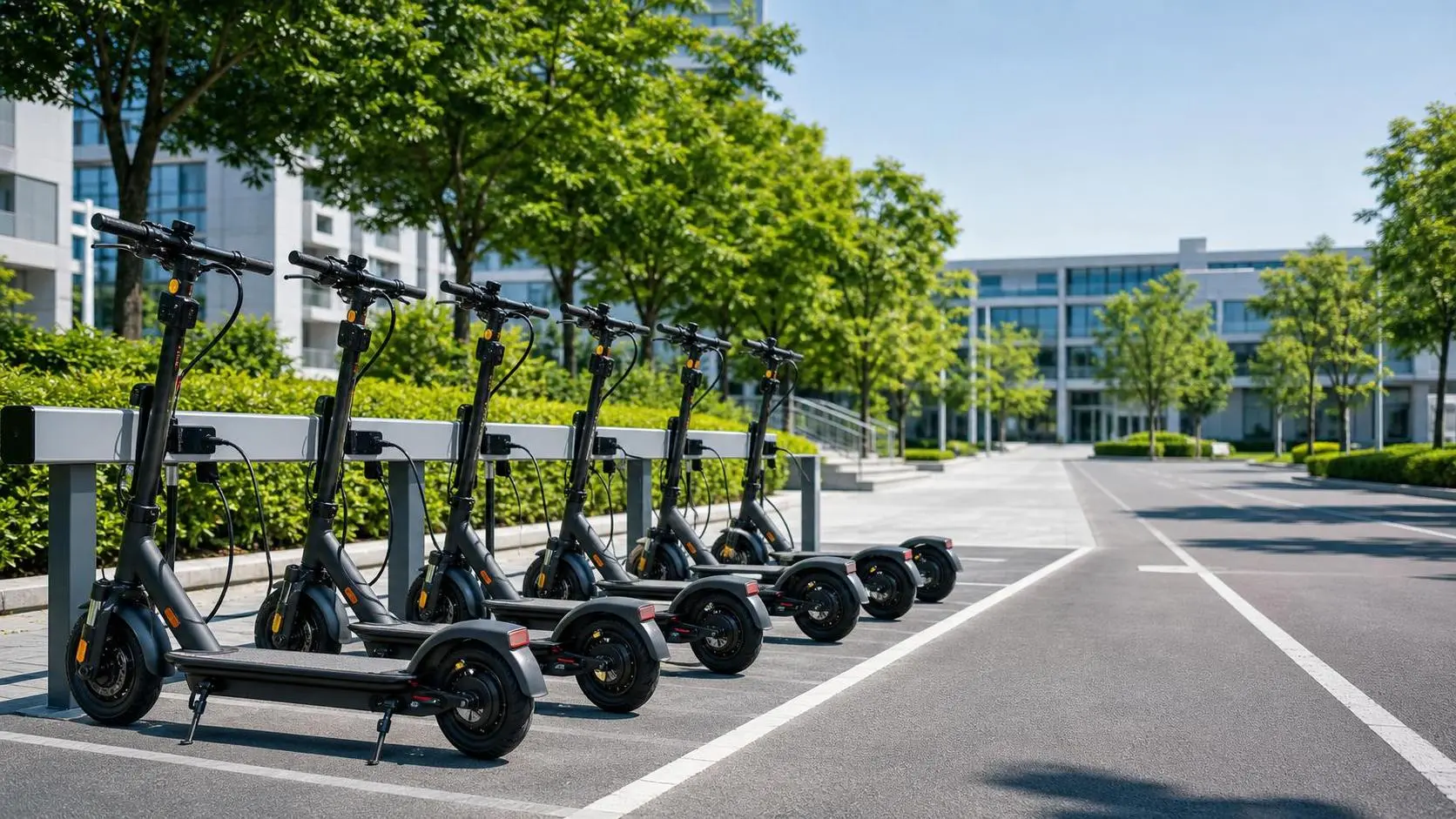
Urban Transport Scooters for Campuses: What to Consider for Safety, Charging, and Fleet Size
Urban transport scooters for campuses require more than the right vehicle. Learn how to improve safety, plan charging, and size fleets for reliable, scalable campus mobility.
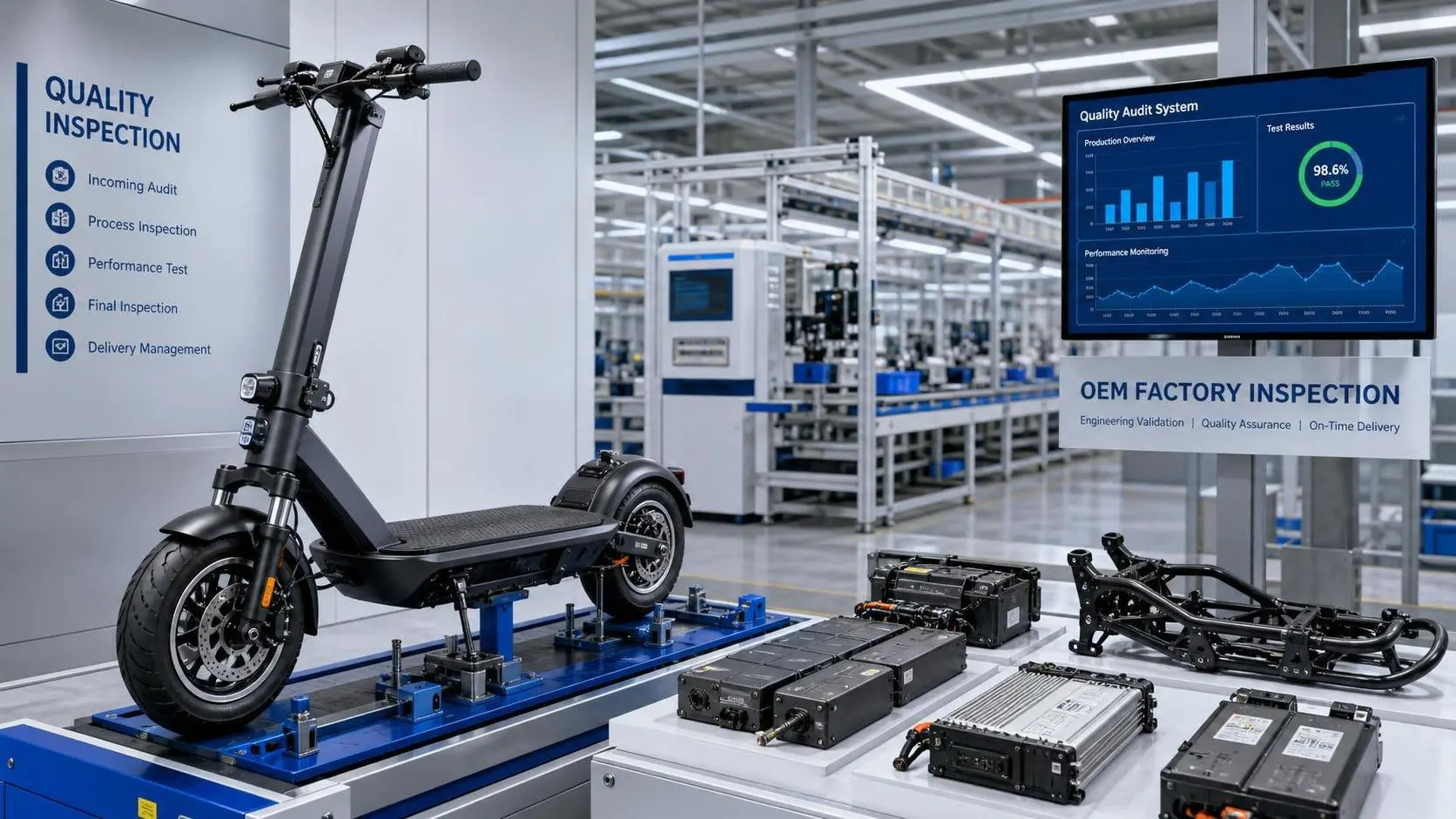
How to Evaluate an E Scooter Sourcing Factory for OEM Quality and Lead Time
e scooter sourcing factory evaluation guide for OEM buyers: learn how to verify quality systems, engineering strength, compliance, and lead time reliability before placing volume orders.

Electric Mountain Bike Buying Guide: Motor Torque, Battery Range, and Trail Fit
Electric mountain bike buying guide covering motor torque, battery range, and trail fit. Compare key specs, avoid costly mistakes, and choose the right e-MTB for your riding style.

Urban Transport Planning Basics: How Cities Match Mobility Options to Trip Demand
Urban transport planning explained: learn how cities match buses, rail, e-bikes, and scooters to real trip demand, cut congestion, and improve last-mile mobility.
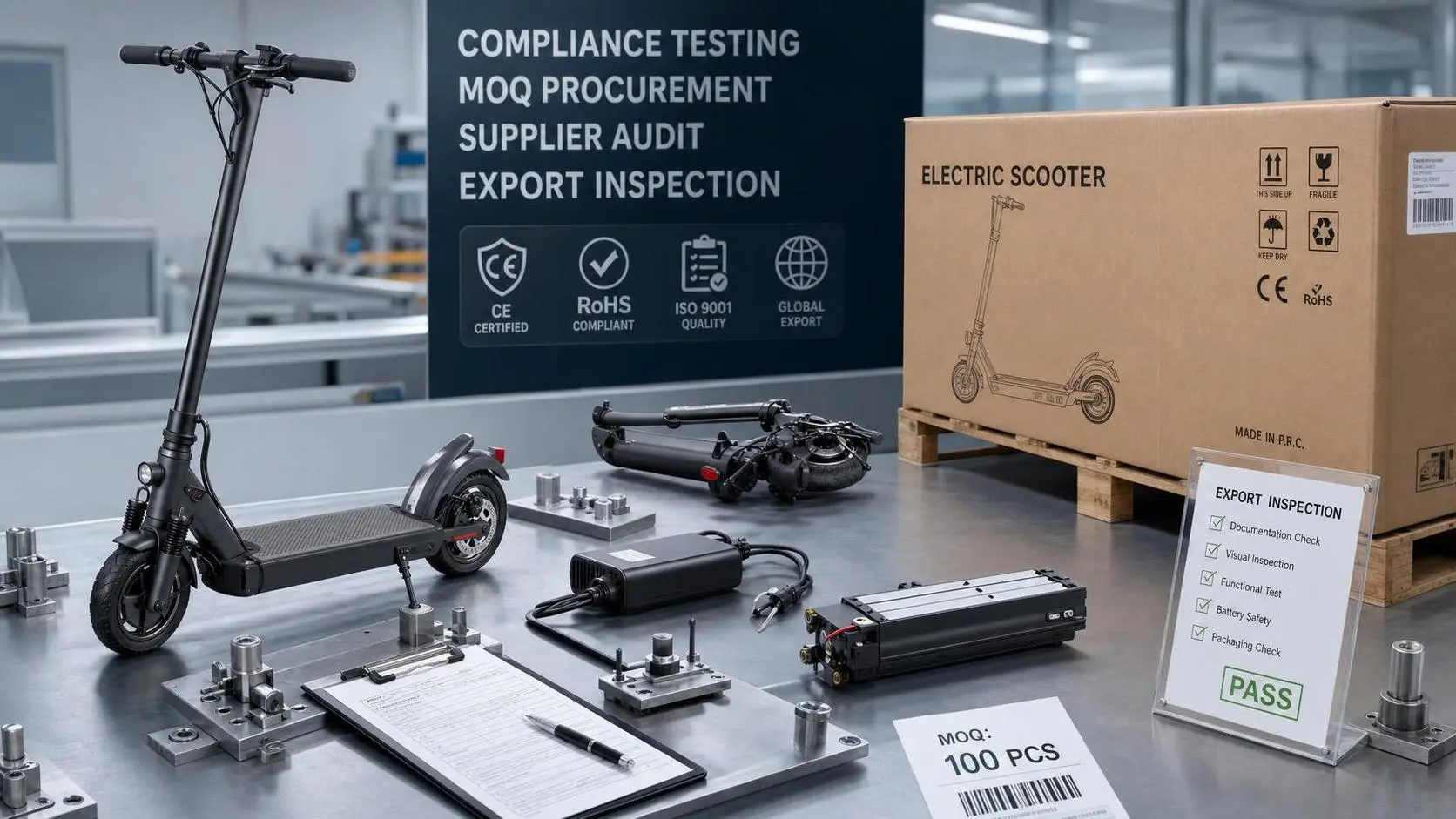
Private Label Electric Scooters in Europe: Compliance, MOQ, and Supplier Checks
Private label electric scooters Europe: learn compliance checks, realistic MOQ structures, and supplier screening tips to reduce risk, protect margins, and launch with confidence.
How to Evaluate Decarbonization Technology Suppliers for Industrial Projects
Decarbonization technology suppliers can make or break industrial projects. Learn how to assess technical fit, emissions credibility, delivery risk, and lifecycle value.
Brushless Motor for Scooters: How to Compare Power, Torque, and Efficiency
Brushless motor for scooters comparison made simple: learn how to evaluate power, torque, and efficiency for better range, stronger climbs, and smarter urban performance.
Utility Maximization for Shared Fleets: Which Data Inputs Matter Most?
Utility maximization for shared fleets starts with the right data. Learn which inputs improve allocation, charging, maintenance, and margins in shared mobility.

How to Choose OEM Windshield Wipers for Private Label Auto Parts Programs
OEM windshield wipers buying guide for private label auto parts: compare fitment, materials, testing, supplier reliability, and hidden cost risks to build a safer, higher-margin program.