
Related News
- 00
0000-00
How to Verify Micro Mobility Technical Credibility Before Supplier Approval - 00
0000-00
Urban Electric Vehicles Fleet Planning: Key Cost and Maintenance Factors to Compare - 00
0000-00
International Voice Building in Southeast Asia: What Brands Must Localize to Be Found - 00
0000-00
Urban Charging Infrastructure Costs: What Drives CAPEX, OPEX, and ROI by Deployment Type - 00
0000-00
Urban Traffic Solutions in Latin America: Which Models Fit Dense City Corridors?
Ms. Elena Rodriguez
Weekly Insights
Stay ahead with our curated technology reports delivered every Monday.
Urban Electric Vehicles Fleet Planning: Key Cost and Maintenance Factors to Compare





Urban Electric Vehicles Fleet Planning: Key Cost and Maintenance Factors to Compare
For business leaders evaluating an urban electric vehicles fleet, success depends on more than purchase price alone.
Battery life, charging access, service intervals, uptime, and residual value all shape long-term returns.
In practice, the best fleet decision usually comes from comparing total operating economics, not headline unit cost.
This matters even more in dense cities, where utilization is high and every hour of downtime affects revenue, service levels, and rider trust.
Why Purchase Price Is Only the Starting Point
Many urban electric vehicles fleet projects begin with a simple comparison of unit prices.
That approach looks efficient, but it often hides the costs that accumulate over three to five years.
A lower-cost e-bike or smart e-scooter may require earlier battery replacement, more brake work, or more frequent controller failures.
By contrast, a higher-spec model can lower total cost of ownership through better durability, energy efficiency, and easier maintenance access.
For an urban electric vehicles fleet, the better question is straightforward: what will each vehicle cost per kilometer, per month, and per available operating hour?
Once procurement teams shift to that lens, vendor comparisons become far more useful.
The Core Cost Buckets to Compare
A reliable urban electric vehicles fleet budget should separate direct acquisition costs from recurring operating costs.
- Vehicle purchase price, including battery packs, chargers, telematics, and safety accessories.
- Charging infrastructure, electrical upgrades, software integration, and site preparation.
- Routine maintenance, including tires, brake pads, chains, bearings, and firmware updates.
- Unexpected repairs, especially battery faults, motor issues, and controller replacement.
- Labor costs for inspections, diagnostics, spare parts handling, and field service.
- Downtime costs tied to missed trips, delayed deliveries, or lower asset utilization.
- End-of-life value, second-life battery options, and recycling obligations.
This structure makes it easier to compare vendors that look similar on paper but perform very differently in service.
Battery Lifecycle: The Biggest Variable in Fleet Economics
Battery performance is usually the single most important cost factor in an urban electric vehicles fleet.
A battery is not just an energy source. It is a wear component, a safety issue, and a utilization limiter.
When comparing models, look beyond nominal capacity and ask for cycle life under real operating conditions.
Urban stop-and-go use, steep gradients, weather swings, and fast charging can all accelerate degradation.
A practical battery comparison should include these points:
- Usable energy, not just advertised battery size.
- Expected capacity retention after one, two, and three years.
- Thermal management quality in hot and cold climates.
- Battery management system visibility and fault reporting.
- Swap versus fixed-pack architecture.
- Warranty terms, exclusions, and replacement lead times.
From a procurement perspective, weak battery transparency is usually a warning sign.
If a supplier cannot provide degradation curves and field data, cost forecasting becomes guesswork.
Charging Infrastructure and Energy Costs
Charging strategy can change the economics of an urban electric vehicles fleet more than many buyers expect.
The right choice depends on route density, daily range needs, shift design, and available depot space.
Centralized overnight charging keeps hardware simpler, but it can require larger parking footprints and stronger electrical capacity.
Battery swapping improves vehicle uptime, yet it adds inventory complexity, swap labor, and spare battery capital.
Fast charging can support intense daily use, but it may raise energy demand charges and shorten battery life.
For a clean comparison, calculate the full infrastructure burden:
- Site electrical upgrade cost.
- Charger hardware and installation.
- Energy tariff structure and peak pricing.
- Backup power or resilience planning.
- Software for charging schedules and asset monitoring.
This is where an urban electric vehicles fleet often wins or loses scalability.
Maintenance Design: What Actually Drives Service Costs
Maintenance costs are rarely determined by one component alone.
They come from how the whole vehicle is engineered for repeated urban use and fast service turnaround.
For example, sealed connectors, protected cable routing, and modular controllers can reduce both failure rates and repair time.
On the mechanical side, tire quality, wheel strength, suspension durability, and brake material strongly affect workshop frequency.
In real-world urban electric vehicles fleet operations, the service questions below matter most:
- How long does a standard inspection take?
- Can technicians replace key parts without specialized tools?
- Are spare parts stocked locally?
- Is remote diagnostics included?
- How often do firmware issues trigger service calls?
- What is the average repair turnaround time?
The more standardized the platform, the easier it becomes to control labor costs and keep assets on the road.
Uptime, Parts Support, and Vendor Responsiveness
A low-cost fleet loses its advantage quickly if vehicles sit idle waiting for components.
That is why uptime should be treated as a financial metric, not just a maintenance metric.
When comparing suppliers for an urban electric vehicles fleet, ask for documented service level performance.
Lead time for motors, battery packs, displays, and controllers can determine whether a fleet scales smoothly or stalls.
It is also worth checking whether parts are shared across multiple models.
Platform commonality lowers spare inventory requirements and reduces technician training complexity.
A Practical Comparison Framework for Procurement
A simple weighted scorecard can improve urban electric vehicles fleet selection dramatically.
This framework keeps discussions grounded in operational outcomes.
It also helps procurement teams explain why the cheapest quote is not always the most economical fleet choice.
Common Mistakes in Urban Electric Vehicles Fleet Planning
Several mistakes show up repeatedly in urban electric vehicles fleet planning.
- Buying for peak range instead of real route patterns.
- Ignoring workshop layout and technician workflow.
- Underestimating spare battery and spare vehicle requirements.
- Accepting vague warranty language.
- Skipping pilot testing under local climate and road conditions.
- Failing to model downtime as a cost item.
A short pilot with clear service metrics usually reveals these issues before they become expensive.
How to Build a More Resilient Fleet Decision
A strong urban electric vehicles fleet strategy starts with matching vehicle architecture to operating reality.
That means mapping daily duty cycles, charging windows, maintenance capacity, and expected service levels before vendor selection.
Then compare suppliers using lifecycle cost, battery transparency, serviceability, and support responsiveness.
In the current market, stronger signals come from data quality and service depth than from brochure claims.
For any urban electric vehicles fleet, the goal is simple: lower cost per useful operating hour with fewer service disruptions.
That is what turns electrification from a promising purchase into a durable operating advantage.
The most effective next step is a side-by-side TCO model, backed by a pilot and a maintenance readiness review.
Related News

How to Verify Micro Mobility Technical Credibility Before Supplier Approval
Micro mobility technical credibility starts with proof, not promises. Learn how to verify tests, compliance, field data, and supplier controls before approval.

Electric Torque for Ebikes Explained: What Power Delivery Means for Climbing and Cargo
Electric torque for ebikes explained: learn how torque shapes hill climbing, cargo hauling, smoother starts, and real-world commuting performance before you buy.

Photoelectric Recognition for Scooters: How It Improves Detection in Urban Riding
Photoelectric recognition for scooters improves obstacle detection, edge awareness, and rider safety in urban traffic. Discover how it boosts smarter, more reliable city riding.
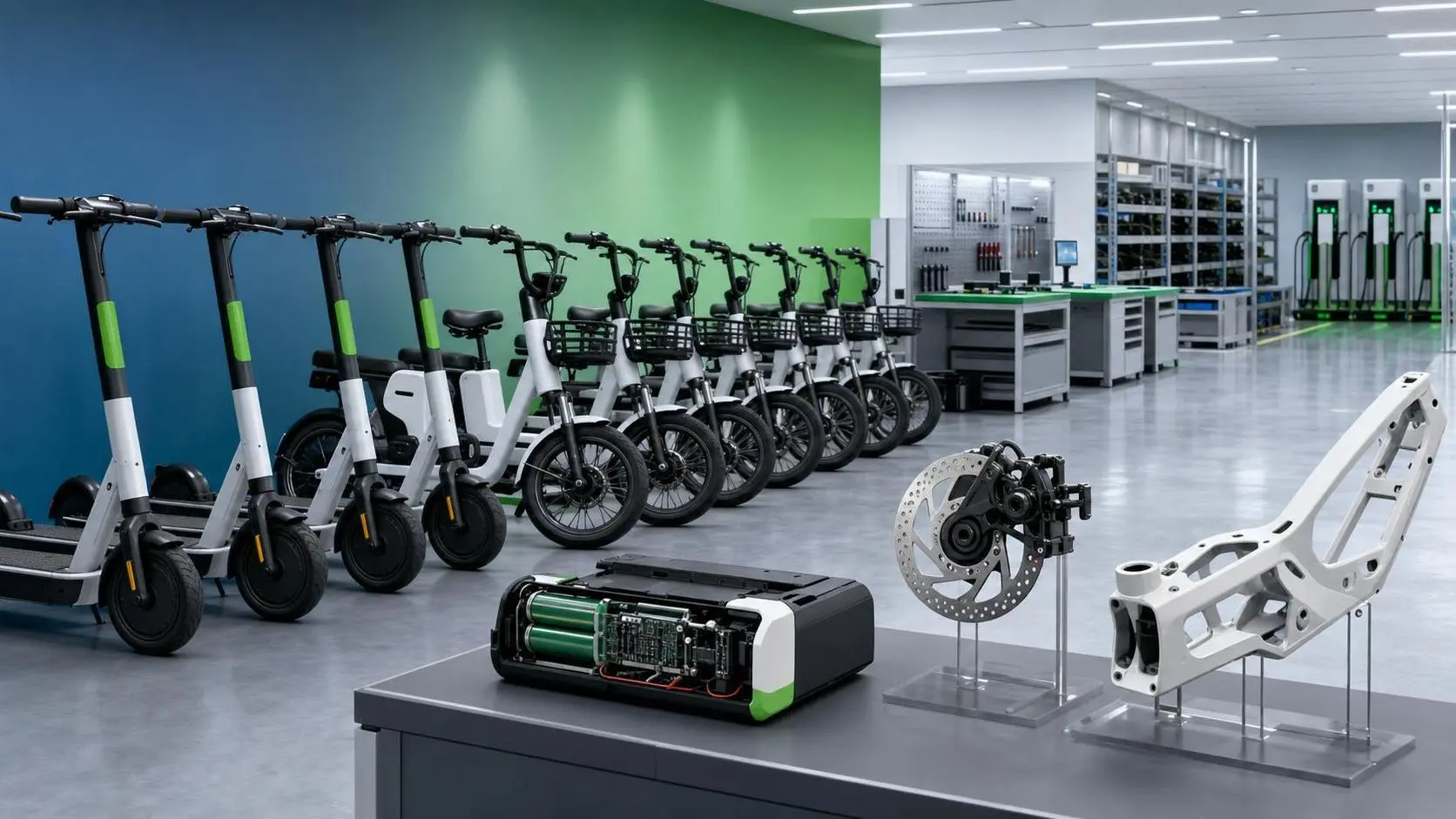
How to Evaluate a Micro-Mobility Supplier for Shared Fleet Reliability
Micro-mobility supplier selection directly shapes fleet uptime, maintenance costs, and rider trust. Learn how to evaluate durability, batteries, software, and service support for reliable shared fleet growth.
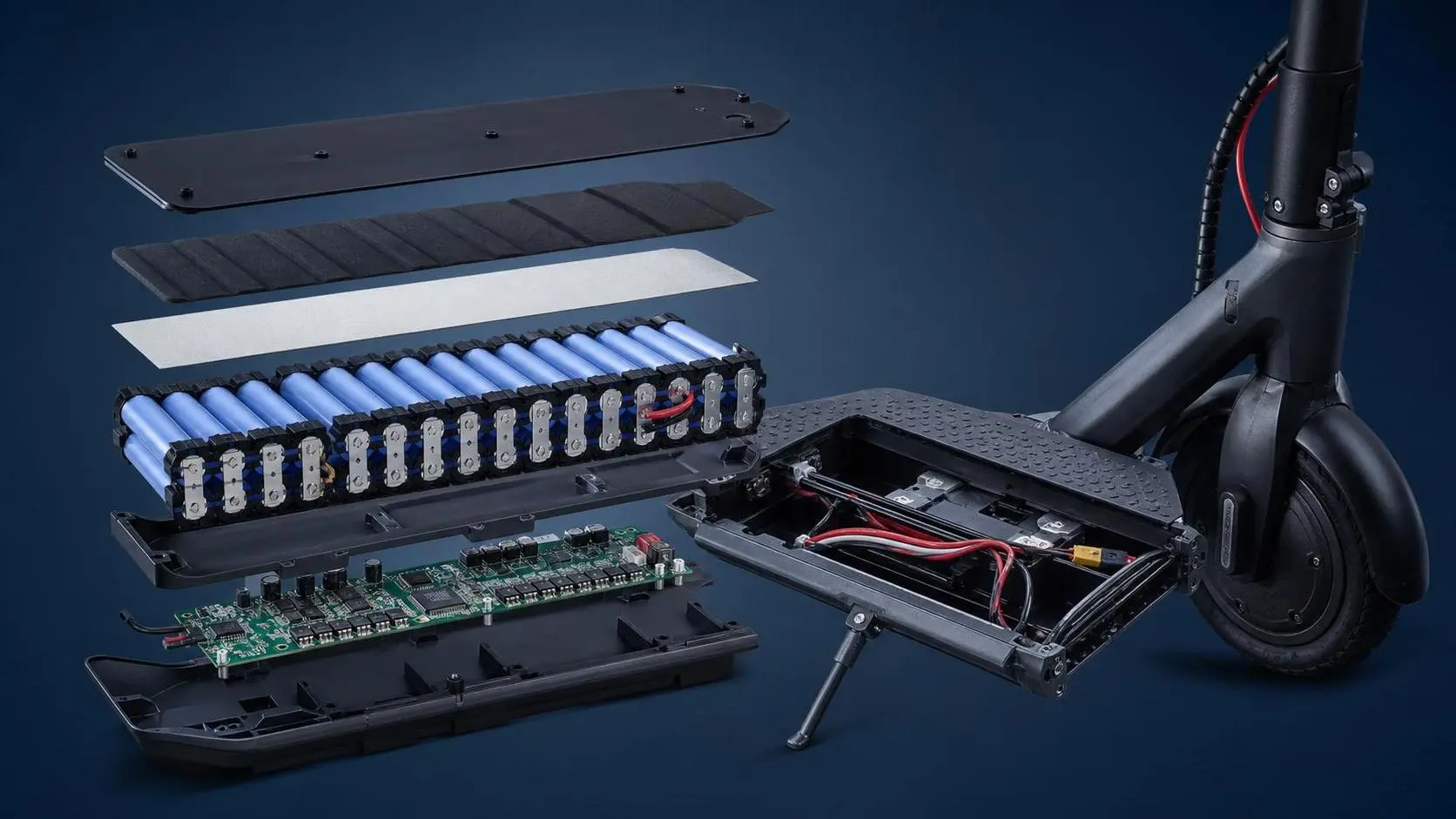
Component Selection for E-Scooters Battery Systems: Cells, BMS, and Thermal Protection
Component selection for e-scooters battery starts with the right cells, BMS, and thermal protection. Learn how to improve safety, range, lifecycle, and compliance.

Electric Bike Technology Solutions for Urban Fleets: Connectivity, BMS, and Service Data
Electric bike technology solutions for urban fleets: discover how connectivity, BMS, and service data improve uptime, battery safety, and maintenance efficiency.

International Voice Building in Southeast Asia: What Brands Must Localize to Be Found
International voice building Southeast Asia requires more than translation. Learn what brands must localize in technical, regulatory, and search content to improve visibility, trust, and regional demand.

How to Choose CE-Certified IoT Scooter Modules for Shared Fleet Compliance
IoT scooter modules CE certified: learn how to verify compliance scope, documentation, and field performance for shared fleets to reduce risk, avoid downtime, and scale with confidence.

Electric Bicycles ODM: How to Evaluate Design, MOQ, and Customization Capabilities
Electric bicycles ODM evaluation starts with design, MOQ, and customization. Learn how to compare suppliers, reduce sourcing risk, and choose a partner that supports faster launches.