
Related News
- 00
0000-00
How to Choose CE-Certified IoT Scooter Modules for Shared Fleet Compliance - 00
0000-00
Vehicle Visibility Safety Technology: Key Features for Low-Speed Urban Fleets - 00
0000-00
Why Green Scooter Demand Is Rising in Shared Mobility and Last-Mile Delivery - 00
0000-00
Micro Mobility Report: Which Metrics Matter Most for City Fleet Planning - 00
0000-00
Common Scooter Battery Issues and How to Troubleshoot Range Drop, Heat, and Charging Faults
Urban Transit Fellow
Weekly Insights
Stay ahead with our curated technology reports delivered every Monday.
How to Choose CE-Certified IoT Scooter Modules for Shared Fleet Compliance





Choosing IoT scooter modules CE certified for a shared fleet has moved far beyond basic hardware sourcing. In Europe, the module now sits at the intersection of vehicle connectivity, market access, incident traceability, and operational safety. A weak choice can create compliance gaps, unstable data links, and avoidable downtime. A strong choice supports reliable fleet control, cleaner audits, and a smoother path to scaled deployment.
That shift matters across the wider micro-mobility sector tracked by UMMS, where connected e-scooters, e-bikes, and other electrified two-wheelers are increasingly judged by both technical performance and regulatory discipline. For shared systems, the IoT layer is not an accessory. It is the control point for location, lock status, ride records, alarms, firmware updates, and compliance evidence.
Why CE-Certified Modules Matter in Shared Micro-Mobility
CE marking signals that a product placed on the EU market aligns with applicable requirements. For scooter IoT hardware, this usually touches radio equipment, electromagnetic compatibility, electrical safety, and restricted substances.
In practice, that means a module should not be treated as compliant just because a supplier says it is “EU ready.” The real question is whether the certification scope, test reports, declarations, and hardware version all match the product being deployed.
This is especially important in shared fleets. One uncertified or poorly documented batch can affect customs clearance, insurer confidence, operator liability, and city tender eligibility.
What the Module Actually Controls
A modern scooter IoT module usually handles more than connectivity. It often links the vehicle controller, battery system, smart lock, GNSS positioning, and cloud platform.
It may also capture crash alerts, geofencing actions, ride session timing, unauthorized movement, and remote diagnostics. That makes the module a critical evidence source whenever a fleet operator needs to investigate misuse, failure, or safety events.
Because of this central role, IoT scooter modules CE certified should be evaluated as control infrastructure, not as a low-cost communication part.
The Compliance Check Should Go Beyond the Label
A CE logo on the housing is not enough. The stronger approach is to verify the full compliance chain before approval.
Documents worth reviewing
- EU Declaration of Conformity with exact model number
- Applicable directive or regulation references
- Radio and EMC test reports from credible laboratories
- Bill of materials or revision control records
- Label samples and traceability coding method
- Firmware version linkage to certified hardware
This review matters because shared fleets often update firmware, antennas, enclosures, or power routing during localization. Small design changes can affect the original compliance basis.
Where possible, request confirmation that the delivered version is identical to the tested version. If not, ask what gap analysis was completed.
Technical Performance Still Decides Field Risk
Certification supports market access, but it does not guarantee deployment success. Shared fleets place modules under vibration, weather exposure, frequent charging cycles, and irregular urban signal conditions.
Several technical factors deserve close attention:
Usually, the field failures that hurt operations are not dramatic lab failures. They are intermittent faults: delayed unlocks, drifting location data, unstable low-battery reporting, or random reconnect behavior after charging.
Shared Fleet Use Cases Change the Selection Criteria
Not every scooter program needs the same module profile. A campus fleet, a dense urban sharing network, and a tourism rental system can all require different priorities.
Common deployment patterns
- High-turnover city fleets need strong geofencing, fast reconnects, and anti-tamper alerts.
- Long-dwell suburban fleets often prioritize sleep efficiency and battery preservation.
- Tender-driven public projects usually require clearer compliance files and audit-ready records.
- Multi-country operators need broader carrier coverage and version consistency across markets.
This is where the broader UMMS view becomes useful. In micro-mobility, regulatory pressure and technical architecture increasingly move together. The same fleet platform may need to respond to local parking rules, battery safety expectations, and wireless performance constraints at once.
How to Judge Certification Credibility
Some suppliers present certification as a sales badge. The better indicator is whether they can explain the compliance path clearly and consistently.
Useful signs include stable part numbering, document issue control, named test standards, and a clear statement on who holds responsibility for the Declaration of Conformity.
Less convincing signs include vague claims, incomplete report excerpts, or documents that do not match the physical label. When evaluating IoT scooter modules CE certified, credibility often shows up in these details.
Questions that expose hidden risk
- Was the antenna used in testing the same as the production antenna?
- Do firmware updates affect radio behavior or transmission power?
- How are component substitutions controlled during shortages?
- Can each shipment be traced to a hardware revision and test status?
- Who maintains the technical file for EU market surveillance requests?
Integration Quality Often Determines Real Compliance
Even properly certified hardware can create problems after vehicle integration. Cable routing, power noise, enclosure materials, and lock motor interference may alter actual radio or EMC performance.
That is why incoming verification should include bench tests and vehicle-level tests. A short pilot under real urban conditions often reveals more than a clean sample inspection.
For shared fleets, practical validation should cover unlock latency, parking zone enforcement, false motion alerts, network recovery after low voltage, and data continuity between module and cloud dashboard.
A Working Selection Framework
A balanced decision usually combines four filters: legal fit, technical fit, operational fit, and supplier control.
- Legal fit: verify CE scope, declarations, test evidence, and market responsibility.
- Technical fit: confirm connectivity, GNSS, power profile, and firmware security.
- Operational fit: test behavior in actual fleet workflows and local network conditions.
- Supplier control: review revision management, change notification, and traceability discipline.
This kind of framework helps prevent a common mistake: choosing a low-cost module that passes initial review but creates recurring service incidents later.
Where to Focus Next
The best next step is to translate fleet risk into a written approval checklist. Include certification files, lab evidence, version matching, field-test criteria, and post-launch change control.
For organizations comparing multiple IoT scooter modules CE certified, side-by-side scoring is more useful than broad supplier claims. The important differences usually appear in documentation quality, idle power behavior, radio consistency, and traceability.
As shared micro-mobility becomes more regulated, module selection will keep moving closer to safety governance. A well-chosen connected module supports not only fleet uptime, but also stronger compliance confidence when operations expand across cities and borders.
Related News
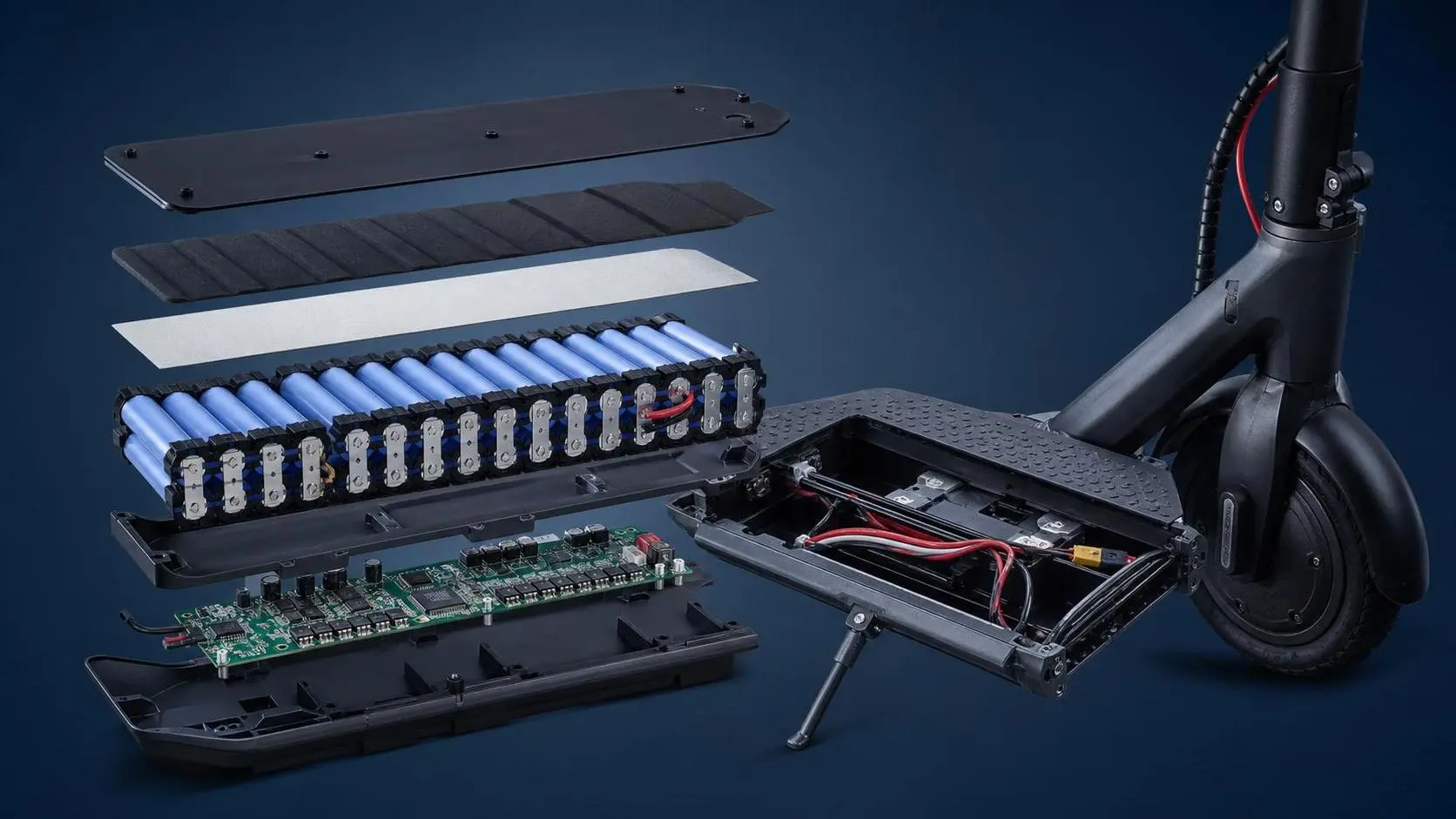
Component Selection for E-Scooters Battery Systems: Cells, BMS, and Thermal Protection
Component selection for e-scooters battery starts with the right cells, BMS, and thermal protection. Learn how to improve safety, range, lifecycle, and compliance.

Electric Bike Technology Solutions for Urban Fleets: Connectivity, BMS, and Service Data
Electric bike technology solutions for urban fleets: discover how connectivity, BMS, and service data improve uptime, battery safety, and maintenance efficiency.

International Voice Building in Southeast Asia: What Brands Must Localize to Be Found
International voice building Southeast Asia requires more than translation. Learn what brands must localize in technical, regulatory, and search content to improve visibility, trust, and regional demand.

Electric Bicycles ODM: How to Evaluate Design, MOQ, and Customization Capabilities
Electric bicycles ODM evaluation starts with design, MOQ, and customization. Learn how to compare suppliers, reduce sourcing risk, and choose a partner that supports faster launches.

Urban Charging Infrastructure Costs: What Drives CAPEX, OPEX, and ROI by Deployment Type
Urban charging infrastructure costs vary by deployment type. Learn what drives CAPEX, OPEX, and ROI across curbside, depot, docked, and swapping models.

Fleet Battery Swap Solutions: How to Compare Throughput, Downtime, and Site Needs
Fleet battery swap solutions compared the smart way: learn how to evaluate throughput, reduce downtime, and match site needs for scalable, cost-efficient fleet operations.

Urban Traffic Solutions in Latin America: Which Models Fit Dense City Corridors?
Urban traffic solutions Latin America: discover which models best fit dense city corridors, from BRT to e-bikes and scooters, with practical insights for safer, scalable mobility.

Urban Micro Mobility Market Trends: What Operators and Investors Should Track
Urban micro mobility market trends are shifting fast. Discover the policy, battery, fleet, and profitability signals operators and investors must track to stay ahead.

Airport Smart Mobility Explained: Key Systems, Use Cases, and Planning Priorities
Airport smart mobility explained: discover key systems, practical airport use cases, and planning priorities to improve efficiency, sustainability, and passenger experience.