
Related News
- 00
0000-00
Electric Two Wheeler Market Analysis: How to Compare Demand, Pricing, and Regional Growth - 00
0000-00
Urban Traffic Congestion Solutions: Which Options Work Best for Dense City Corridors? - 00
0000-00
Electric Drivetrain Market Breakdown: Key Segments, Cost Drivers, and Supplier Shifts - 00
0000-00
Battery Technology China: How LFP, Sodium-Ion, and Fast-Charging Cells Compare - 00
0000-00
How to Evaluate an Electric Two-Wheeler Market Manufacturer for Supply and Compliance
Ms. Elena Rodriguez
Weekly Insights
Stay ahead with our curated technology reports delivered every Monday.
Urban Traffic Congestion Solutions: Which Options Work Best for Dense City Corridors?





Urban Traffic Congestion Solutions: Which Options Work Best for Dense City Corridors?
As dense city corridors strain under rising demand, choosing effective urban traffic congestion solutions has become a strategic priority for decision-makers.
From smart signals to dedicated lanes, the best answers rarely come from one tool alone.
What works is a coordinated system that improves movement, reduces friction, and supports low-carbon travel choices.
That matters even more now, as city growth, e-commerce, and travel recovery keep adding pressure to limited road space.
For dense urban corridors, the most reliable urban traffic congestion solutions combine public transport priority, traffic intelligence, curb control, and micro-mobility integration.
The question is not whether to act, but which options deliver the strongest return under real operating conditions.
Why Dense City Corridors Need a Different Playbook
High-density corridors behave differently from suburban roads.
They carry buses, delivery vehicles, private cars, cyclists, scooters, and pedestrians in the same limited footprint.
Small disruptions quickly become corridor-wide delays.
A poorly timed signal, double-parked van, or unsafe crossing can slow every mode at once.
This is why traditional road widening often fails as a long-term congestion fix.
In mature city centers, the smarter route is to move more people and goods with the same space.
What Decision-Makers Should Measure First
Before selecting urban traffic congestion solutions, establish a practical baseline.
- Peak-hour travel time reliability, not just average speed
- Person throughput by lane and by mode
- Bus delay at intersections and stops
- Curb occupancy from freight, ride-hailing, and informal stopping
- Safety conflicts involving pedestrians, cyclists, and scooters
- Emissions exposure in the most congested blocks
From a planning view, these measures reveal which urban traffic congestion solutions will create visible impact fastest.
The Options That Usually Work Best
In practice, several congestion strategies outperform isolated road expansion.
The strongest urban traffic congestion solutions tend to share one trait: they improve flow across modes, not for cars alone.
1. Adaptive Signal Control
Smart signals are often the quickest starting point.
They adjust green time using real-time traffic data, queue length, and corridor demand shifts.
This reduces stop-and-go movement, shortens intersection delay, and improves travel time consistency.
They work especially well when paired with bus priority and emergency vehicle preemption.
2. Dedicated Bus and Transit Lanes
If one lane moves more people, it should get priority.
Dedicated transit lanes remain one of the most effective urban traffic congestion solutions for dense corridors.
They improve schedule reliability, increase passenger capacity, and make public transport more competitive with private vehicles.
The result is often mode shift, which eases pressure across the whole corridor.
3. Protected Micro-Mobility Networks
Short urban trips do not always need a car or full-size bus trip.
Protected lanes for e-bikes, bicycles, and smart e-scooters create a safe alternative for short-distance travel.
This is where micro-mobility has strategic value, especially for first-mile and last-mile connections.
When integrated with transit stations, these networks can reduce short car trips that clog critical intersections.
For cities tracking sustainable mobility, this is one of the most scalable urban traffic congestion solutions available today.
4. Curbside and Freight Management
Many corridor delays start at the curb.
Delivery vans, ride-hailing pickups, and unauthorized stopping can erase the gains from signal upgrades.
Timed loading zones, digital curb permits, and off-peak delivery windows reduce this friction.
This option is often overlooked, yet it ranks among the most cost-effective urban traffic congestion solutions.
5. Demand Management and Pricing
Some congestion cannot be engineered away without changing travel behavior.
Congestion pricing, dynamic parking charges, and access controls can discourage low-value peak-hour trips.
These tools work best when revenues support transit upgrades and safer active transport infrastructure.
Without strong alternatives, pricing alone can create public resistance.
Why Micro-Mobility Deserves a Bigger Role
A more obvious signal in recent years is the rise of lightweight electric mobility.
E-bikes, smart e-scooters, and compact electric two-wheelers are no longer fringe tools.
They are now practical components of urban traffic congestion solutions, especially where road space is constrained.
For mobility strategists, the advantage is clear: these vehicles move efficiently, require little space, and support decarbonization targets.
For operators and OEM ecosystems, they also open room for connected fleet management, battery analytics, and predictive maintenance.
That combination of operational flexibility and environmental value makes micro-mobility central to future corridor design.
Where It Works Best
- Station access within two to five kilometers
- University, medical, and commercial districts
- Tourism-heavy corridors with short trip patterns
- Mixed-use neighborhoods with frequent curb conflicts
- Areas where bus networks need stronger first-mile support
In these settings, urban traffic congestion solutions become more effective when micro-mobility is treated as planned infrastructure, not an afterthought.
What Usually Fails in Real Deployment
Even good policy can underperform if execution is fragmented.
One common failure is treating every mode in isolation.
Another is deploying technology without governance, enforcement, or clear service standards.
In actual operations, urban traffic congestion solutions break down when agencies do not share data or align corridor goals.
The same happens when new lanes are installed without safe crossings, parking controls, or user education.
The lesson is simple: corridor performance depends on system design, not isolated projects.
Key Risks to Watch
- Political pressure for visible but low-impact road expansion
- Weak enforcement of bus lanes and curb rules
- Insufficient safety design for pedestrians and riders
- Poor integration between ticketing, routing, and shared mobility apps
- Pilot projects without long-term funding or measurable targets
How to Choose the Right Urban Traffic Congestion Solutions
Selection should follow corridor function, not trend chasing.
A freight-heavy route needs different tools than a transit spine or mixed retail district.
The most durable urban traffic congestion solutions are phased, measurable, and supported by data from day one.
- Identify the corridor’s dominant problem, such as delay, unreliability, or safety conflict.
- Prioritize person throughput over vehicle throughput.
- Bundle signal, curb, transit, and micro-mobility interventions where possible.
- Set short review cycles using traffic, safety, and emissions indicators.
- Scale only after operational evidence shows corridor-wide improvement.
This also means choosing technology partners that understand connected mobility, battery ecosystems, and multimodal operations.
In that environment, intelligence platforms like UMMS help connect product evolution with real mobility system needs.
The Best Mix for Future-Ready Corridors
So, which urban traffic congestion solutions work best?
For most dense city corridors, the winning combination is clear.
Start with adaptive signals, transit priority, protected micro-mobility lanes, and disciplined curb management.
Add pricing or access controls where alternatives already exist.
Most importantly, manage these measures as one operating system rather than separate infrastructure pieces.
That is how urban traffic congestion solutions move from short-term relief to lasting corridor resilience.
Cities that act early will not just reduce delay.
They will build cleaner, safer, and more flexible mobility networks around the realities of modern urban life.
The next practical step is to evaluate one priority corridor, map its friction points, and test a multimodal package with clear performance targets.
Related News
Electric Two Wheeler Market Analysis: How to Compare Demand, Pricing, and Regional Growth
Electric two wheeler market analysis made practical: compare real demand, pricing drivers, and regional growth signals to avoid sourcing mistakes and choose smarter suppliers.
Micro Mobility Global Expansion: What Market Entry Risks and Growth Signals Should Distributors Watch?
Micro mobility global expansion demands more than shipment growth. Discover key market entry risks, regulation shifts, battery challenges, and trusted growth signals distributors should watch.
How the Global Mobility Landscape Is Shifting Across Shared, Electric, and Low-Speed Transport
Global mobility landscape trends are redefining urban transport through shared fleets, e-bikes, scooters, and low-speed EVs. Explore the signals shaping smarter, cleaner growth.

Electric Drivetrain Market Breakdown: Key Segments, Cost Drivers, and Supplier Shifts
Electric drivetrain market insights on key segments, cost drivers, and supplier shifts. See where value, risk, and growth opportunities are emerging across mobility platforms.

Battery Technology China: How LFP, Sodium-Ion, and Fast-Charging Cells Compare
Battery technology China compared: explore how LFP, sodium-ion, and fast-charging cells differ in cost, safety, range, and fleet value for smarter urban mobility decisions.
Electric Two-Wheeler Market Manufacturer Trends: Capacity, Export Strategy, and OEM Shifts
Electric two-wheeler market manufacturer trends decoded: explore capacity flexibility, smarter export strategy, and OEM shifts shaping resilient growth and competitive advantage.

How to Choose a Brushless Wiper Motor: Voltage, Torque, IP Rating, and Duty Cycle
Brushless wiper motor selection starts with the right voltage, torque, IP rating, and duty cycle. Learn how to compare specs, reduce failure risk, and choose a reliable fit.
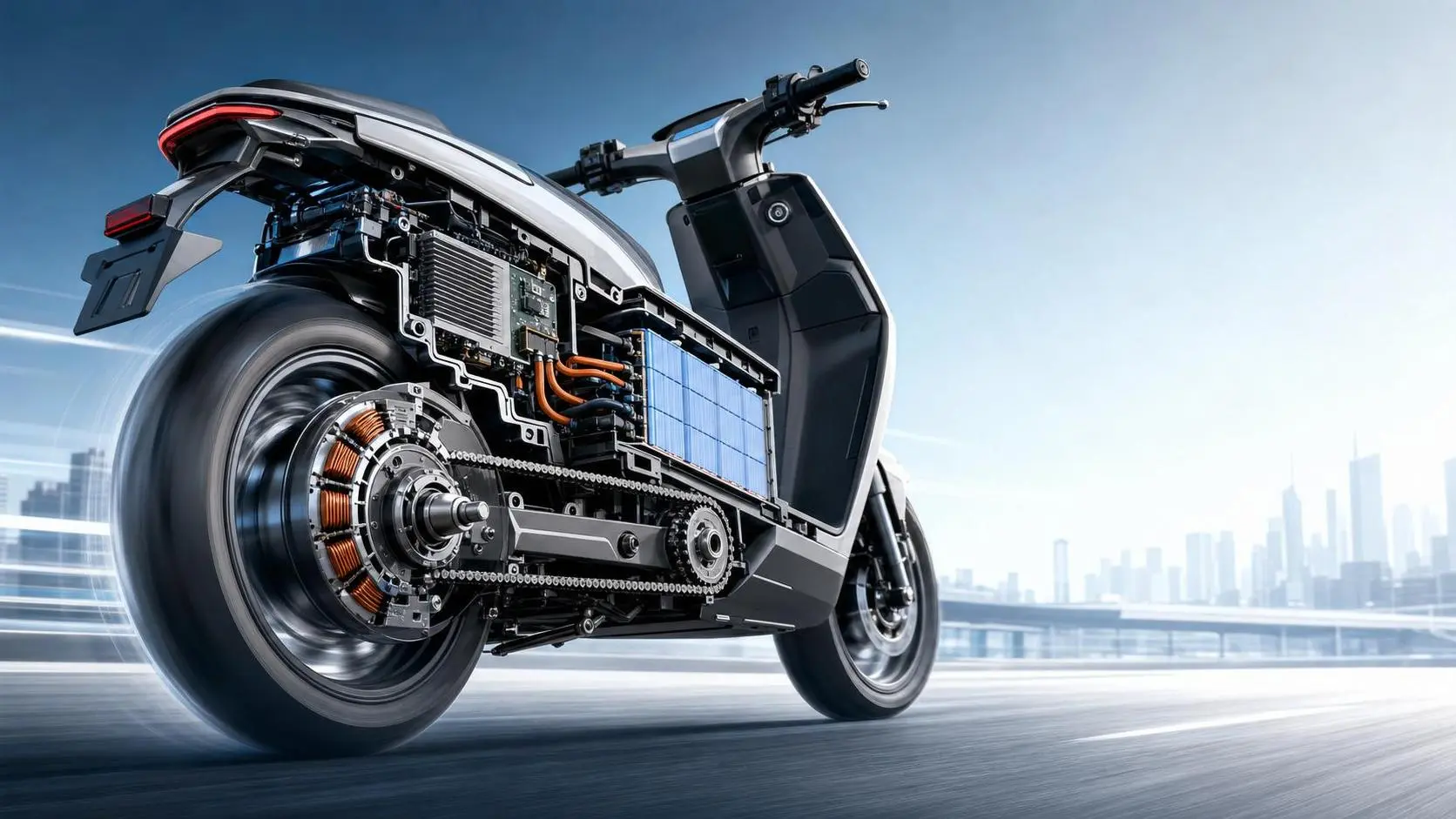
What Causes Torque Lag in Electric Two-Wheelers and How Can Engineers Reduce It?
Torque lag in electric two-wheelers starts with more than the motor. Learn what causes torque lag in e-bikes, e-scooters, and e-motorcycles, and how engineers can reduce it for faster, smoother response.

Bike Derailleur Parts Explained: Names, Functions, and What Wears Out First
Bike derailleur parts explained clearly: learn the key names, functions, common wear points, and how to tell adjustment issues from real damage before you repair or upgrade.