
Related News
- 00
0000-00
Fleet Battery Swap Solutions: How to Compare Throughput, Downtime, and Site Needs - 00
0000-00
Battery Swapping Network Cost: What Drives Setup and Operating Expenses? - 00
0000-00
Battery Swapping in China vs Charging: Which Model Fits Shared Scooter Fleets? - 00
0000-00
Thermal Management for Swappable Battery Scooters: Key Design Factors to Compare - 00
0000-00
Battery-Swapping Networks for Motorcycles: Key Cost Drivers and Deployment Models
Electric Powertrain Analyst
Weekly Insights
Stay ahead with our curated technology reports delivered every Monday.
Evolutionary trends in swappable battery scooters: 2025 standardization progress on connector pinout





Why Connector Pinout Standardization Is the Linchpin of Swappable Battery Evolution
Swappable battery systems once promised universal convenience—yet fragmented pinouts turned interoperability into a logistical bottleneck. In 2025, connector pinout standardization is no longer a technical footnote; it is the foundational layer enabling true system intelligence across fleets, service networks, and second-life battery ecosystems.
Without harmonized pin definitions, voltage sensing, thermal feedback, CAN bus arbitration, and secure authentication protocols remain siloed. Proprietary connectors force OEMs into vertical lock-in, inflate spare-part inventories by 40–60%, and delay battery-swapping station deployment by 8–12 weeks per city rollout. Regulatory pressure—from the EU’s Battery Regulation (EU) 2023/1542 to China’s GB/T 42236-2022 amendments—is now explicitly mandating open pinout documentation for type-approved urban micro-mobility vehicles.
The 2025 Connector Pinout Standardization Checklist
- Define mandatory pins for bidirectional power transfer (V+, V−), cell-level temperature sensing (T1–T4), and pack-state authentication (AUTH+ / AUTH−) in all Tier-1 connector specifications.
- Standardize CAN FD signal mapping across ISO 11898-2 physical layer: reserve CAN_H/CAN_L for vehicle-to-battery state negotiation and reserve CAN_HS for over-the-air firmware updates during hot-swap cycles.
- Enforce differential signaling for analog sensor lines to suppress EMI from motor controllers—verified via IEC 61000-4-3 radiated immunity testing at 10 V/m, 80 MHz–2 GHz.
- Require mechanical keying geometry that prevents misinsertion under 3 N·m torque, validated through 5,000-cycle wear testing with 50 µm nickel-gold plating on contact surfaces.
- Mandate embedded secure element (SE) communication handshake before enabling discharge—using ECDSA-P256 signatures tied to ISO/IEC 15408 EAL4+ certified cryptographic modules.
- Document pin functional redundancy: assign backup voltage sense paths (VSENSE_BKUP) and alternate ground references (GND_ISO) to ensure fail-operational continuity during high-current transients.
Application-Specific Implications
For shared fleet operators, standardized pinouts reduce battery logistics complexity by unifying charging rack interfaces across scooter models—even those from competing OEMs. A single docking station can now authenticate, thermally profile, and commission batteries from three distinct manufacturers, cutting depot CAPEX by up to 35%.
For high-speed e-motorcycle platforms, pinout harmonization enables dynamic battery stacking: primary packs handle peak torque delivery while auxiliary units manage regenerative braking energy capture—coordinated via synchronized pin-level CAN FD arbitration without protocol translation layers.
In circular economy deployments, standardized pin definitions allow third-party remanufacturers to validate battery health metrics (SOH, RUL, impedance dispersion) using calibrated reference tools—bypassing OEM-locked diagnostic gateways and accelerating second-life repurposing into stationary grid-support applications.
Commonly Overlooked Risks
Many developers assume pinout alignment alone guarantees interoperability—yet neglect signal timing tolerances. A 50 ns skew between VSENSE and TSENSE sampling clocks can induce ±2.3°C thermal reporting error at 125°C, triggering premature derating or unsafe fast-discharge conditions.
Another critical gap: omission of electromagnetic compatibility (EMC) co-location requirements. Pinouts may be identical, but if adjacent high-frequency switching nodes (e.g., gate drivers) share PCB routing with analog sensor traces, crosstalk invalidates calibration—rendering standardized pins functionally non-interoperable.
Finally, regulatory compliance does not equal field readiness. Several 2024-certified connectors passed lab-based IEC 60529 IP67 tests—but failed real-world vibration validation (ISO 16750-3, 5–500 Hz, 3g RMS) due to insufficient contact retention force, causing intermittent AUTH+ dropout during urban pothole impacts.
Actionable Implementation Steps
Audit existing battery interface schematics against the draft ISO/IEC AWI 21742 “Modular Energy Interface for Urban Two-Wheelers” annex—focusing specifically on pin assignment traceability and documented EMC test reports.
Integrate pinout verification into early-stage hardware-in-the-loop (HIL) testing: simulate worst-case contact resistance drift (0.5–2.5 mΩ) and verify state estimation convergence within 120 ms across all defined operating conditions.
Collaborate with battery management system (BMS) vendors to co-develop open-source pinout abstraction layers—enabling software-defined configuration of analog input scaling, CAN message IDs, and cryptographic key provisioning without hardware revision.
Conclusion: From Hardware Compatibility to System Intelligence
Evolutionary trends in swappable battery scooters are converging on a singular insight: connector pinout standardization is not about plug-and-play convenience—it is the substrate for distributed battery intelligence. In 2025, harmonized pins enable real-time health federation across heterogeneous fleets, predictive swapping based on localized thermal gradients, and seamless integration into urban energy grids.
Strategists must treat pin definitions as living specifications—not static footprints. Embed version-controlled pinout manifests into vehicle OTA update packages. Require BMS firmware to self-report pin compliance status during every boot cycle. And align procurement contracts with enforceable pinout conformance clauses—including penalties for undocumented proprietary extensions.
The next phase of micro-mobility system intelligence begins where metal meets metal. Get the pins right—and everything else scales.
Related News

Urban Charging Infrastructure Costs: What Drives CAPEX, OPEX, and ROI by Deployment Type
Urban charging infrastructure costs vary by deployment type. Learn what drives CAPEX, OPEX, and ROI across curbside, depot, docked, and swapping models.
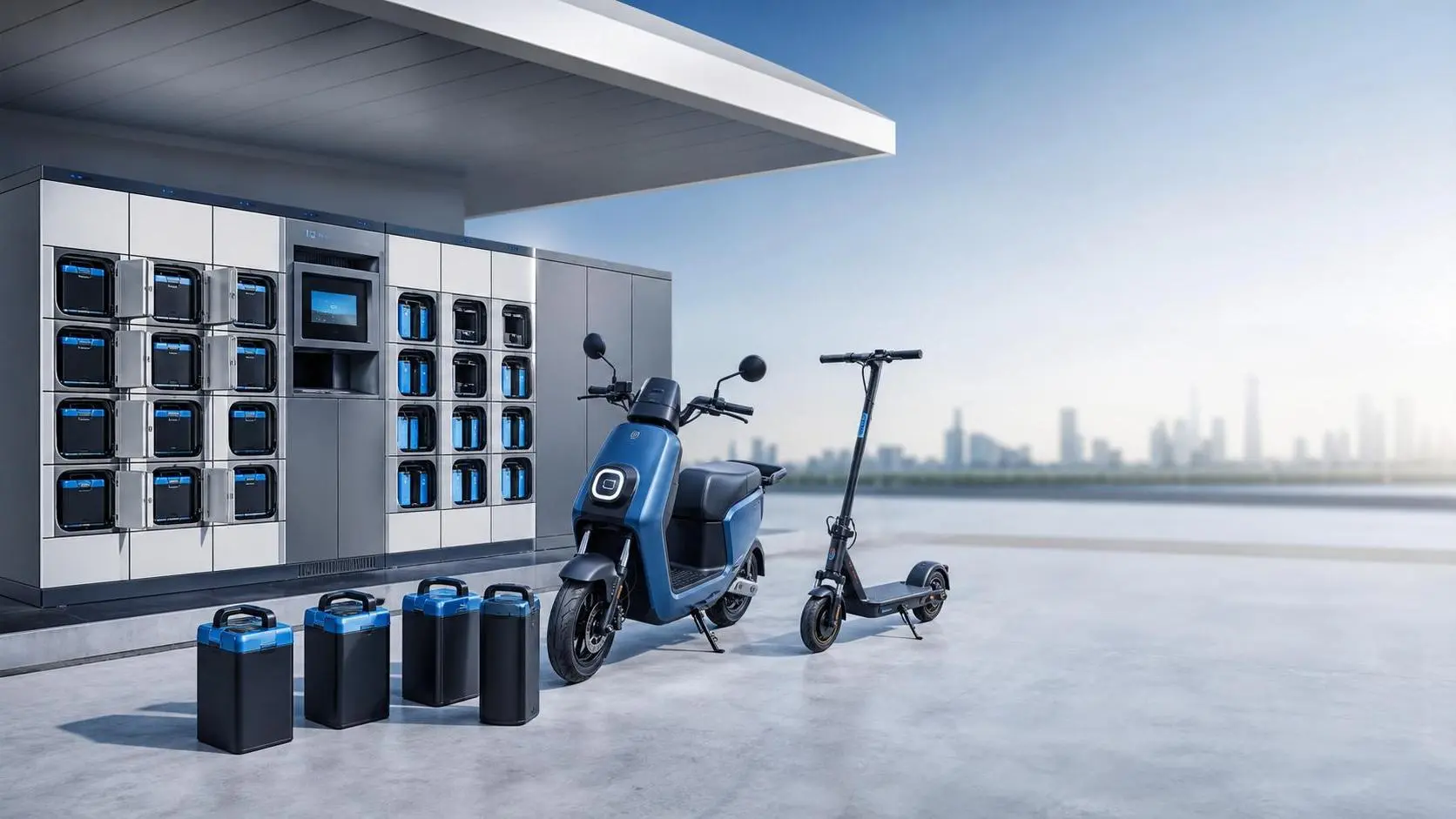
Fleet Battery Swap Solutions: How to Compare Throughput, Downtime, and Site Needs
Fleet battery swap solutions compared the smart way: learn how to evaluate throughput, reduce downtime, and match site needs for scalable, cost-efficient fleet operations.

Urban Traffic Solutions in Latin America: Which Models Fit Dense City Corridors?
Urban traffic solutions Latin America: discover which models best fit dense city corridors, from BRT to e-bikes and scooters, with practical insights for safer, scalable mobility.

Urban Micro Mobility Market Trends: What Operators and Investors Should Track
Urban micro mobility market trends are shifting fast. Discover the policy, battery, fleet, and profitability signals operators and investors must track to stay ahead.

Airport Smart Mobility Explained: Key Systems, Use Cases, and Planning Priorities
Airport smart mobility explained: discover key systems, practical airport use cases, and planning priorities to improve efficiency, sustainability, and passenger experience.

How to Evaluate an Electric Mobility Provider for Cost, Service Coverage, and Scalability
Electric mobility provider evaluation starts with total cost, service coverage, and scalability. Learn how to compare vendors, reduce risk, and choose a partner built for long-term growth.

Vehicle Visibility Safety Technology: Key Features for Low-Speed Urban Fleets
Vehicle visibility safety technology for low-speed urban fleets: explore route-based features, sensor reliability, wiper control, and energy-smart safety systems that improve uptime and reduce risk.

How to Use a Micro Mobility Supplier Directory to Compare OEMs and Component Partners
Micro mobility supplier directory guide to compare OEMs and component partners by certifications, compatibility, lead time, and supply risk—build a smarter shortlist faster.
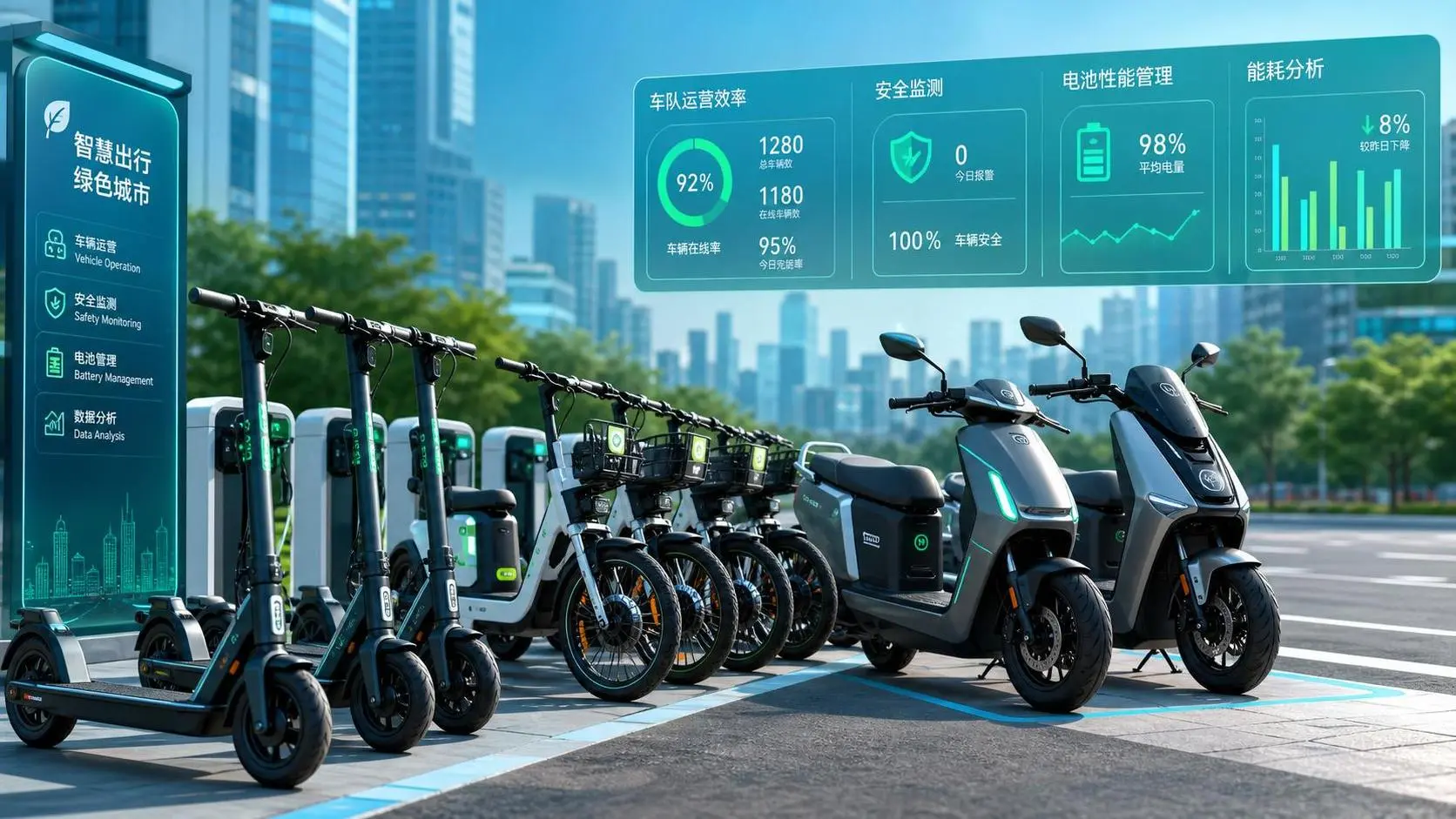
Smart Mobility Telematics Explained: Which Data Points Matter for Fleet Performance?
Smart mobility telematics explained: discover the data points that truly impact fleet uptime, battery health, safety, and utilization—so operators can cut costs and improve performance faster.