
Related News
- 00
0000-00
Fleet Battery Swap Solutions: How to Compare Throughput, Downtime, and Site Needs - 00
0000-00
Battery Swapping Network Cost: What Drives Setup and Operating Expenses? - 00
0000-00
Battery Swapping in China vs Charging: Which Model Fits Shared Scooter Fleets? - 00
0000-00
Thermal Management for Swappable Battery Scooters: Key Design Factors to Compare - 00
0000-00
Battery-Swapping Networks for Motorcycles: Key Cost Drivers and Deployment Models
Electric Powertrain Analyst
Weekly Insights
Stay ahead with our curated technology reports delivered every Monday.
Anti-interference protocols critical for swappable battery scooters in high-EMI urban zones





In high-EMI urban zones—dense with 5G base stations, EV charging infrastructure, and RF-heavy transit systems—swappable battery scooters face unprecedented electromagnetic interference risks. For technical evaluators assessing real-world reliability, anti-interference protocols are no longer optional; they’re the foundational layer ensuring CAN bus integrity, BMS communication fidelity, and seamless battery authentication during hot-swap events. This analysis dissects protocol-level hardening strategies—from spread-spectrum clocking and shielded differential signaling to adaptive RF filtering—validated across Tier-1 OEM deployments in Tokyo, Berlin, and São Paulo.
What Are Anti-Interference Protocols—and Why Do They Matter for Swappable Battery Scooters?
Anti-interference protocols are standardized signal conditioning, encoding, timing, and physical-layer techniques designed to preserve data integrity in electromagnetically noisy environments.
For swappable battery scooters, these protocols govern three critical interactions: battery-to-vehicle authentication, BMS-to-ECU telemetry exchange, and real-time state synchronization during insertion/removal.
Unlike fixed-battery platforms, swappable systems introduce dynamic contact points, transient voltage spikes, and millisecond-critical handshake windows—making robust anti-interference design non-negotiable.
Where Do EMI Threats Most Severely Impact Swappable Systems?
Urban micro-mobility hubs generate concentrated EMI across multiple bands:
- Sub-1 GHz: LTE-M/NB-IoT modules, RFID-based battery ID readers
- 2.4–2.4835 GHz: Bluetooth Low Energy (BLE) for battery pairing and diagnostics
- 3.5–3.8 GHz: 5G NR mid-band co-location near scooter docking kiosks
- 0–100 kHz: Switching noise from nearby DC fast chargers and regenerative braking harmonics
Field measurements in Shinjuku (Tokyo) revealed 12–18 dBμV/m excess noise at 2.45 GHz during peak commuter hours—enough to corrupt BLE packet CRCs without hardened protocols.
Which Protocol-Level Hardening Techniques Deliver Proven Urban Resilience?
Leading OEMs deploy layered defenses—not single-point fixes. Key validated techniques include:
- Spread-spectrum clocking (SSC) on CAN FD controllers reduces spectral peak energy by up to 15 dB
- Shielded twisted-pair (STP) differential signaling for battery interface buses—mandatory for >1 Mbps authentication handshakes
- Adaptive notch filtering in BLE PHY layers, dynamically suppressing narrowband interferers detected via RSSI variance tracking
- Time-triggered communication scheduling, isolating safety-critical BMS messages in dedicated time slots immune to burst-mode EMI
Berlin’s Voi deployment achieved 99.998% successful hot-swaps over 14 months using all four techniques—versus 92.3% for legacy implementations relying solely on shielding.
How Do Anti-Interference Protocols Affect Certification, Lifecycle, and Interoperability?
Compliance is not just about passing IEC 61000-4-3 (radiated immunity) or CISPR 25 Class 5.
Real-world interoperability demands cross-vendor protocol alignment—especially for open battery-swapping networks like Gogoro Network or SUN Mobility.
Without harmonized anti-interference logic, a battery certified to EN 55032 may still fail authentication when docked into a scooter using different clock jitter tolerance or filter bandwidth settings.
Common Misconceptions About Anti-Interference Implementation
Three persistent myths undermine system reliability:
- “Shielding alone solves EMI.” Metal enclosures reduce far-field coupling but worsen near-field resonance if grounding paths lack impedance control.
- “Higher baud rate equals better performance.” At 5 Mbps CAN FD, unhardened interfaces suffer 4× more bit errors in 5G-dense zones than at 2 Mbps with SSC enabled.
- “Protocols are firmware-only.” True resilience requires co-design: PCB stack-up optimization, connector pin assignment, and protocol stack tuning as an integrated unit.
Comparative Protocol Readiness Across Urban Deployment Zones
Anti-interference protocols define the operational ceiling of swappable battery scooter reliability—not just in labs, but where riders demand uninterrupted service amid the world’s most electrically saturated streets.
Technical stakeholders evaluating next-gen platforms must treat protocol architecture as core IP—not auxiliary firmware. Prioritize solutions with field-validated hardening across ≥3 urban EMI profiles. Demand full stack disclosure: PHY layer specs, timing jitter budgets, and filter adaptation latency metrics.
The Last-Mile Revolution won’t stall at the curb. It accelerates only where anti-interference protocols hold firm.
Related News

Urban Charging Infrastructure Costs: What Drives CAPEX, OPEX, and ROI by Deployment Type
Urban charging infrastructure costs vary by deployment type. Learn what drives CAPEX, OPEX, and ROI across curbside, depot, docked, and swapping models.

Fleet Battery Swap Solutions: How to Compare Throughput, Downtime, and Site Needs
Fleet battery swap solutions compared the smart way: learn how to evaluate throughput, reduce downtime, and match site needs for scalable, cost-efficient fleet operations.

Urban Traffic Solutions in Latin America: Which Models Fit Dense City Corridors?
Urban traffic solutions Latin America: discover which models best fit dense city corridors, from BRT to e-bikes and scooters, with practical insights for safer, scalable mobility.
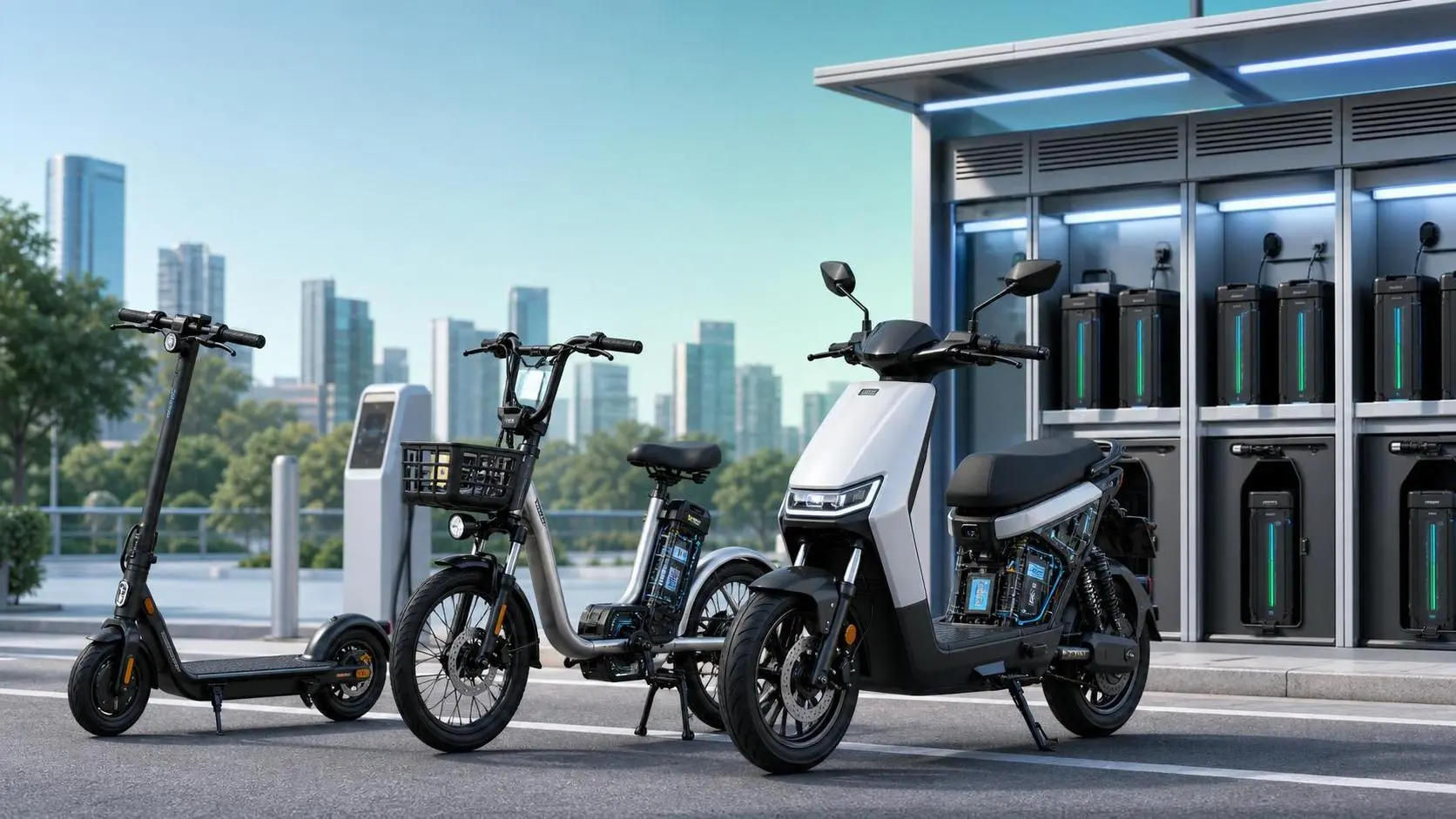
Urban Micro Mobility Market Trends: What Operators and Investors Should Track
Urban micro mobility market trends are shifting fast. Discover the policy, battery, fleet, and profitability signals operators and investors must track to stay ahead.

Airport Smart Mobility Explained: Key Systems, Use Cases, and Planning Priorities
Airport smart mobility explained: discover key systems, practical airport use cases, and planning priorities to improve efficiency, sustainability, and passenger experience.
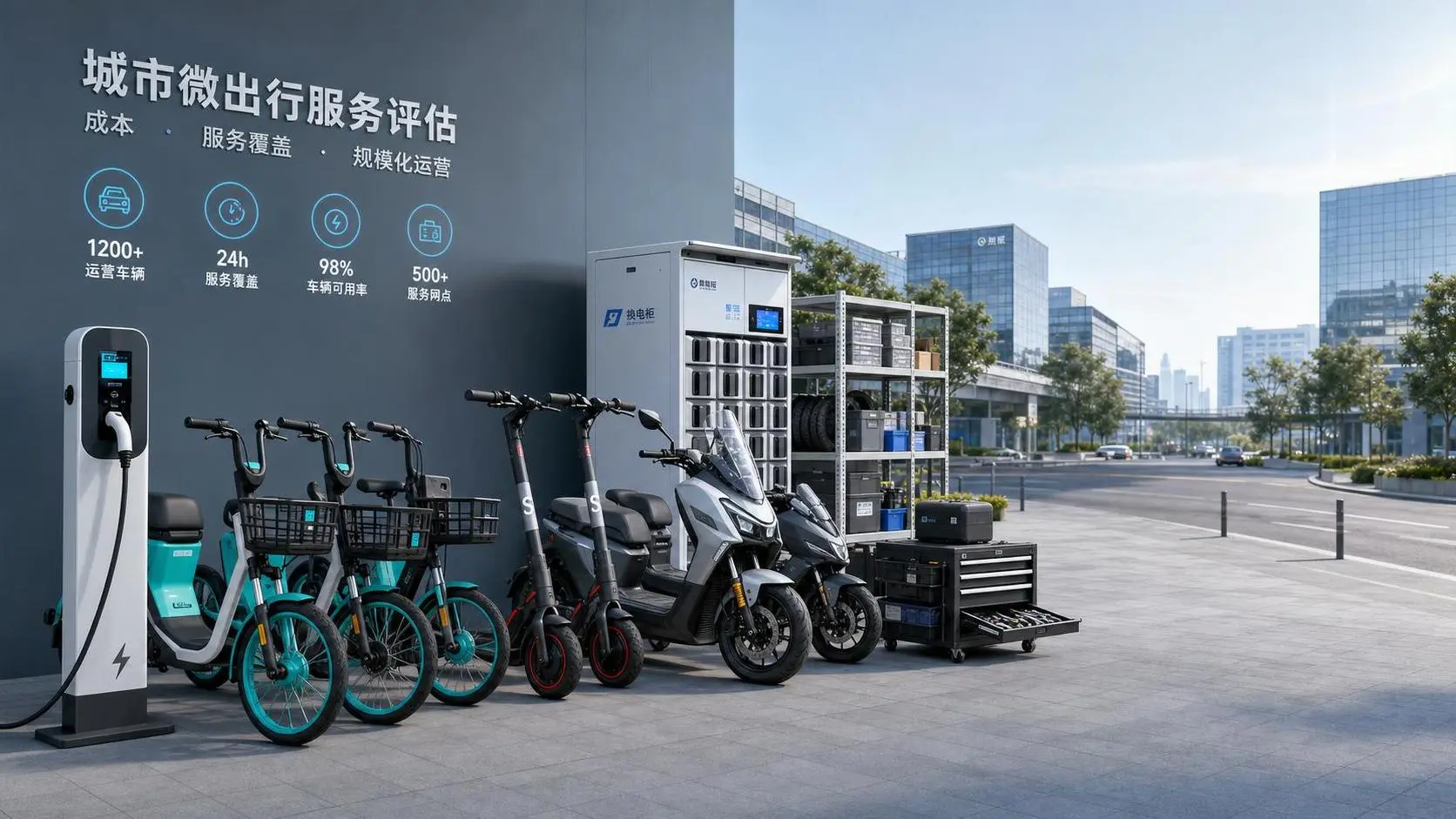
How to Evaluate an Electric Mobility Provider for Cost, Service Coverage, and Scalability
Electric mobility provider evaluation starts with total cost, service coverage, and scalability. Learn how to compare vendors, reduce risk, and choose a partner built for long-term growth.

Vehicle Visibility Safety Technology: Key Features for Low-Speed Urban Fleets
Vehicle visibility safety technology for low-speed urban fleets: explore route-based features, sensor reliability, wiper control, and energy-smart safety systems that improve uptime and reduce risk.

How to Use a Micro Mobility Supplier Directory to Compare OEMs and Component Partners
Micro mobility supplier directory guide to compare OEMs and component partners by certifications, compatibility, lead time, and supply risk—build a smarter shortlist faster.
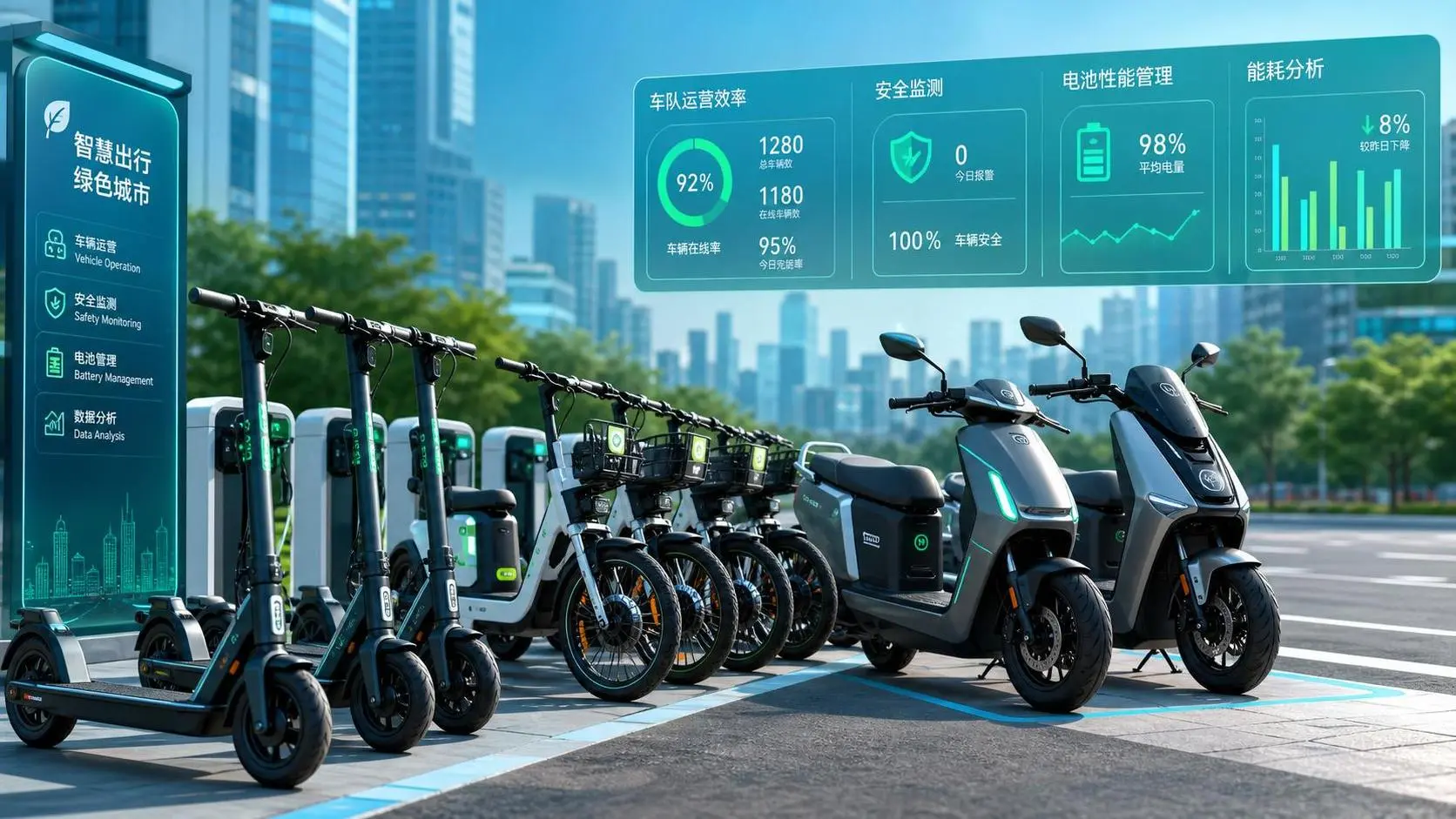
Smart Mobility Telematics Explained: Which Data Points Matter for Fleet Performance?
Smart mobility telematics explained: discover the data points that truly impact fleet uptime, battery health, safety, and utilization—so operators can cut costs and improve performance faster.