
Related News
- 00
0000-00
Battery Swapping Network Cost Breakdown: Hardware, Site Fees, and Maintenance - 00
0000-00
How to Use a Market Intelligence Report to Evaluate EV Two-Wheeler Opportunities - 00
0000-00
Electric Mobility Challenges Explained: Grid Limits, Charging Access, and TCO - 00
0000-00
Electric Torque Market Price Drivers: Materials, Supply Risk, and Sourcing Trade-Offs - 00
0000-00
How Carbon Bicycle Components Affect Weight, Stiffness, and Ride Feel
Ms. Elena Rodriguez
Weekly Insights
Stay ahead with our curated technology reports delivered every Monday.
Battery Swapping Network Cost Breakdown: Hardware, Site Fees, and Maintenance





Battery Swapping Network Cost Breakdown: What Really Drives the Budget
Understanding battery swapping network cost is essential when a project moves from pilot to scale. The price is not driven by one item alone. Hardware, site fees, software, and maintenance all shape the final number, and each one changes the payback story in a different way.
For micro-mobility operators, the core question is simple: does the network reduce downtime enough to justify the capital and operating load? In practice, the answer depends on deployment density, station reliability, and how well the system fits local traffic patterns.
Hardware Cost: The Largest Upfront Share
Hardware usually takes the biggest slice of battery swapping network cost. This includes swapping cabinets, battery modules, chargers, control boards, thermal management parts, and safety enclosures. For higher-volume routes, operators also need stronger cabinets, more ports, and better monitoring hardware.
Battery ownership matters too. If the network uses shared battery packs, the capital load rises quickly, but utilization can improve. If batteries are leased, upfront spending falls, yet the recurring fee must be modeled carefully. That tradeoff often decides whether the project looks attractive on paper.
A useful approach is to separate fixed hardware from expandable hardware. Fixed items cover the cabinet structure and power system. Expandable items cover battery inventory and communication modules. This makes it easier to forecast the cost of the first site versus the next 20 sites.
Site Fees and Installation: The Hidden Budget Pressure
Site fees are often underestimated in battery swapping network cost models. A low-cost cabinet can become expensive once the operator adds rent, permits, utility access, civil work, and local compliance charges. In dense cities, these costs can rival the hardware bill.
Installation is another area where budgets slip. Teams may need trenching, electrical upgrades, fire-safety approval, telecom setup, and physical protection against vandalism. If the site is inside a parking garage, mall, or curbside location, each environment creates different technical and legal requirements.
From a financial review angle, location choice should be treated as a cost lever, not a real-estate detail. A site with slightly higher rent may still be cheaper overall if it reduces installation time, lowers permitting risk, and improves battery turnover.
Software Integration and Network Operations
Modern battery swapping network cost is not just physical infrastructure. Software connects the station, battery health data, user app, payment flow, and fleet dashboard. Without this layer, the network cannot support real-time availability, reserve planning, or fault alerts.
Integration costs depend on whether the platform is built in-house or bought from a vendor. In-house systems offer more control, but they often require longer implementation and stronger technical staffing. Vendor platforms can launch faster, though customization and data access may be limited.
A good financial model should include API setup, cloud hosting, cybersecurity, and dashboard maintenance. These items may look small at first, but they influence uptime and user confidence. In a swapping business, poor software can quietly destroy hardware ROI.
Maintenance: The Cost That Grows with Scale
Maintenance is where battery swapping network cost becomes a long-term operating story. Cabinets need inspections, connectors wear out, sensors drift, and batteries degrade at different speeds. If maintenance is weak, replacement cycles become shorter and service quality drops fast.
The most common recurring items include preventive service, spare parts, battery testing, cleaning, firmware updates, and emergency response. Operators should also budget for field labor and remote support. In high-traffic locations, even a short outage can reduce daily throughput and hurt revenue.
Battery lifecycle management deserves special attention. Temperature exposure, charging habits, and uneven rotation can shorten pack life. Better monitoring reduces replacement surprises, which is why predictive diagnostics often pay for themselves earlier than expected.
A Practical Cost Framework for Approval
For financial review, it helps to group battery swapping network cost into three buckets. First is capital expenditure, which covers cabinets, batteries, power systems, and installation. Second is launch cost, including software integration, permits, and site readiness. Third is recurring operating cost, such as rent, service, connectivity, and replacements.
This structure makes comparison easier across vendors and locations. It also shows where cost savings are real and where they simply move money from one line item to another. For example, cheaper hardware may increase maintenance later, while premium software may reduce downtime enough to improve total return.
A simple approval checklist can help:
- Estimate site fees separately from equipment quotes.
- Model battery replacement by cycle, not by guesswork.
- Compare software license cost against uptime gains.
- Test maintenance response time before scaling.
- Review local permitting and utility constraints early.
How to Improve ROI Without Cutting Corners
The best way to improve battery swapping network cost efficiency is to raise utilization. A station that swaps frequently spreads fixed costs more effectively than a station that sits idle. That is why route density, customer concentration, and parking access matter so much.
Standardization also helps. Using fewer battery types, simpler cabinet designs, and repeatable installation methods lowers both training burden and spare-parts inventory. Over time, this makes expansion faster and easier to forecast.
Another strong lever is operational visibility. Real-time alerts for battery health, station faults, and usage peaks allow teams to react before service gaps become expensive. In practice, this is where smart networks outperform basic infrastructure.
Final Takeaway
Battery swapping network cost should never be judged by hardware price alone. Site fees, integration work, and maintenance shape the real economics, and they often decide whether a rollout scales smoothly or stalls after launch.
For better approval decisions, compare total lifecycle cost, not just first-year spend. When the network is planned around utilization, serviceability, and local site conditions, the investment case becomes much clearer.
The most reliable path is to start with a tight pilot, track actual operating data, and expand only after the cost model matches field performance. That is how battery swapping becomes a disciplined infrastructure decision, not just a technology purchase.
Related News

Electric Drivetrain Technology Explained: Motors, Controllers, and Efficiency
Electric drivetrain technology explained clearly: compare motors, controllers, thermal management, and efficiency to choose smarter, longer-lasting e-bike, e-scooter, and e-motorcycle systems.

Urban Electric Vehicles Market Trends: Where Demand Is Rising Fastest
Urban electric vehicles market demand is rising fastest in dense cities with strong policy support, better infrastructure, and reliable e-mobility tech. Explore where growth is accelerating next.

Urban Electric Vehicles Market: Key Growth Drivers and Adoption Challenges
Urban electric vehicles market trends, growth drivers, and adoption challenges explained. Discover how policy, battery tech, safety, and urban mobility demand are shaping the next wave.

Battery Swapping Network Cost: What Drives Setup and Operating Expenses?
Battery swapping network cost explained: discover what drives setup and operating expenses, from station hardware to battery inventory, and learn how to improve ROI and scale smarter.

How to Use a Market Intelligence Report to Evaluate EV Two-Wheeler Opportunities
Market intelligence report insights for evaluating EV two-wheeler opportunities—compare e-bikes, e-scooters, and e-motorcycles by demand, policy, technology, and channel fit.

Green Scooter Demand: Which Buyer Segments and City Use Cases Are Growing Fast?
Green scooter demand is accelerating across urban commuters, shared fleets, campuses, and delivery routes. Discover the fastest-growing buyer segments and city use cases shaping the market.

Battery Swapping in China vs Charging: Which Model Fits Shared Scooter Fleets?
Battery swapping China vs charging: discover which model keeps shared scooter fleets safer, more efficient, and easier to scale across dense urban markets.
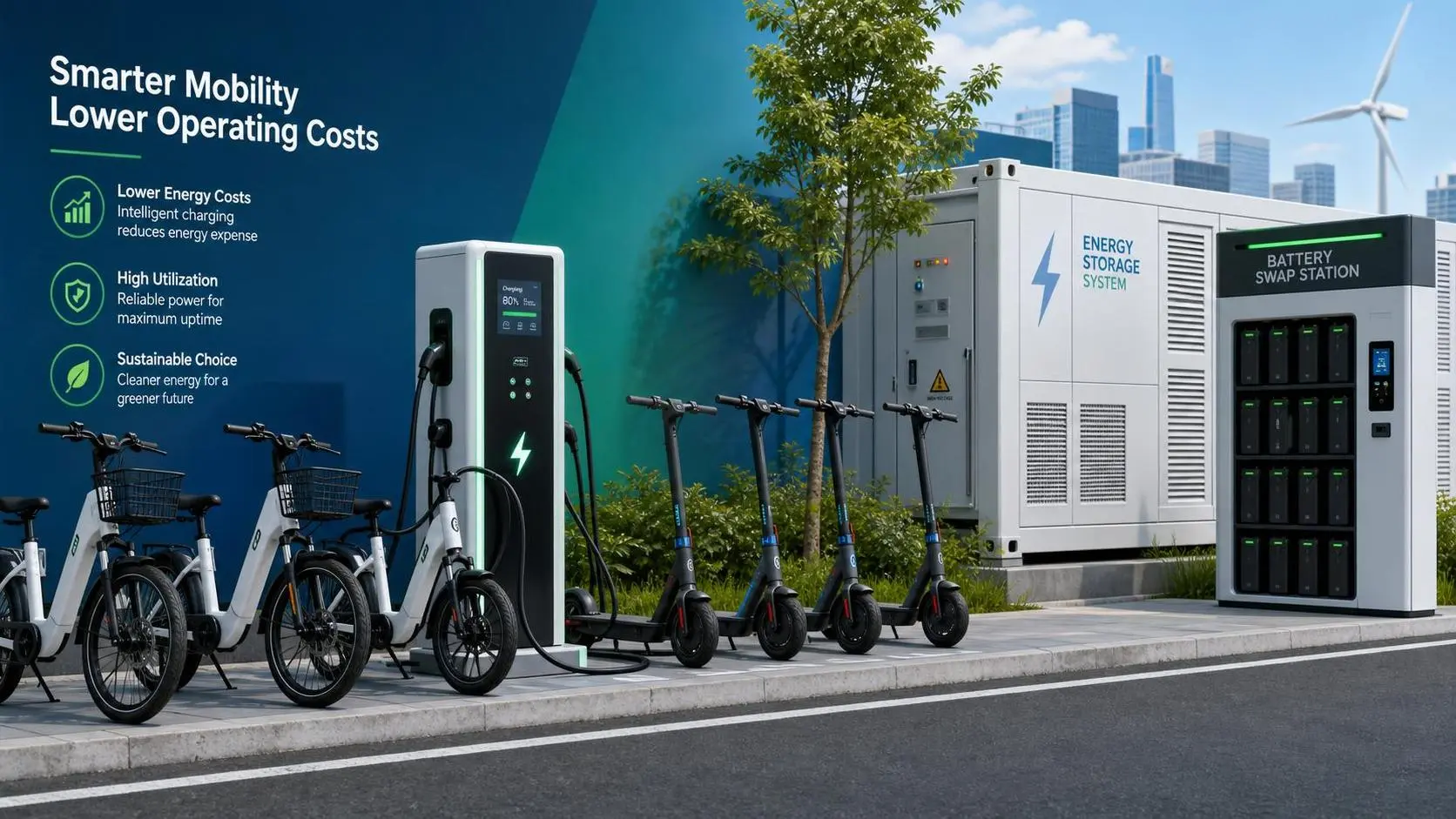
Electric Mobility Challenges Explained: Grid Limits, Charging Access, and TCO
Electric mobility challenges explained: discover how grid limits, charging access, and TCO shape EV adoption, fleet uptime, and smarter micro-mobility growth strategies.
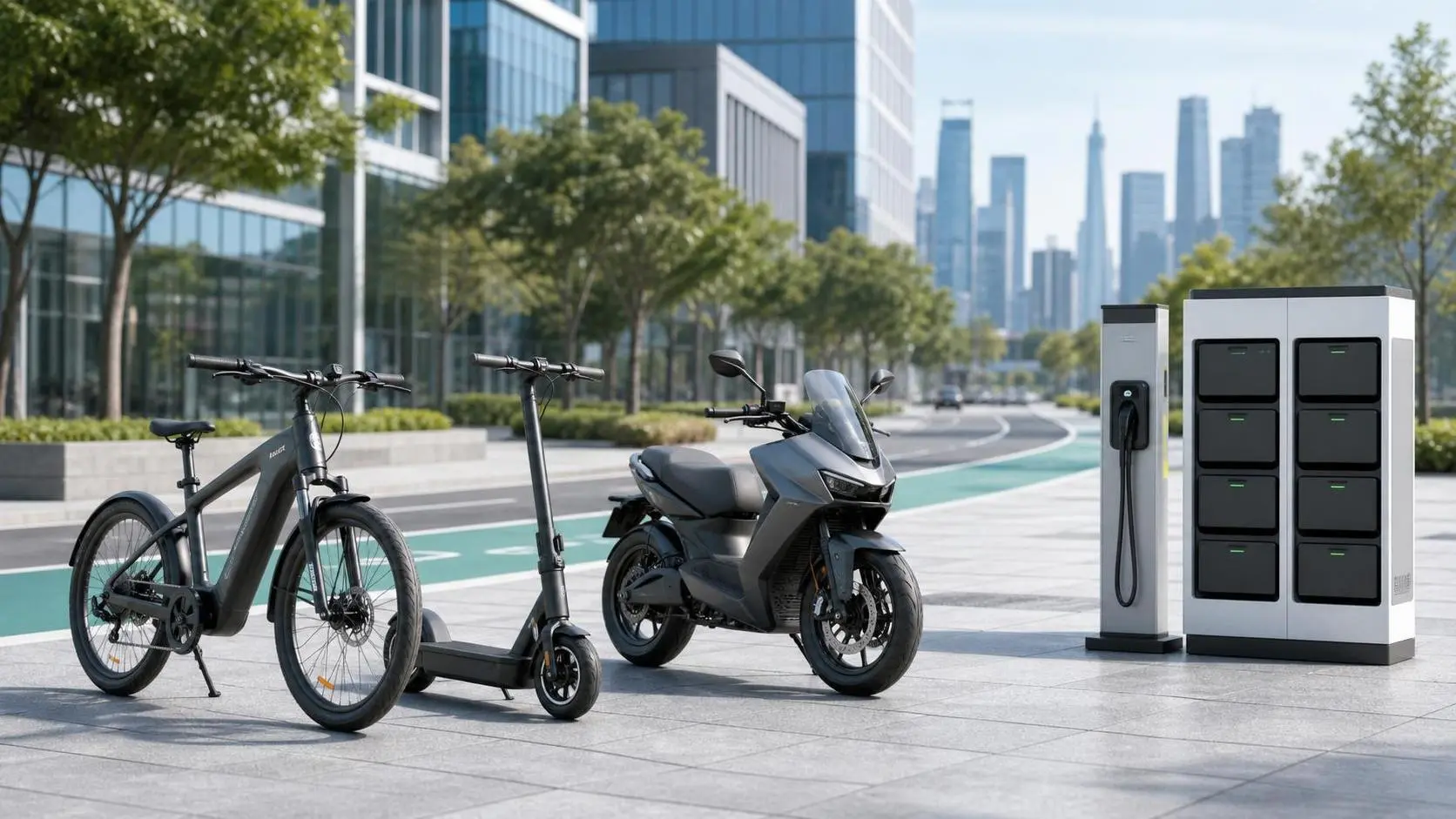
Two Wheeler Electrification Trends: What Is Driving Adoption in Urban Mobility?
Two wheeler electrification trends are reshaping urban mobility through smarter batteries, supportive policy, and flexible transport. Explore what is driving adoption now.