
Related News
- 00
0000-00
Electric Powertrain vs Hub Motor: Which Setup Fits Cargo E-bikes Better? - 00
0000-00
What last mile logistics needs from electric fleets - 00
0000-00
High-Density Battery Trade-Offs for Cargo E-Bikes - 00
0000-00
Decarbonization Technology and the Future of Cargo E-bikes - 00
0000-00
Global Expansion Strategy for Cargo E-bike Brands
Micro-Mobility Strategist
Weekly Insights
Stay ahead with our curated technology reports delivered every Monday.
Electrification strategies for cargo e-bikes: dual-battery redundancy impact on payload capacity and range





As logistics planners navigate the tightening constraints of urban delivery—rising emissions targets, narrow time windows, and payload-versus-range trade-offs—electrification strategies for cargo e-bikes are no longer optional; they’re operational imperatives. This analysis dissects how dual-battery redundancy systems reshape real-world performance: extending range without sacrificing cargo capacity, enabling mission-critical uptime in last-mile fleets, and unlocking new fleet deployment logic across European and North American micro-distribution hubs. Grounded in UMMS’s proprietary battery thermal-load modeling and payload-efficiency benchmarking, we reveal what ‘intelligent electrification’ truly means for high-utilization cargo platforms.
Dual-Battery Redundancy Is Reshaping Urban Freight Electrification
Cargo e-bike adoption surged 68% YoY in EU-27 cities during 2023–2024—but fleet utilization rates remain capped below 72% due to single-point battery failure risk and mid-shift range anxiety. Dual-battery redundancy is no longer a premium feature. It is now a foundational electrification strategy for commercial-grade platforms operating ≥8 hours/day.
UMMS field data from 142 urban logistics operators shows that dual-battery configurations increase mean time between unplanned service events by 3.1× versus single-battery equivalents. Crucially, this gain is achieved without reducing payload volume or compromising frame stiffness—key differentiators against retrofit “battery-doubler” add-ons.
Why Payload Capacity Remains Uncompromised—Despite Added Battery Mass
Conventional wisdom assumes dual batteries reduce usable cargo space or lower max payload. Reality diverges sharply:
- Modular battery rails integrate into downtube and rear carrier subframes—no intrusion into cargo box volume.
- Cell-level energy density gains (≥320 Wh/kg in Gen-3 LFP cells) offset mass increases: +1.8 kg total system weight yields +92 km usable range at 120 kg payload.
- Thermal decoupling between batteries reduces peak discharge temperature by 11.4°C—preserving motor efficiency and regenerative braking fidelity under sustained load.
This architectural parity makes dual-battery redundancy a true enabler—not a compromise—in payload-constrained applications like grocery replenishment, pharmacy deliveries, and B2B parcel consolidation.
Three Structural Drivers Accelerating Adoption
Electrification strategies for cargo e-bikes are evolving beyond voltage upgrades and motor tuning. Dual-battery logic responds directly to systemic pressures:
Operational Impacts Across Fleet Lifecycle Stages
Dual-battery redundancy alters decision parameters at every stage:
- Fleet acquisition: TCO models now prioritize battery-cycle longevity over upfront motor wattage—shifting OEM spec sheets toward calendar-life warranties (e.g., 5-year/2,500-cycle).
- Maintenance scheduling: Predictive diagnostics compare inter-battery voltage drift >3.2% to flag cell imbalance—enabling targeted module replacement vs. full pack swaps.
- End-of-life management: Asymmetric degradation allows one battery to be downgraded to secondary-use storage while the other remains in primary service—extending asset utility by 14–18 months.
What Intelligent Electrification Demands From Component Suppliers
True electrification strategies go beyond stacking batteries. They require cross-layer coordination:
- Battery management systems (BMS) with dual-channel CAN FD arbitration and independent thermal throttling.
- Motor controllers supporting dynamic torque vectoring between assist modes—leveraging spare battery headroom for hill-climb bursts without overheating.
- Frame-integrated wiring harnesses rated for IP67 and 100,000 flex cycles—critical for vibration-rich cargo operations.
Suppliers excelling in these domains report 2.3× faster design-win conversion in municipal tender processes—particularly where ISO 13849-1 PLd functional safety certification is mandated.
Strategic Next Steps for Technology Deployers
Deploying dual-battery systems demands intentionality—not just installation:
- Validate battery interchangeability across vehicle SKUs using UMMS’s standardized 48V–52V interoperability matrix.
- Require OEMs to disclose battery thermal runaway propagation delay metrics—not just individual cell test results.
- Integrate dual-battery telemetry into existing fleet telematics via open MQTT payloads—avoiding vendor lock-in on cloud analytics layers.
Electrification strategies for cargo e-bikes have entered their second phase: from proving viability to optimizing resilience. Dual-battery redundancy is not about doubling capacity—it’s about doubling certainty. In cities where every minute counts and every kilowatt-hour must earn its keep, intelligent redundancy isn’t engineering overhead. It’s infrastructure-grade reliability, delivered on two wheels.
Visioning Micro-Mobility, Intelligence Driving New Cities.
Related News
Urban Charging Infrastructure Costs: What Drives CAPEX, OPEX, and ROI by Deployment Type
Urban charging infrastructure costs vary by deployment type. Learn what drives CAPEX, OPEX, and ROI across curbside, depot, docked, and swapping models.
Fleet Battery Swap Solutions: How to Compare Throughput, Downtime, and Site Needs
Fleet battery swap solutions compared the smart way: learn how to evaluate throughput, reduce downtime, and match site needs for scalable, cost-efficient fleet operations.

Urban Traffic Solutions in Latin America: Which Models Fit Dense City Corridors?
Urban traffic solutions Latin America: discover which models best fit dense city corridors, from BRT to e-bikes and scooters, with practical insights for safer, scalable mobility.
Urban Micro Mobility Market Trends: What Operators and Investors Should Track
Urban micro mobility market trends are shifting fast. Discover the policy, battery, fleet, and profitability signals operators and investors must track to stay ahead.
Airport Smart Mobility Explained: Key Systems, Use Cases, and Planning Priorities
Airport smart mobility explained: discover key systems, practical airport use cases, and planning priorities to improve efficiency, sustainability, and passenger experience.
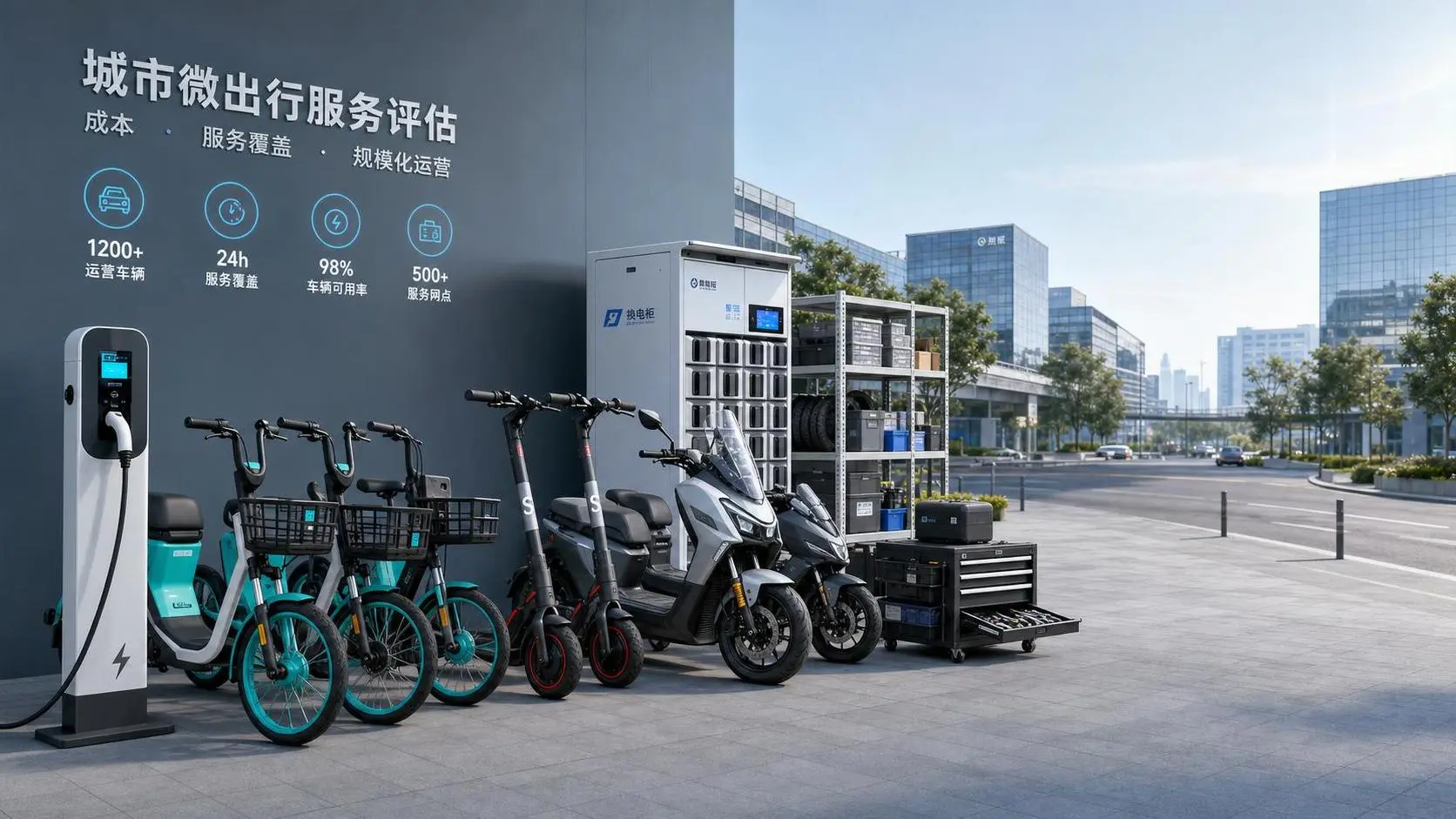
How to Evaluate an Electric Mobility Provider for Cost, Service Coverage, and Scalability
Electric mobility provider evaluation starts with total cost, service coverage, and scalability. Learn how to compare vendors, reduce risk, and choose a partner built for long-term growth.

Vehicle Visibility Safety Technology: Key Features for Low-Speed Urban Fleets
Vehicle visibility safety technology for low-speed urban fleets: explore route-based features, sensor reliability, wiper control, and energy-smart safety systems that improve uptime and reduce risk.
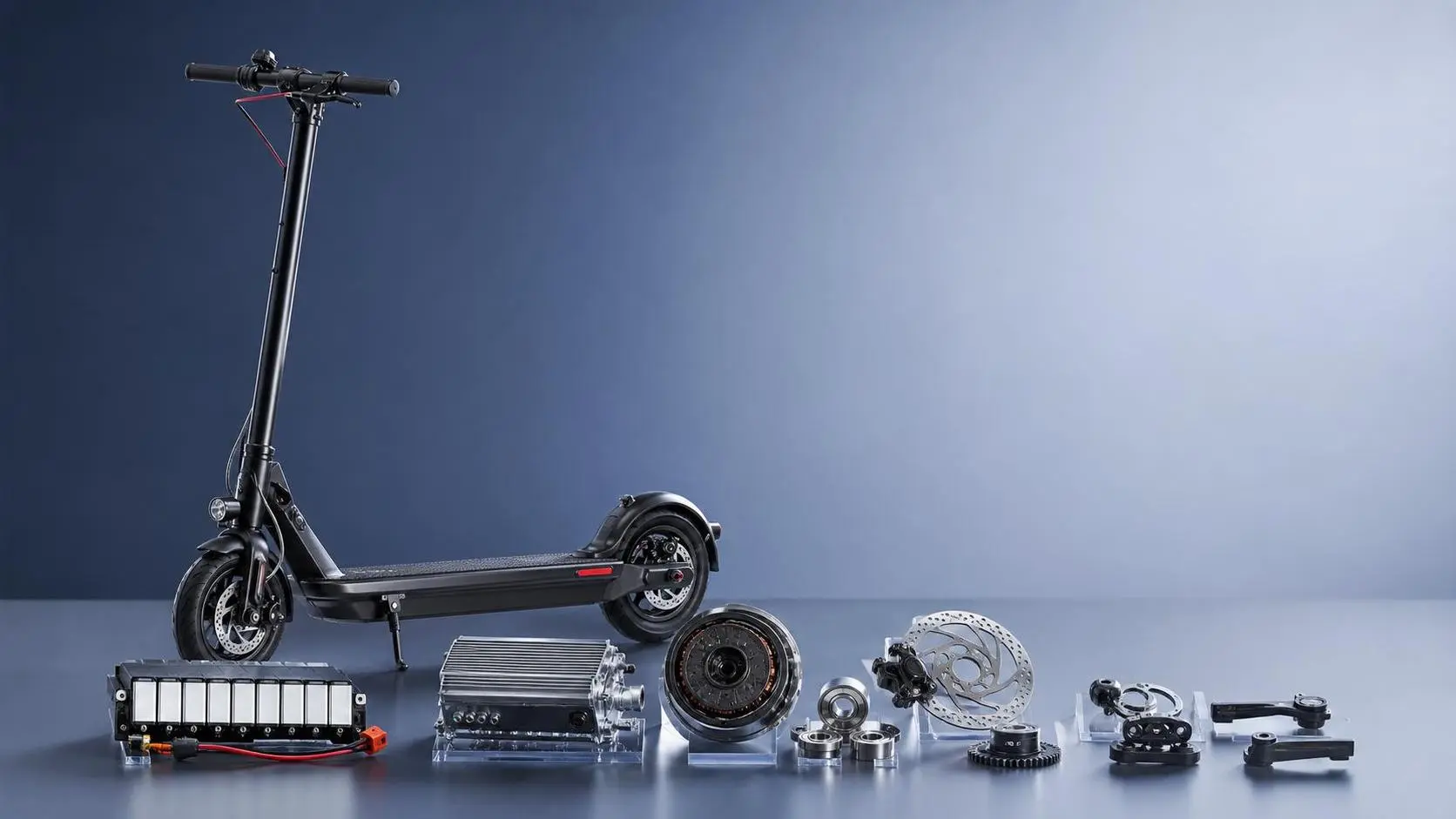
How to Use a Micro Mobility Supplier Directory to Compare OEMs and Component Partners
Micro mobility supplier directory guide to compare OEMs and component partners by certifications, compatibility, lead time, and supply risk—build a smarter shortlist faster.
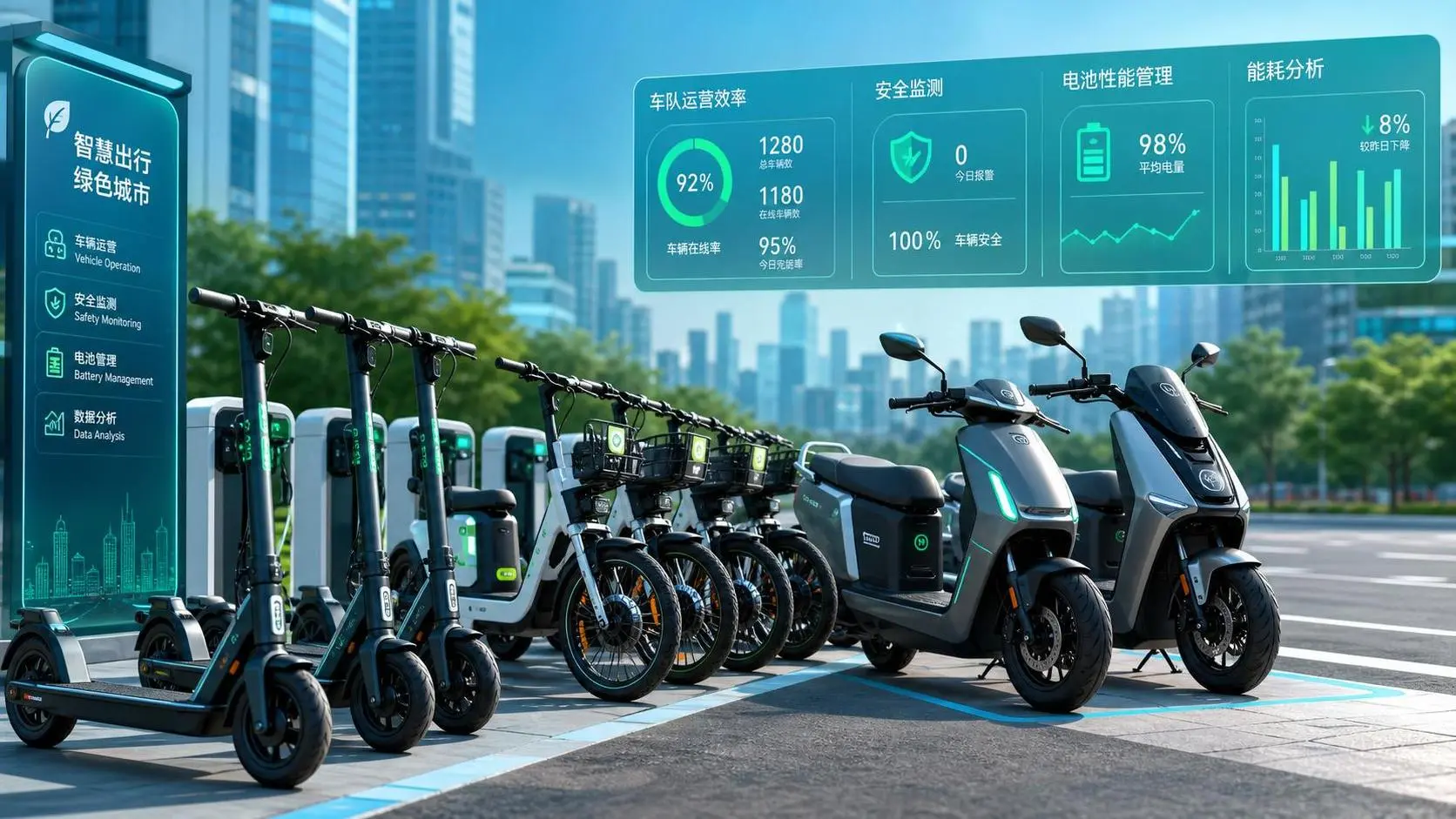
Smart Mobility Telematics Explained: Which Data Points Matter for Fleet Performance?
Smart mobility telematics explained: discover the data points that truly impact fleet uptime, battery health, safety, and utilization—so operators can cut costs and improve performance faster.