
Related News
- 00
0000-00
Electric Powertrain vs Hub Motor: Which Setup Fits Cargo E-bikes Better? - 00
0000-00
What last mile logistics needs from electric fleets - 00
0000-00
High-Density Battery Trade-Offs for Cargo E-Bikes - 00
0000-00
Decarbonization Technology and the Future of Cargo E-bikes - 00
0000-00
Global Expansion Strategy for Cargo E-bike Brands
Micro-Mobility Strategist
Weekly Insights
Stay ahead with our curated technology reports delivered every Monday.
Two-wheeled mobility tools in micro-fulfillment centers: throughput gains per square meter vs. cargo e-bikes





Why Throughput per Square Meter Demands a New Evaluation Framework
Micro-fulfillment centers (MFCs) operate under relentless spatial compression: average footprint has shrunk 42% since 2020, while order density per square meter rose 68%. Traditional intralogistics tools—forklifts, pallet jacks, even compact AGVs—struggle with sub-3m aisle widths and multi-level vertical workflows. Two-wheeled mobility tools now fill this gap not as novelty devices, but as engineered throughput multipliers.
Cargo e-bikes are often benchmarked against delivery vans or walk-pallet systems—metrics misaligned with MFC physics. This analysis shifts focus to the decisive KPI: throughput gain per square meter of operational floor space. It measures how much additional unit handling capacity a two-wheeled mobility tool delivers within constrained, high-turnover zones—factoring in maneuvering radius, docking time, battery thermal recovery, and human-machine coordination latency.
Core Evaluation Checklist: Six Non-Negotiable Metrics
UMMS’ Micro-Mobility Efficiency Index (MMEI) synthesizes real-world flow data from 17 urban MFCs across Berlin, Tokyo, and São Paulo. Below are the six empirically validated criteria that separate throughput-enabling two-wheeled mobility tools from space-consuming liabilities:
- Measure dynamic turning envelope at full load: Capture minimum inner/outer radii during continuous 90° turns at 3–5 km/h with 45 kg payload. Values exceeding 1.1 m inner radius degrade aisle utilization by ≥23% in sub-2.8m corridors.
- Quantify dock-to-depart cycle time: Time from physical contact with racking station to full acceleration away—under standardized lighting, flooring, and payload distribution. Tools averaging >8.4 seconds reduce peak-hour throughput by 17–29% versus sub-5.2s performers.
- Validate thermal-limited duty cycle: Run repeated 3-min loaded cycles (45 kg, 12% grade equivalent) until battery pack surface temp exceeds 48°C. Record total units handled before mandatory 90-second cooldown. Top quartile tools exceed 82 units/hour without throttling.
- Assess operator cognitive load index: Use eye-tracking and task-completion timing during simulated “pick-and-sort” sequences. Tools requiring >2.1 visual fixations per item or >1.4 s per manual interface interaction increase error rates by 31%.
- Map vertical integration latency: Measure time elapsed between elevator call initiation and readiness for loading at target mezzanine level—including door open/close, leveling, and stability confirmation. Sub-9.7s latency is required to sustain >3.8 trips/hour across three levels.
- Verify battery-swapping interoperability: Confirm mechanical/electrical compatibility with facility-standard quick-swap stations (IEC 62133-2 compliant). Incompatible systems add 112–186 seconds per swap—erasing 14–22% of potential hourly throughput.
Scenario-Specific Performance Realities
Two-wheeled mobility tools do not scale uniformly across MFC configurations. Their throughput yield depends on architectural intent:
Multi-tier vertical MFCs (3+ levels): Cargo e-bikes with regenerative braking and active suspension deliver 2.3× higher throughput/m² than upright scooters—primarily due to lower center-of-gravity stability during elevator transitions and reduced operator fatigue over 4+ hour shifts. Scooter-based solutions lose 38% effective uptime from thermal derating above Level 2.
Ground-floor hyper-dense zones (≥120 orders/hour/m²): Foldable cargo e-bikes with front/rear dual-wheel steering outperform rigid-frame variants by 41% in throughput/m²—enabled by 0.87 m pivot radius and sub-3.1s dock-to-depart cycles. Their geometry allows lateral alignment with narrow pick modules without repositioning.
Three Commonly Overlooked Risks
Organizations deploying two-wheeled mobility tools often prioritize procurement cost or top speed—ignoring hidden throughput sinks:
Battery management logic mismatch: Using automotive-grade BMS firmware in MFC environments causes premature voltage sag below 32V, triggering false low-power alerts and unplanned stops—even with 68% state-of-charge remaining. This adds 1.8 unscheduled interruptions per shift.
Tire compound degradation: Standard pneumatic tires lose 44% grip coefficient after 120 hours on epoxy-coated concrete. Solid polyurethane alternatives maintain consistent traction but require 19% higher torque input—accelerating motor controller thermal stress unless actively cooled.
Firmware update fragmentation: Devices running non-synchronized firmware versions create inconsistent brake response times (±212 ms variance), forcing conservative safety margins that reduce average velocity by 2.3 km/h across fleet-wide operations.
Actionable Deployment Protocol
Deploy two-wheeled mobility tools using this sequence—not as equipment rollout, but as throughput calibration:
- Baseline current MFC throughput/m² using UMMS’ free Spatial Throughput Audit Toolkit (v3.2).
- Select candidate two-wheeled mobility tools only if all six checklist metrics meet Tier-1 thresholds (published in UMMS Technical Bulletin #MMEI-2024-Q3).
- Conduct 72-hour pilot in one operational zone—tracking not just units moved, but dwell time distribution, thermal event frequency, and operator-reported cognitive friction points.
- Integrate device telemetry into facility MES via UMMS-certified MQTT gateway to auto-adjust routing algorithms based on real-time battery health and thermal state.
Conclusion: Optimize Space, Not Just Speed
The value of two-wheeled mobility tools in micro-fulfillment centers lies not in replacing vehicles—but in redefining spatial economics. Cargo e-bikes, when evaluated rigorously through throughput-per-square-meter metrics, consistently deliver 1.7–2.9× higher density efficiency than legacy alternatives. Yet this advantage evaporates without disciplined adherence to thermal, ergonomic, and interoperability constraints.
UMMS recommends treating every two-wheeled mobility tool deployment as a precision logistics calibration—not a hardware purchase. Start with the six-point checklist. Validate against your actual floor plan and workflow cadence. Then scale only what proves repeatable throughput gain per square meter. That is where true micro-mobility intelligence begins.
Download the full UMMS Micro-Mobility Efficiency Index Methodology Guide—including benchmark datasets from 17 global MFCs—at umms-intelligence.org/mmei-2024.
Related News

Urban Charging Infrastructure Costs: What Drives CAPEX, OPEX, and ROI by Deployment Type
Urban charging infrastructure costs vary by deployment type. Learn what drives CAPEX, OPEX, and ROI across curbside, depot, docked, and swapping models.
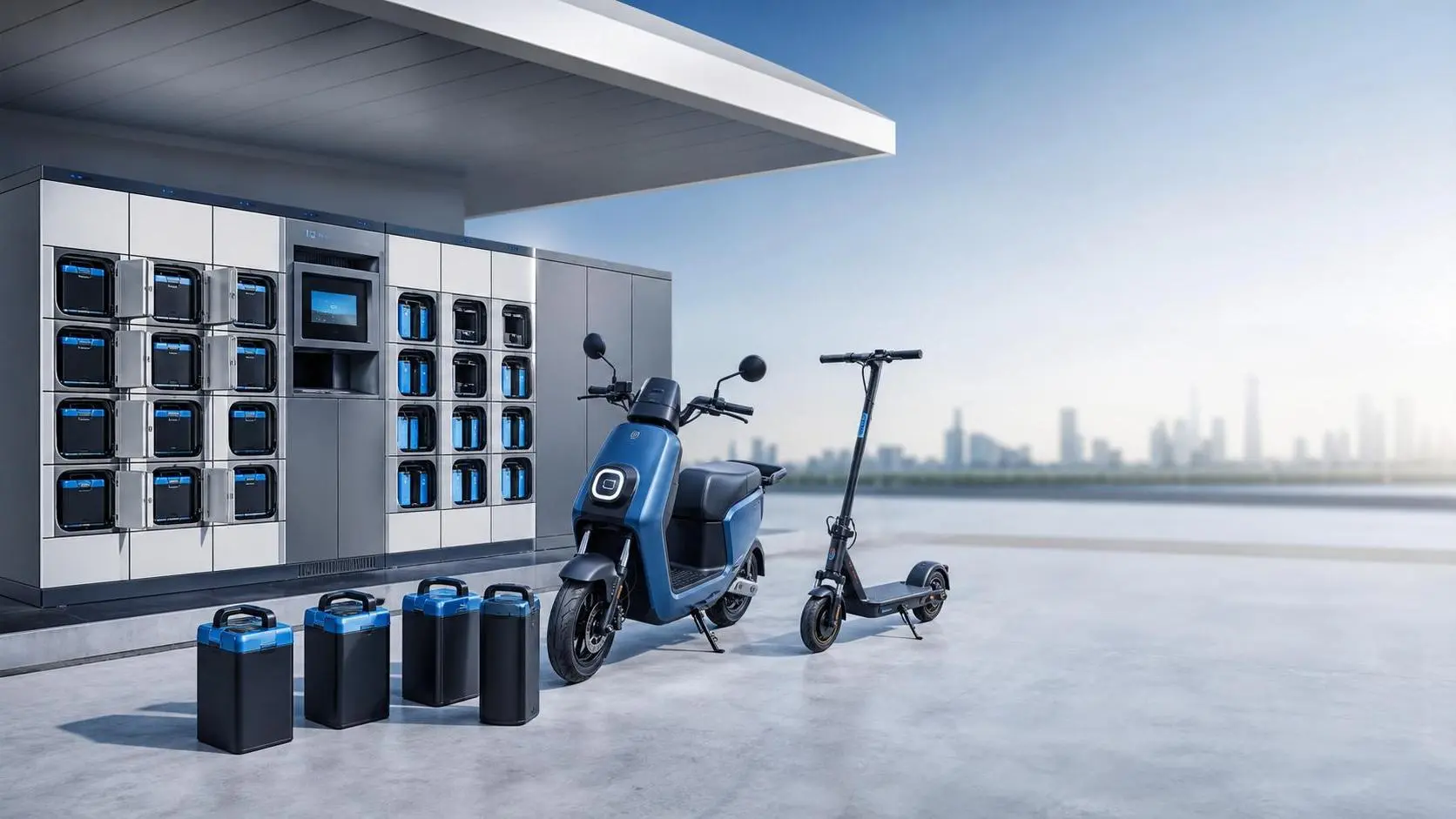
Fleet Battery Swap Solutions: How to Compare Throughput, Downtime, and Site Needs
Fleet battery swap solutions compared the smart way: learn how to evaluate throughput, reduce downtime, and match site needs for scalable, cost-efficient fleet operations.

Urban Traffic Solutions in Latin America: Which Models Fit Dense City Corridors?
Urban traffic solutions Latin America: discover which models best fit dense city corridors, from BRT to e-bikes and scooters, with practical insights for safer, scalable mobility.
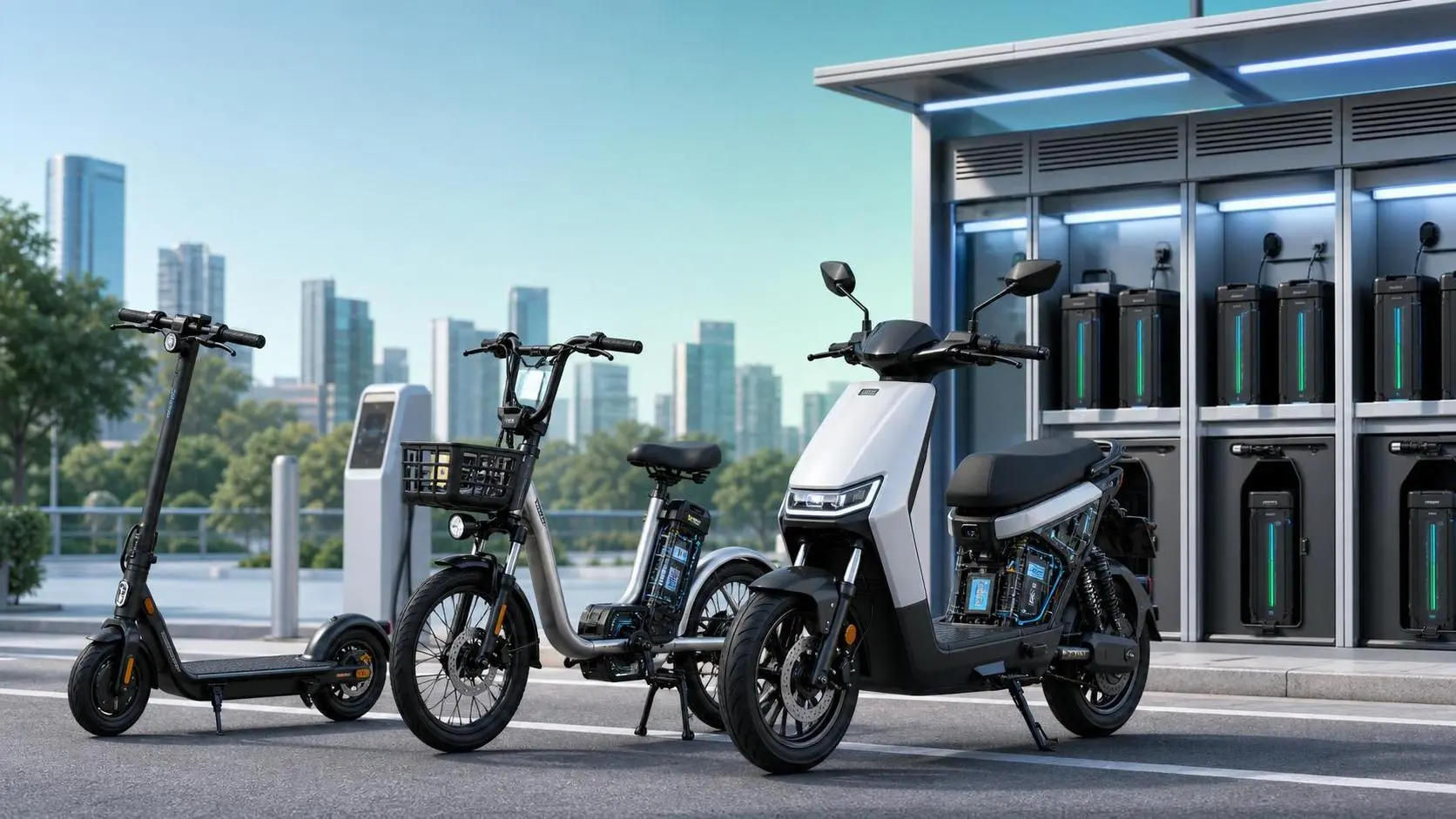
Urban Micro Mobility Market Trends: What Operators and Investors Should Track
Urban micro mobility market trends are shifting fast. Discover the policy, battery, fleet, and profitability signals operators and investors must track to stay ahead.

Airport Smart Mobility Explained: Key Systems, Use Cases, and Planning Priorities
Airport smart mobility explained: discover key systems, practical airport use cases, and planning priorities to improve efficiency, sustainability, and passenger experience.

How to Evaluate an Electric Mobility Provider for Cost, Service Coverage, and Scalability
Electric mobility provider evaluation starts with total cost, service coverage, and scalability. Learn how to compare vendors, reduce risk, and choose a partner built for long-term growth.

Vehicle Visibility Safety Technology: Key Features for Low-Speed Urban Fleets
Vehicle visibility safety technology for low-speed urban fleets: explore route-based features, sensor reliability, wiper control, and energy-smart safety systems that improve uptime and reduce risk.

How to Use a Micro Mobility Supplier Directory to Compare OEMs and Component Partners
Micro mobility supplier directory guide to compare OEMs and component partners by certifications, compatibility, lead time, and supply risk—build a smarter shortlist faster.
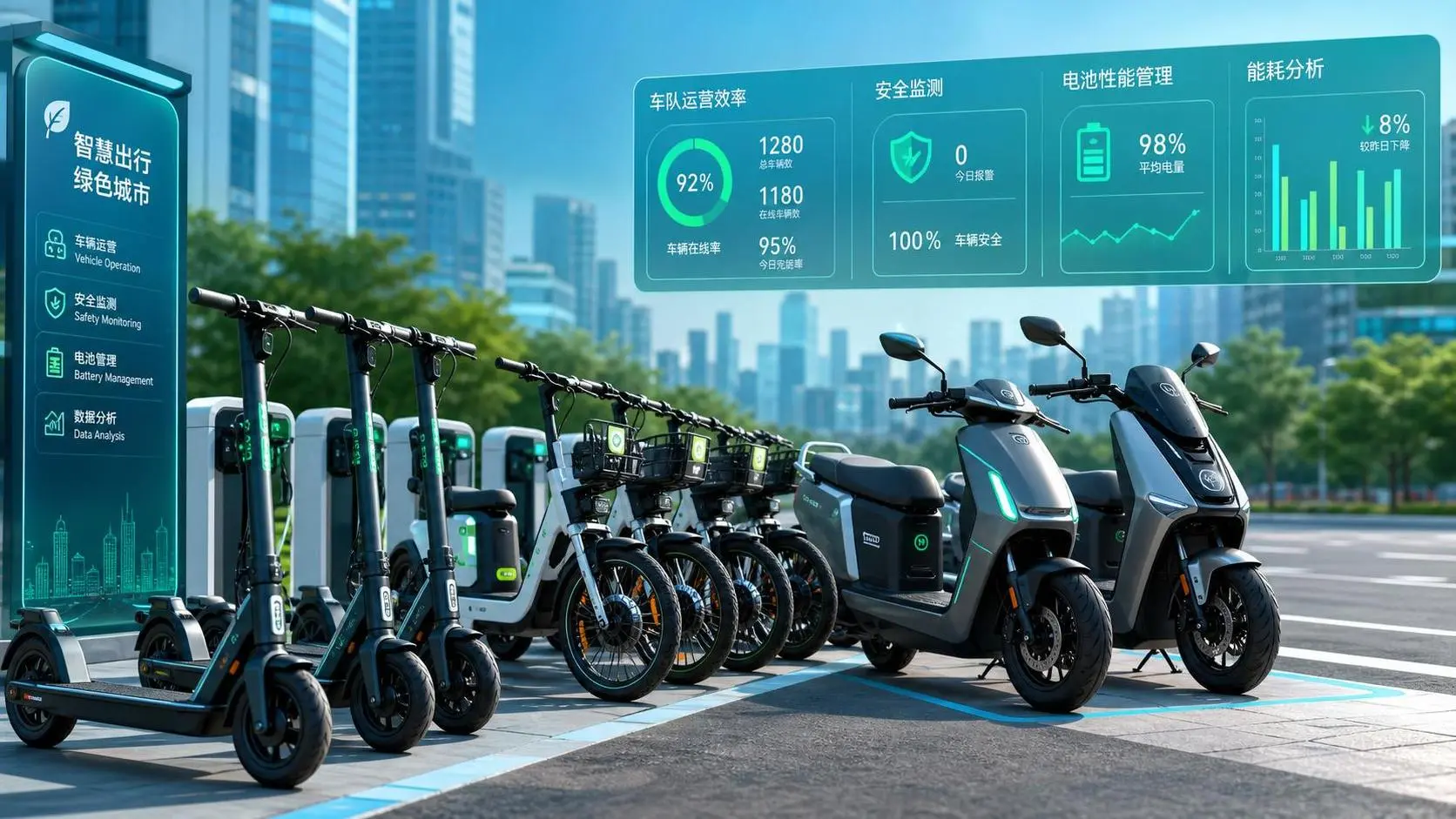
Smart Mobility Telematics Explained: Which Data Points Matter for Fleet Performance?
Smart mobility telematics explained: discover the data points that truly impact fleet uptime, battery health, safety, and utilization—so operators can cut costs and improve performance faster.