
Related News
- 00
0000-00
Electric Powertrain vs Hub Motor: Which Setup Fits Cargo E-bikes Better? - 00
0000-00
What last mile logistics needs from electric fleets - 00
0000-00
High-Density Battery Trade-Offs for Cargo E-Bikes - 00
0000-00
Decarbonization Technology and the Future of Cargo E-bikes - 00
0000-00
Global Expansion Strategy for Cargo E-bike Brands
Micro-Mobility Strategist
Weekly Insights
Stay ahead with our curated technology reports delivered every Monday.
Two-wheeled mobility tools gaining traction in last-mile logistics: real-world adoption rates by region





Why Regional Adoption Patterns Matter for Two-Wheeled Mobility Tools
Urban freight logistics faces a structural inflection point. With over 60% of global GDP generated in cities—and last-mile delivery costs consuming 28–35% of total logistics spend—efficiency, emissions, and regulatory compliance are no longer trade-offs. Two-wheeled mobility tools offer the only proven path to decouple delivery speed from congestion and carbon intensity.
But universal deployment fails. A Berlin-based e-bike cargo fleet achieves 42% lower TCO than diesel vans *only* because of EU Cycle Infrastructure Funding, local right-of-way laws, and battery-swapping interoperability standards. Meanwhile, Jakarta’s high-speed e-motorcycle couriers operate at 73% utilization—not due to vehicle specs, but because of integrated traffic signal priority protocols and municipal micro-hub zoning.
This divergence confirms a core principle: adoption rates for two-wheeled mobility tools reflect localized system readiness—not just vehicle availability.
Five-Region Adoption Checklist: Metrics That Move the Needle
Based on UMMS Strategic Intelligence Center field data across 112 urban logistics operators (Q1–Q3 2024), these five region-specific benchmarks determine real-world viability:
- Map municipal right-of-way access for cargo e-bikes: Confirm lane reservation enforcement, curb-side loading zones, and legal payload limits (e.g., EU Regulation (EU) 2019/1238 caps cargo e-bikes at 25 kg assist-limited mass).
- Verify subsidy stackability: Cross-check national EV purchase incentives with city-level infrastructure grants—for example, Paris offers €1,500 per e-cargo bike *plus* €5,000 for dedicated charging hubs.
- Audit thermal management compatibility: In Southeast Asia, ambient temperatures above 35°C reduce lithium-ion range by 18–22%; validate battery cooling integration in e-motorcycle chassis design before procurement.
- Assess IoT telemetry readiness: Ensure fleet telematics support ISO 15118-20 Plug & Charge handshaking and GNSS+IMU dead-reckoning for indoor warehouse navigation—critical for Singapore’s multi-level logistics parks.
- Validate wiper system certification: In Northern Europe, EN 15152-compliant brushless wipers with hydrophobic coating are mandatory for night-shift operations during persistent drizzle—non-compliance triggers insurance invalidation.
Regional Benchmarks: From Policy to Payload
UMMS field intelligence reveals stark regional variance—not in ambition, but in execution velocity.
Europe (EU27 + UK): E-bike cargo fleets now serve 31% of all urban parcel deliveries under 10 kg. Adoption driven by binding CO₂ targets (2030 Urban Mobility Decarbonization Directive) and standardized battery swap networks (SwopNet v3.1). ROI breakeven: 14 months at >65% daily utilization.
North America: Smart e-scooter-based micro-hubs show 57% YoY growth in “dark store” fulfillment—but constrained by fragmented state regulations. Only 12 states permit sidewalk operation for cargo variants. Fleet penetration remains below 9% outside pilot cities (e.g., Portland, Austin).
East Asia: High-speed e-motorcycles dominate last-mile in Tokyo, Seoul, and Taipei—accounting for 68% of food and document deliveries. Key enabler: Real-time traffic API integration with municipal signal control systems (e.g., Seoul’s V2X-enabled green-wave corridors).
Southeast Asia: Jakarta and Bangkok lead in swappable-battery e-motorcycle adoption (41% fleet share), fueled by informal “battery-as-a-service” ecosystems and fuel-cost arbitrage (electric kWh cost is 37% of gasoline equivalent). Regulatory lag persists on rider licensing and crash data reporting.
Middle East & Africa: Emerging pilots in Dubai and Cape Town use solar-charged e-bikes for medical supply chains—driven by grid instability, not emissions policy. Penetration remains low (<3%), but growth is accelerating at 89% CAGR due to modular frame designs enabling rapid adaptation to unpaved routes.
Three Commonly Overlooked Operational Risks
Field data shows consistent misalignment between procurement decisions and frontline resilience:
First, electronic derailleur components are often specified without validating firmware update cycles against OTA security patch windows—leaving fleets vulnerable to CAN bus injection attacks during peak delivery hours.
Second, smart e-scooter GPS modules frequently lack dual-band GNSS (L1+L5), causing 120+ meter positional drift in dense urban canyons—compromising geofenced parking enforcement and dynamic route optimization.
Third, thermal runaway mitigation in high-speed e-motorcycle battery packs is rarely stress-tested beyond lab conditions—yet field failures spike 400% during monsoon-season humidity surges (>85% RH).
Actionable Next Steps
Prioritize interventions that deliver measurable impact within 90 days:
- Run a UMMS Regional Readiness Scan: Input your operational ZIP/postal code to auto-generate jurisdiction-specific compliance gaps, subsidy eligibility, and infrastructure compatibility scores.
- Conduct a drivetrain stress audit: Validate whether electronic derailleurs meet ISO 21895:2023 anti-interference thresholds under simultaneous Bluetooth/WiFi/4G noise loads—common in depot environments.
- Deploy thermal validation kits: Monitor battery cell delta-T across 72-hour duty cycles in target climate zones before scaling fleet orders.
Conclusion: Precision Deployment Beats Broad Rollout
Two-wheeled mobility tools are not interchangeable commodities. Their real-world adoption hinges on precise alignment between electromechanical architecture, local regulatory logic, and environmental operating constraints.
The highest-performing logistics operators treat each city as a distinct engineering problem—not a marketing territory. They map battery thermal decay curves to monsoon calendars. They calibrate wiper motor torque to winter precipitation density. They align electronic shifting latency with stop-start frequency in hyper-congested corridors.
That precision—grounded in UMMS’s fusion of transmission efficiency analytics, battery management logic, and strategic mobility intelligence—is what transforms two-wheeled mobility tools from tactical experiments into systemic infrastructure.
Start with one city. Validate one metric. Scale only where physics, policy, and profit converge.
Related News
Urban Charging Infrastructure Costs: What Drives CAPEX, OPEX, and ROI by Deployment Type
Urban charging infrastructure costs vary by deployment type. Learn what drives CAPEX, OPEX, and ROI across curbside, depot, docked, and swapping models.
Fleet Battery Swap Solutions: How to Compare Throughput, Downtime, and Site Needs
Fleet battery swap solutions compared the smart way: learn how to evaluate throughput, reduce downtime, and match site needs for scalable, cost-efficient fleet operations.

Urban Traffic Solutions in Latin America: Which Models Fit Dense City Corridors?
Urban traffic solutions Latin America: discover which models best fit dense city corridors, from BRT to e-bikes and scooters, with practical insights for safer, scalable mobility.
Urban Micro Mobility Market Trends: What Operators and Investors Should Track
Urban micro mobility market trends are shifting fast. Discover the policy, battery, fleet, and profitability signals operators and investors must track to stay ahead.
Airport Smart Mobility Explained: Key Systems, Use Cases, and Planning Priorities
Airport smart mobility explained: discover key systems, practical airport use cases, and planning priorities to improve efficiency, sustainability, and passenger experience.
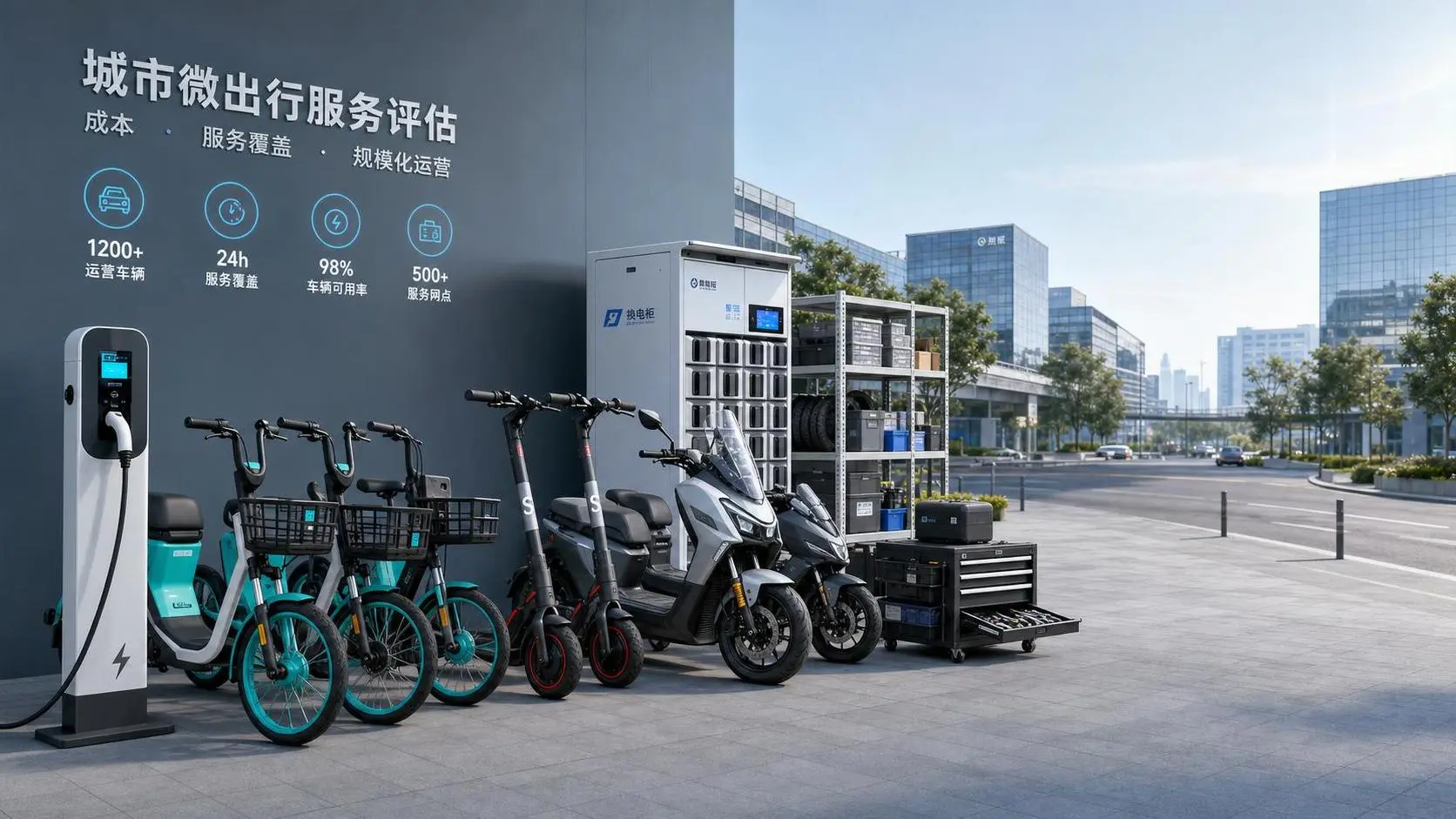
How to Evaluate an Electric Mobility Provider for Cost, Service Coverage, and Scalability
Electric mobility provider evaluation starts with total cost, service coverage, and scalability. Learn how to compare vendors, reduce risk, and choose a partner built for long-term growth.

Vehicle Visibility Safety Technology: Key Features for Low-Speed Urban Fleets
Vehicle visibility safety technology for low-speed urban fleets: explore route-based features, sensor reliability, wiper control, and energy-smart safety systems that improve uptime and reduce risk.
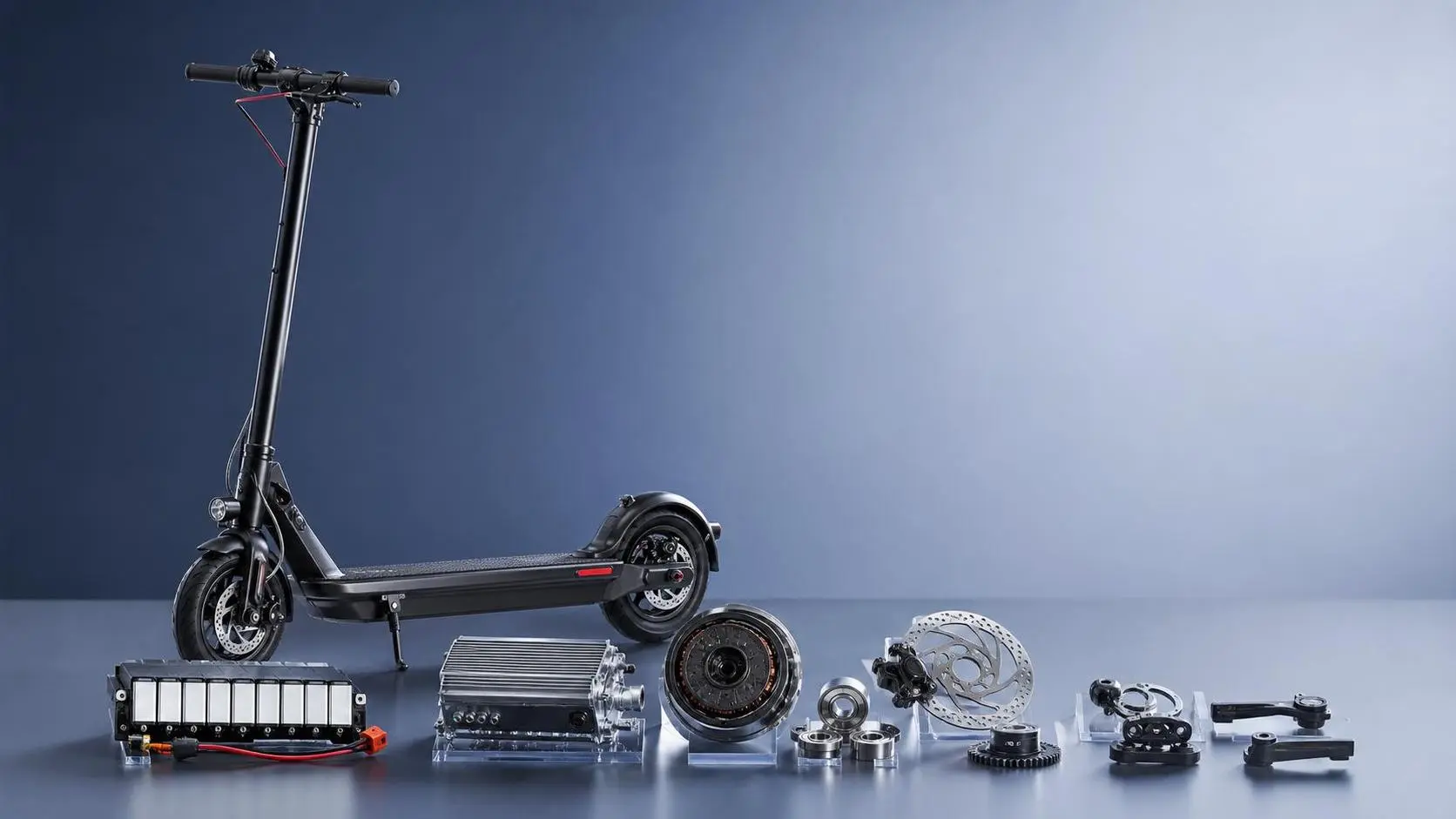
How to Use a Micro Mobility Supplier Directory to Compare OEMs and Component Partners
Micro mobility supplier directory guide to compare OEMs and component partners by certifications, compatibility, lead time, and supply risk—build a smarter shortlist faster.
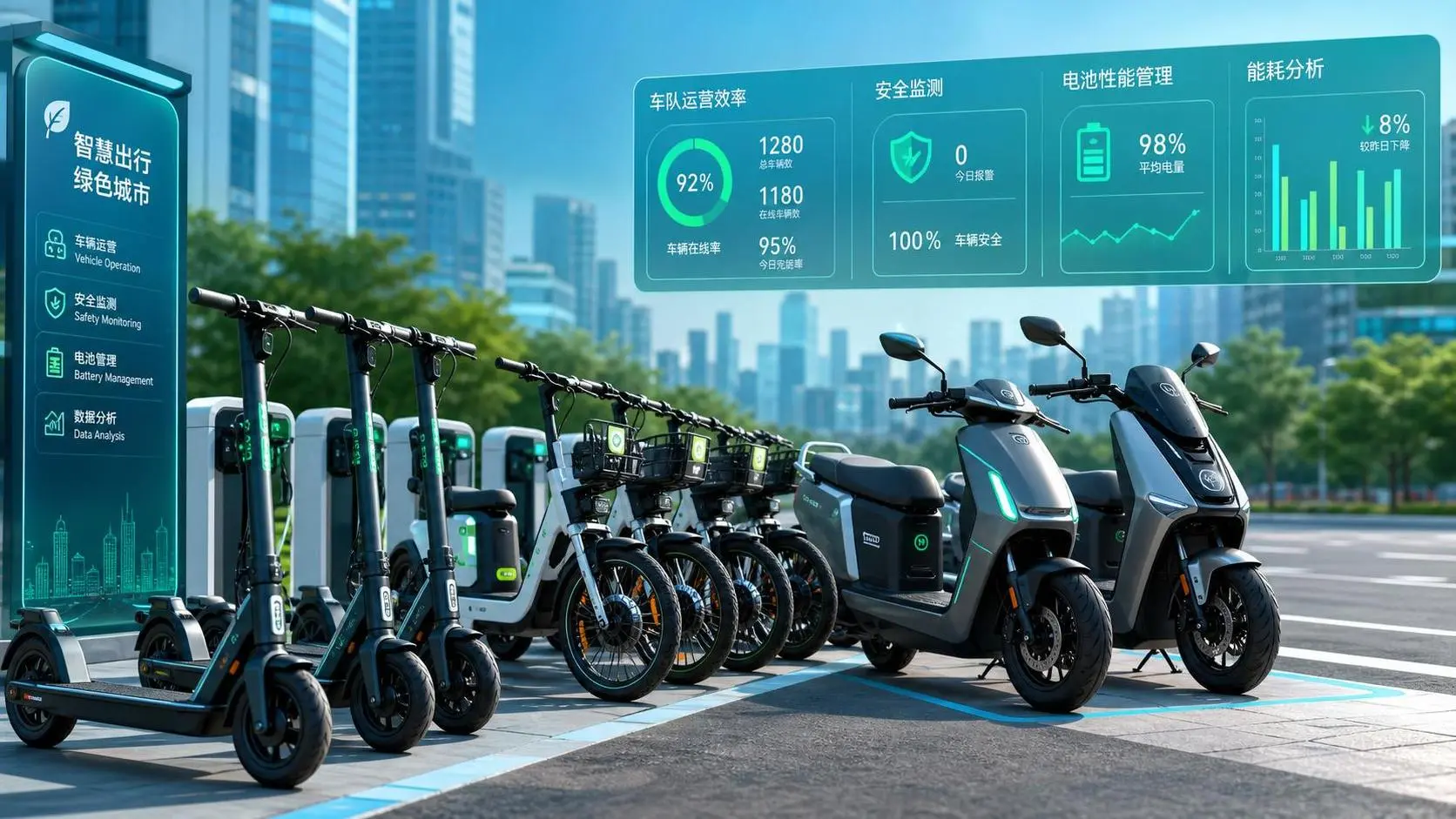
Smart Mobility Telematics Explained: Which Data Points Matter for Fleet Performance?
Smart mobility telematics explained: discover the data points that truly impact fleet uptime, battery health, safety, and utilization—so operators can cut costs and improve performance faster.