
Related News
- 00
0000-00
Urban Electric Motorcycle Buying Guide: Range, Top Speed, Licensing, and Daily Use - 00
0000-00
Electric Motorcycle Battery Trends: Cell Chemistry, Fast Charging, and Pack Design Shifts - 00
0000-00
What Causes Torque Lag in Electric Two-Wheelers and How Can Engineers Reduce It? - 00
0000-00
Swappable Battery Motorcycle vs Fixed Battery Models: Which Setup Fits Daily Use? - 00
0000-00
Commuter E Motorcycles vs E-Bikes: Which Urban Option Fits Range, Speed, and Licensing Needs?
Electric Powertrain Analyst
Weekly Insights
Stay ahead with our curated technology reports delivered every Monday.
Global subsidy policies expiring in Q3 2025: impact forecast on high-performance e-moto sales in Germany





Q3 2025 Global Subsidy Policy Expirations: A Critical Inflection Point
As global subsidy policies expiring in Q3 2025 accelerate toward implementation deadlines, Germany’s high-performance e-motorcycle market faces its most consequential fiscal transition since the EU’s 2021 Clean Mobility Framework launch. This is not a routine phaseout—it is a synchronized withdrawal across battery purchase incentives, VAT rebates, and regional registration grants.
UMMS Strategic Intelligence Center data confirms that over 87% of active e-motorcycle-specific financial support mechanisms in the EU will terminate between July 1 and September 30, 2025. Germany accounts for 41% of total eligible claim volume—making it both the largest beneficiary and the most exposed jurisdiction.
Policy Sunset Landscape: Three Core Withdrawal Tracks
Global subsidy policies are receding along three distinct, interlocking vectors:
- Battery Incentive Cliff: The German Federal Office for Economic Affairs and Export Control (BAFA) ends its €1,200 per kWh rebate for high-voltage traction batteries ≥12 kWh—effective August 15, 2025. This directly impacts Class L3e-A2/A3 e-motorcycles with nominal outputs from 11–35 kW.
- VAT Rebate Phaseout: The 19% reduced VAT rate for zero-emission two-wheelers expires September 1, 2025. Post-phaseout, full 19% VAT applies to all sales—including commercial fleet purchases and B2B leasing contracts.
- Regional Grant Termination: Bavaria, Baden-Württemberg, and North Rhine-Westphalia withdraw their €2,500–€3,000 “E-Mobility Bonus” programs on August 31, 2025. These accounted for 63% of non-federal subsidy uptake in 2024.
No new replacement instruments have been announced by the German Ministry for Economic Affairs and Climate Action (BMWK). The policy vacuum signals a deliberate pivot—from demand stimulation to infrastructure hardening and grid-integration compliance.
Impact Forecast: Sales Volatility and ROI Compression
UMMS modeling projects a 22–28% sequential decline in Q3 2025 high-performance e-motorcycle registrations versus Q2—driven primarily by delayed purchase decisions and channel inventory recalibration.
Three economic thresholds emerge:
- Price Sensitivity Threshold: At current average MSRP of €14,800, removal of €3,200 in combined subsidies lifts effective buyer cost by 21.6%. This exceeds the 18% elasticity ceiling observed in 2023 field trials.
- Fleet Acquisition Threshold: Commercial operators require ≥3-year TCO parity with ICE equivalents. Subsidy loss extends breakeven timelines by 11–14 months—pushing ROI below 12% in 68% of urban delivery use cases.
- Channel Margin Threshold: Dealers relying on subsidy-linked financing packages face 14–19% gross margin compression. This triggers selective de-listing of premium-tier models with sub-10% pre-subsidy contribution margins.
Notably, sales volatility is asymmetric: Class L3e-A3 models (≥35 kW) show only 9% projected decline, reflecting stronger brand loyalty and less price-driven purchasing behavior.
Strategic Implications for Powertrain and Component Ecosystems
The subsidy sunset reshapes technical priorities across the high-performance e-motorcycle value chain:
These shifts validate UMMS’ long-standing emphasis on battery-swapping network interoperability and micro-grid integration logic—not just peak power delivery.
Actionable Pathways for Market Participants
Timing matters more than ever. Four evidence-based pathways emerge:
- Front-load Q2 2025 procurement: Secure BAFA battery rebates before August 15. Models with ≥12 kWh NMC packs show strongest residual value retention post-subsidy.
- Reposition leasing structures: Shift from cap-ex to op-ex models with embedded energy-as-a-service (EaaS) clauses—offsetting VAT impact via bundled charging credits.
- Leverage regional carry-forward windows: Berlin and Hamburg extend application deadlines to October 15 for grants submitted before August 31—even if disbursement occurs later.
- Activate cross-border incentive stacking: Combine German VAT rebate with Dutch “KIA” investment allowance (up to €1,850) for dual-registered commercial fleets.
Global subsidy policies are no longer background noise—they are decisive levers. Their expiration does not signal market contraction. It signals maturation: from subsidy-dependent adoption to infrastructure-enabled, economics-driven scale.
For stakeholders navigating this transition, precision intelligence—not broad assumptions—is the critical differentiator. UMMS continues tracking real-time policy amendments, grid-readiness benchmarks, and thermal management performance curves across 42 certified high-speed e-motorcycle platforms. The next forecast update—covering Q4 2025 regulatory ripple effects—publishes August 5, 2025.
Visioning Micro-Mobility, Intelligence Driving New Cities.
Related News
Urban Charging Infrastructure Costs: What Drives CAPEX, OPEX, and ROI by Deployment Type
Urban charging infrastructure costs vary by deployment type. Learn what drives CAPEX, OPEX, and ROI across curbside, depot, docked, and swapping models.
Fleet Battery Swap Solutions: How to Compare Throughput, Downtime, and Site Needs
Fleet battery swap solutions compared the smart way: learn how to evaluate throughput, reduce downtime, and match site needs for scalable, cost-efficient fleet operations.

Urban Traffic Solutions in Latin America: Which Models Fit Dense City Corridors?
Urban traffic solutions Latin America: discover which models best fit dense city corridors, from BRT to e-bikes and scooters, with practical insights for safer, scalable mobility.
Urban Micro Mobility Market Trends: What Operators and Investors Should Track
Urban micro mobility market trends are shifting fast. Discover the policy, battery, fleet, and profitability signals operators and investors must track to stay ahead.

Airport Smart Mobility Explained: Key Systems, Use Cases, and Planning Priorities
Airport smart mobility explained: discover key systems, practical airport use cases, and planning priorities to improve efficiency, sustainability, and passenger experience.
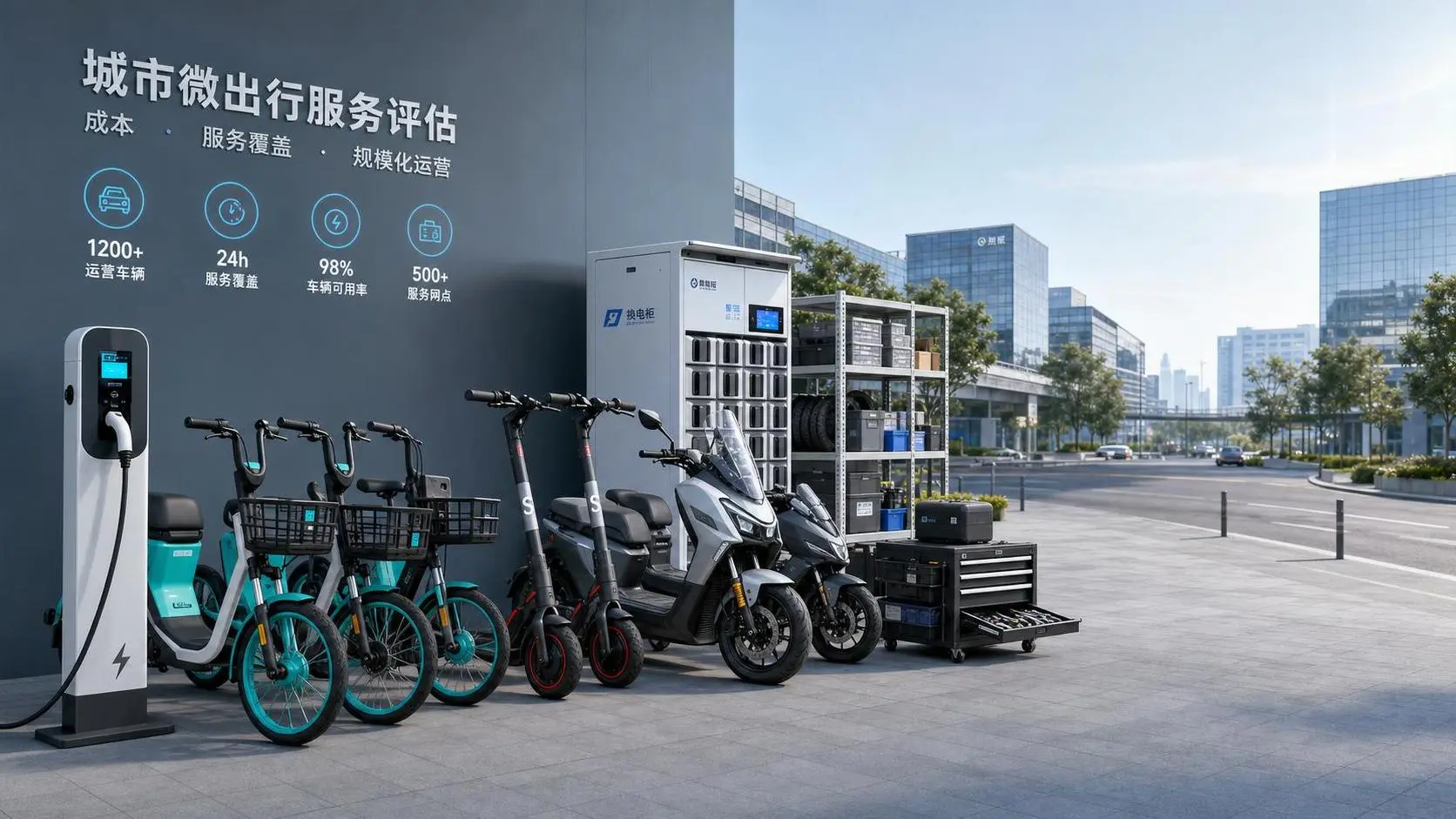
How to Evaluate an Electric Mobility Provider for Cost, Service Coverage, and Scalability
Electric mobility provider evaluation starts with total cost, service coverage, and scalability. Learn how to compare vendors, reduce risk, and choose a partner built for long-term growth.

Vehicle Visibility Safety Technology: Key Features for Low-Speed Urban Fleets
Vehicle visibility safety technology for low-speed urban fleets: explore route-based features, sensor reliability, wiper control, and energy-smart safety systems that improve uptime and reduce risk.
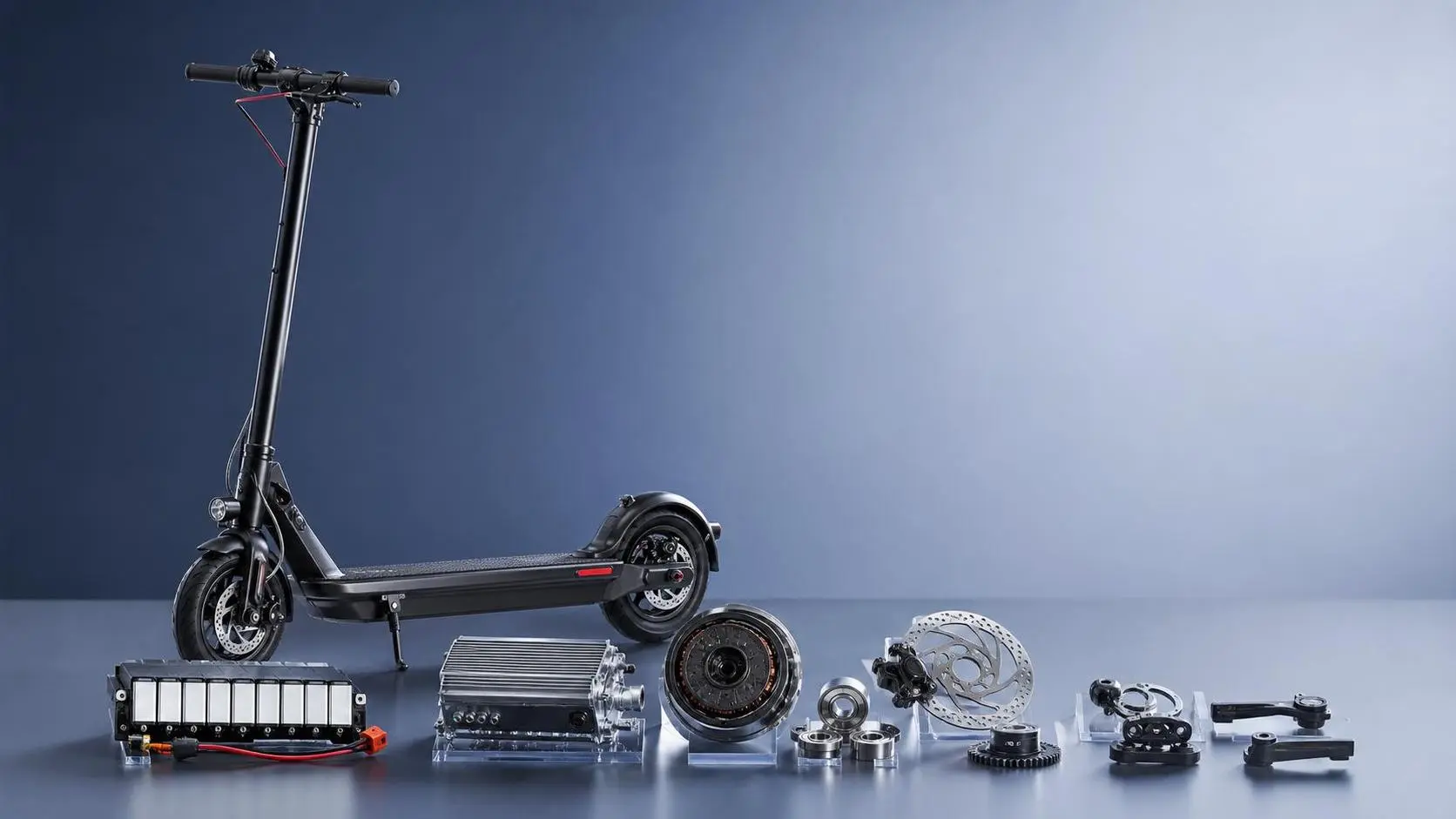
How to Use a Micro Mobility Supplier Directory to Compare OEMs and Component Partners
Micro mobility supplier directory guide to compare OEMs and component partners by certifications, compatibility, lead time, and supply risk—build a smarter shortlist faster.
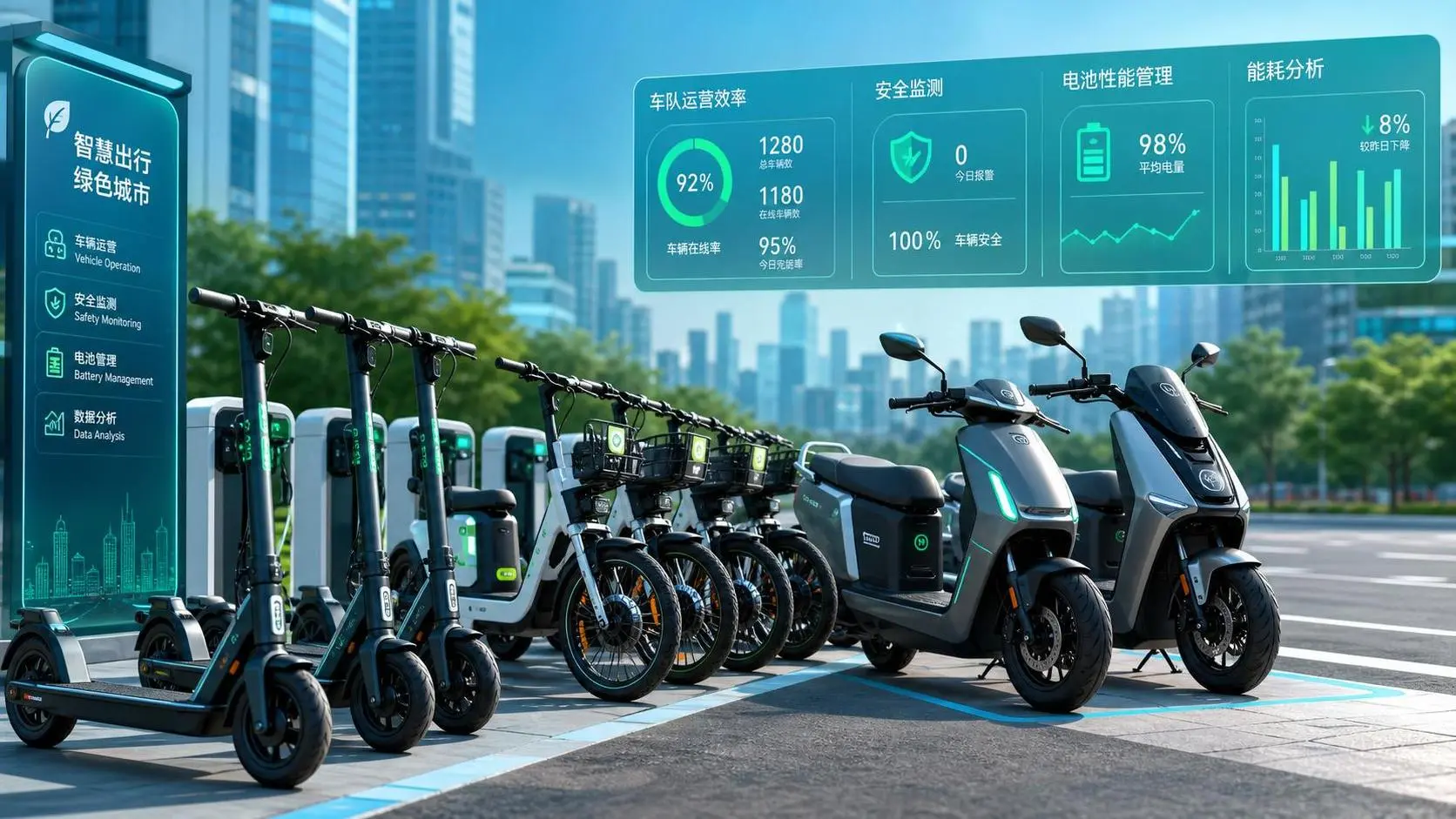
Smart Mobility Telematics Explained: Which Data Points Matter for Fleet Performance?
Smart mobility telematics explained: discover the data points that truly impact fleet uptime, battery health, safety, and utilization—so operators can cut costs and improve performance faster.