
Related News
- 00
0000-00
Battery Management Systems Factory Capabilities: How to Compare Testing and Traceability - 00
0000-00
Swappable Battery Scooter Market: Key Growth Segments and Fleet Demand Signals - 00
0000-00
Fleet Battery Swap Solutions: How to Compare Throughput, Downtime, and Site Needs - 00
0000-00
Battery Swapping Network Cost: What Drives Setup and Operating Expenses? - 00
0000-00
Battery Swapping in China vs Charging: Which Model Fits Shared Scooter Fleets?
Electric Powertrain Analyst
Weekly Insights
Stay ahead with our curated technology reports delivered every Monday.
Battery Management Systems Factory Capabilities: How to Compare Testing and Traceability





Comparing a battery management systems factory is rarely about unit price alone. In micro-mobility, the stronger signal lies in how a supplier tests, records, and controls every board, firmware version, and production lot. For e-bikes, smart e-scooters, high-speed e-motorcycles, and other electrified platforms tracked by UMMS, those details shape safety, field reliability, and service cost far more than headline capacity does.
A capable factory does not simply assemble BMS hardware. It proves cell monitoring accuracy, protection response, communication stability, thermal behavior, and traceability continuity from incoming materials to shipment. That is why testing depth and data integrity now sit at the center of supplier evaluation.
Why this topic matters now
The pressure on battery systems has changed. Urban vehicles are lighter, smarter, more connected, and more regulated than a few years ago.
A BMS used in an export e-bike may need stable CAN or UART communication, accurate balancing, firmware consistency, and evidence for compliance reviews. A shared scooter pack may face vibration, frequent charging, and rapid fleet maintenance cycles. A high-speed electric motorcycle adds harsher thermal and current demands.
In each case, weak factory discipline creates downstream risk. Problems appear as warranty claims, inconsistent pack behavior, intermittent shutdowns, or unclear root-cause analysis after a field event.
From the UMMS perspective, this fits a larger industry shift. Low-carbon mobility is scaling globally, but credibility depends on verifiable technical performance. The factory’s internal control system is part of that credibility.
What a battery management systems factory is really being judged on
At a basic level, a battery management systems factory designs or produces the electronic control layer that supervises battery packs. It measures voltage, current, and temperature, while managing protection logic, balancing, and communication.
In practice, evaluation goes beyond the circuit itself. The more useful question is whether the factory can repeatedly deliver the same behavior across thousands of units.
That means looking at three linked capabilities: validation before mass production, process control during manufacturing, and traceable records after shipment.
Testing depth separates capable suppliers from superficial ones
Many factories claim full testing. The phrase means little unless the test structure is specific, measurable, and linked to failure modes.
Incoming and process-level controls
Start with incoming inspection. Critical parts include ICs, MOSFETs, shunt resistors, connectors, NTC sensors, and communication modules. A serious battery management systems factory defines acceptance criteria by risk, not just by appearance.
Then review SMT and assembly control. Solder paste inspection, reflow profile monitoring, AOI coverage, and fixture maintenance matter because BMS boards often fail through small process drift, not obvious assembly mistakes.
Functional testing that reflects real use
Functional test should simulate actual operating conditions. That includes overcharge, overdischarge, short-circuit, overcurrent, temperature alarms, sleep mode behavior, and communication handshake with host devices.
For micro-mobility, test profiles should match application class. An e-bike system may emphasize power smoothness and charger interaction. A shared scooter program may prioritize repeated plug cycles and fault recovery. A motorcycle platform needs stronger validation under current spikes and heat.
Calibration and firmware discipline
Measurement accuracy is often underestimated. Voltage and current sensing errors can distort SOC estimation, trigger false protection, or hide imbalance trends.
Ask how calibration is performed, how offsets are stored, and how firmware versions are locked to each production batch. A factory with weak firmware governance can pass electrical tests and still create chaotic field behavior.
Traceability is not paperwork. It is a risk-control tool.
Traceability becomes valuable the moment something goes wrong. The question is not whether records exist, but whether they can isolate the event fast enough to protect shipments and avoid broad disruption.
A reliable battery management systems factory should connect each unit or panel to material lots, firmware release, test station, calibration data, operator, date code, and final inspection result.
That level of linkage supports three essential tasks: root-cause analysis, corrective action verification, and limited recall scope.
- If a field failure appears, serial lookup should reveal the exact build history.
- If one component lot is suspect, affected units should be filtered quickly.
- If firmware changed, the factory should prove which versions shipped to which customers.
Without that structure, post-failure investigation turns slow, expensive, and inconclusive. In regulated or export-heavy sectors, that gap can become commercially damaging.
How to compare factories in a practical review
A useful comparison framework balances documents, live observation, and data sampling. Factory presentations alone rarely show true capability.
What to check on site or in an audit
- Test stations with clear pass-fail logic and controlled software access
- Fixture validation records and periodic maintenance logs
- Rework controls, including whether retested units are flagged
- Nonconformance handling and closure evidence
- Change management for BOM, PCB revision, and firmware
What to request as evidence
Sample test reports are more revealing than marketing brochures. Look for timestamped data, threshold values, calibration records, and serial-level history.
Pay attention to whether the factory can export records in a structured form. Manual screenshots and disconnected spreadsheets usually indicate immature traceability.
Where this matters across micro-mobility programs
The evaluation logic changes slightly by application, even when the supplier category stays the same.
For e-bikes, consistency across export batches matters because service networks are often distributed. For smart e-scooters, fleet uptime and remote diagnostics make communication reliability and fault logging more important. For high-speed e-motorcycles, higher discharge rates make thermal monitoring and protection timing more critical.
Even adjacent sectors can benefit from the same discipline. Precision drivetrain electronics, connected accessories, and safety-related modules all rely on controlled production data. That cross-sector pattern is one reason UMMS tracks system intelligence, not just finished vehicles.
A sharper way to make the final comparison
When several suppliers appear similar, compare them on response quality rather than presentation polish. The better battery management systems factory usually answers with data, limits, revision logic, and examples of problem closure.
A narrower shortlist can be built around a few decisive questions:
- Which failure modes are screened at design stage and which at production stage?
- How quickly can one shipped serial number be traced backward through the full build record?
- What happens when firmware, components, or test thresholds change?
- How is field feedback converted into revised test coverage?
Those questions move the discussion away from generic capability claims. They expose whether the supplier can support real electrification programs with discipline, transparency, and repeatability.
The next step is straightforward: build a comparison sheet that weights test coverage, firmware control, traceability depth, and corrective-action speed against the needs of the target vehicle platform. That approach gives a far clearer view than price tables alone, especially when the battery management systems factory will sit inside safety-sensitive, high-visibility mobility products.
Related News

Green Transport Scooters for Urban Fleets: Which Specs Matter Most in Daily Use?
Green transport scooters for urban fleets: discover which specs truly drive uptime, safety, charging efficiency, and lower maintenance costs in daily city use.

OEM Market Share in Electric Motorcycles: What It Reveals About Brand Positioning
OEM market share electric motorcycles reveals far more than sales volume—discover how share shifts expose brand positioning, technology strength, pricing logic, and scalable growth potential.

Electric Drivetrain Systems Factory Audit Checklist: Key Quality Points Before Sourcing
Electric drivetrain systems factory audit checklist: learn the key quality, testing, traceability, and process checks buyers should verify before sourcing to reduce risk and choose reliable suppliers.

Micro-Mobility Solutions for Campuses: How to Choose the Right Fleet Model
Micro-mobility solutions for campuses: learn how to choose the right fleet model for safety, cost, charging, and rider demand to build a scalable, efficient campus transport program.

Wiper Systems ECE Compliance: Which Tests, Marks, and Documents Matter for Approval?
Wiper systems ECE approval explained: learn which tests, marks, and documents matter most to avoid delays, reduce compliance risk, and speed market access.

Wiper Streaking Problem: 7 Common Causes and How to Fix Them Step by Step
Wiper streaking problem? Discover 7 common causes and step-by-step fixes to restore clear visibility, prevent repeat failures, and diagnose blades, glass, washer fluid, and system issues fast.

What Is a Smart Transportation Platform and Which Urban Mobility Use Cases Fit Best?
Smart transportation platform strategies help cities and operators improve fleet coordination, battery planning, compliance, and urban mobility efficiency. Explore the best-fit use cases now.
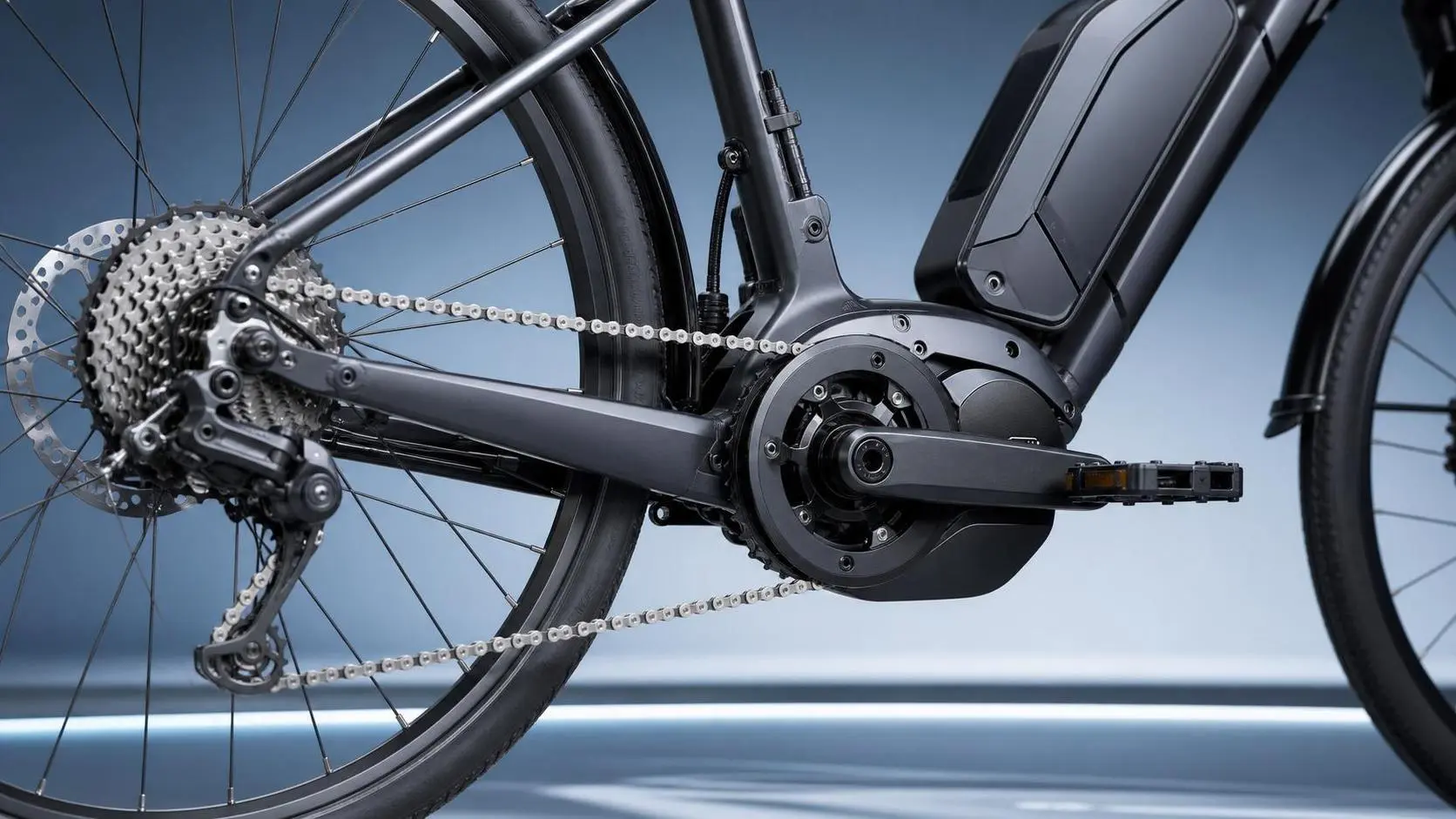
How to Evaluate an Electronic Shifting Drivetrain for E-bikes: Compatibility, Response, and Maintenance
Electronic shifting drivetrain evaluation for e-bikes: learn how to assess compatibility, shift response, and maintenance needs to choose a smoother, more reliable system.
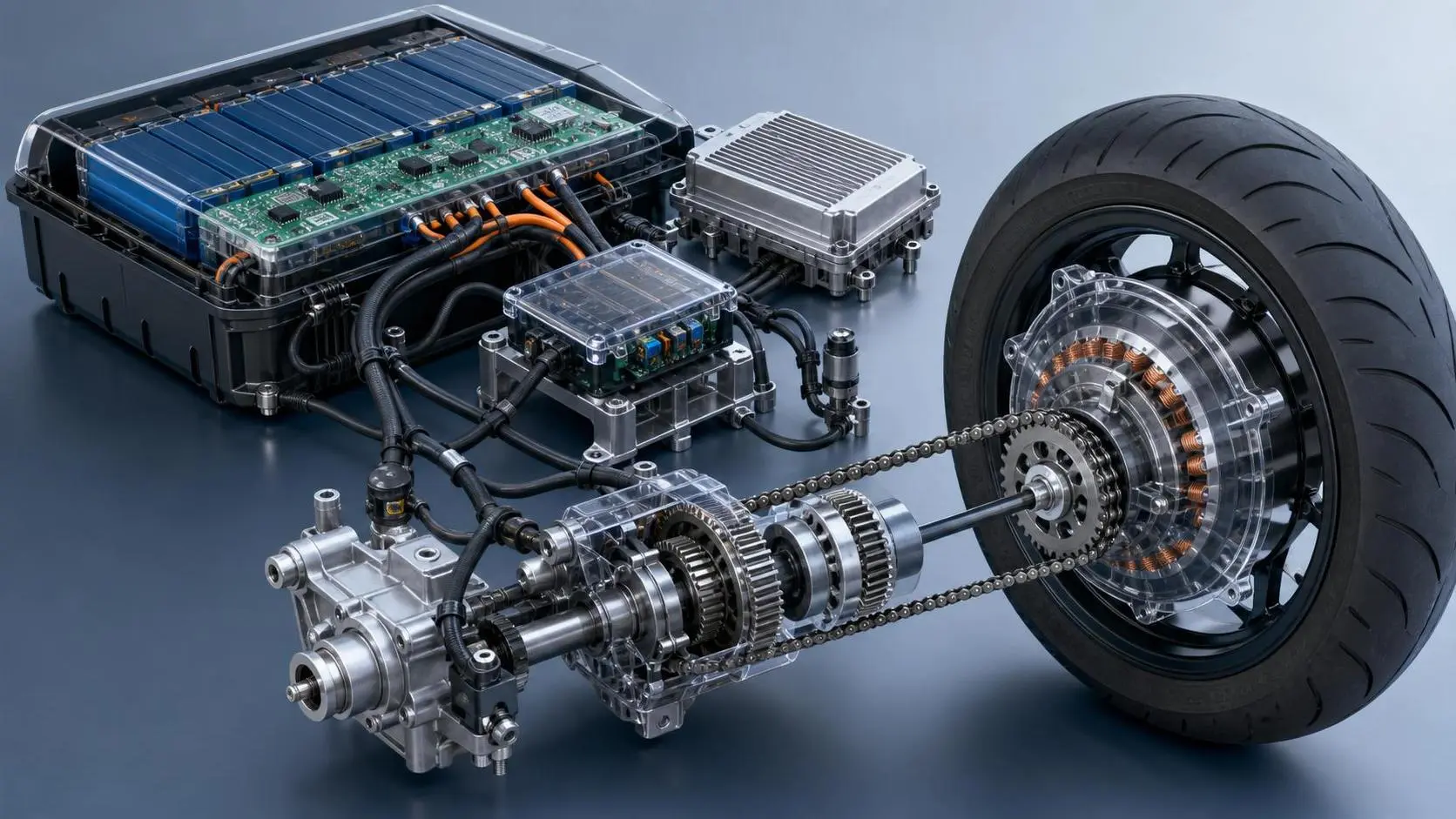
Electric Drivetrain Components Explained: Key Parts, Functions, and Failure Points
Electric drivetrain components explained: discover key parts, core functions, and common failure points to improve performance, reliability, and smarter buying decisions.