
Related News
- 00
0000-00
Wiper Systems ECE Compliance: Which Tests, Marks, and Documents Matter for Approval? - 00
0000-00
Automatic Smart Wiper Systems Explained: Sensors, Control Logic, and Failure Points - 00
0000-00
Wiper Systems for Scooters: Common Failure Points, Maintenance Tips, and Replacement Signs - 00
0000-00
How to Choose a Brushless Wiper Motor: Voltage, Torque, IP Rating, and Duty Cycle - 00
0000-00
Wiper Sensor Technology: How Rain Detection Works and What Affects Response Accuracy
Visibility Safety Expert
Weekly Insights
Stay ahead with our curated technology reports delivered every Monday.
Wiper Systems ECE Compliance: Which Tests, Marks, and Documents Matter for Approval?





Wiper systems ECE approval sits at the intersection of safety, product reliability, and market access. In practice, it is not enough for a wiping system to work well in a prototype vehicle. Approval depends on whether performance results, approval marks, and technical documentation align with regulatory expectations from the start.
That is why the topic matters beyond passenger cars. In the broader mobility sector tracked by UMMS, visibility safety remains a critical issue wherever weather, speed, and compact vehicle design create exposure. For wiper suppliers and integrators, compliance discipline often determines whether launch timing stays on track.
What wiper systems ECE compliance really covers
At a basic level, wiper systems ECE refers to the approval framework applied to windshield wiping and washing functions under relevant UNECE requirements. The exact regulation path depends on vehicle category, system scope, and the contracting parties where approval will be recognized.
The practical point is straightforward. Authorities do not look only at blade movement or motor output. They assess whether the complete system delivers adequate wiped area, stable operation, durability, and traceable conformity.
For quality planning, this means three layers must stay connected:
- the regulated test results;
- the approval mark and labeling details;
- the supporting technical file used during type approval and later audits.
When one of these layers is weak, delays usually appear during authority review, production conformity checks, or customer qualification.
Why the issue is getting more attention
Mobility platforms are becoming more electrified, more compact, and more sensor-driven. That creates tighter packaging for wiper motors, control units, linkage geometry, and washer routing.
At the same time, export programs now span multiple jurisdictions. A system that satisfies internal validation may still fail a formal approval review if markings are incomplete or the information folder does not match the tested configuration.
UMMS follows this shift closely because visibility safety is no longer an isolated hardware matter. Smart wiper sensors, brushless drive strategies, and lightweight vehicle architecture all influence how compliance risk should be managed.
More attention is also coming from claims exposure. If poor wiping performance contributes to a field incident, missing evidence on approval basis, traceability, or document control becomes a serious commercial problem.
Which tests usually matter most
The exact test matrix depends on the applicable UNECE regulation and vehicle type, but several test themes appear repeatedly in wiper systems ECE work.
Wiped area and field coverage
This is often the first checkpoint because it directly affects visibility. Authorities want evidence that the swept area meets the required geometric coverage on the glazing surface.
A common issue is design drift. Small changes in arm length, blade curvature, windshield contour, or mounting angle can reduce coverage enough to trigger rework.
Operating speed and functional modes
Wiper systems ECE review typically checks whether the system can maintain the required wiping frequencies or speed ranges. Intermittent, low, and high-speed modes must behave consistently under defined conditions.
For electronically controlled systems, software logic and motor control calibration should match the approved variant description.
Durability and endurance
A lab pass on day one is not enough. The system must continue performing after repeated cycles, environmental exposure, and component wear.
Endurance concerns usually involve motor overheating, linkage looseness, blade degradation, washer nozzle inconsistency, or failure at end-of-stroke conditions.
Wash-wipe coordination and environmental behavior
Where the regulation includes washer function, reviewers look for proper coordination between fluid delivery and wiping action. Cold-weather behavior, splash pattern, and response timing can become approval issues.
This is especially relevant for vehicles exposed to rain, road spray, and debris in urban duty cycles.
Marks and labels that cannot be treated as minor details
Many approval projects lose time not because the product failed technically, but because the marking scheme was incomplete or inconsistent with the approval documents.
The approval mark must correspond to the granted type approval. Depending on the component and approval route, that may include the E-mark or e-mark format, approval number, and any required variant identification.
What matters in daily control is not only the presence of the mark. The location, readability, permanence, and match to the approved design record are equally important.
- Marking must remain legible after production and service exposure.
- Part number structure should distinguish approved variants clearly.
- Supplier labels, molded marks, and drawings should show the same approval identity.
- Any change in housing, bracket, or controller labeling should trigger review.
In wiper systems ECE work, marking control is part of conformity, not an afterthought handled just before shipping.
The documents that support approval and reduce delays
A strong technical file shortens authority questions and improves internal alignment. It also helps when the approved system is later compared against serial production or a customer-specific derivative.
For most programs, the following documents are the ones that matter most:
- component drawings and assembly layouts;
- bill of materials with controlled revision history;
- test reports linked to the exact tested sample configuration;
- description of motor, controller, linkage, blade, and washer interfaces;
- marking artwork and placement evidence;
- change control records and deviation approvals;
- conformity of production procedures where required.
The critical detail is traceability. A report has limited value if the tested arm, blade, controller software, or windshield reference differs from the product entering production.
For organizations handling multiple mobility platforms, one approval matrix per variant can prevent confusion between visually similar but legally distinct systems.
Typical scenarios where compliance gaps appear
The most common gaps are rarely dramatic. They usually come from routine engineering or sourcing changes that were not screened through an approval lens.
Examples include replacing a motor supplier, changing blade material, moving a bracket hole, revising software logic, or using a different washer nozzle.
In compact urban vehicles and specialized mobility equipment, packaging changes are especially sensitive. A few millimeters can alter swept area, park position, or arm loading.
This is where the UMMS perspective is useful. As low-carbon mobility expands, more platforms combine lightweight structures, electronic controls, and rapid localization. Compliance control has to move with that complexity.
How to evaluate a wiper approval program in practice
A practical review starts with configuration discipline. Confirm exactly which vehicle variant, windshield shape, motor specification, blade type, and controller logic belong to the approval target.
Then compare four records side by side:
- the regulation requirement list;
- the latest design definition;
- the laboratory evidence;
- the production marking and traceability plan.
If these four records do not align, wiper systems ECE risk is already present, even before the formal authority review begins.
It also helps to separate validation language from approval language. Internal durability targets may be tougher than regulation, but they do not replace the need for explicit compliance evidence.
A sensible next step
The strongest approach is to treat wiper systems ECE as a managed approval chain, not as a final test event. Start by mapping applicable regulations, tested variants, required marks, and missing documents in one controlled register.
After that, review recent engineering changes against the approved configuration and verify whether any retest or document update is needed. For programs entering new export markets, add an early check on recognition of the intended approval route.
That kind of structured review usually reveals where the real risk sits: in performance, in labeling, or in paperwork. Once that is clear, approval moves faster and with fewer surprises.
Related News
Wiper Streaking Problem: 7 Common Causes and How to Fix Them Step by Step
Wiper streaking problem? Discover 7 common causes and step-by-step fixes to restore clear visibility, prevent repeat failures, and diagnose blades, glass, washer fluid, and system issues fast.

What Is a Smart Transportation Platform and Which Urban Mobility Use Cases Fit Best?
Smart transportation platform strategies help cities and operators improve fleet coordination, battery planning, compliance, and urban mobility efficiency. Explore the best-fit use cases now.
How to Evaluate an Electronic Shifting Drivetrain for E-bikes: Compatibility, Response, and Maintenance
Electronic shifting drivetrain evaluation for e-bikes: learn how to assess compatibility, shift response, and maintenance needs to choose a smoother, more reliable system.
Electric Drivetrain Components Explained: Key Parts, Functions, and Failure Points
Electric drivetrain components explained: discover key parts, core functions, and common failure points to improve performance, reliability, and smarter buying decisions.

How to Plan Micro-Mobility Charging Stations: Site Selection, Power Needs, and ROI
Micro-mobility charging stations: learn how to choose the right site, size power capacity, improve uptime, and build a stronger ROI model for scalable fleet operations.

Smart Battery Solutions for Shared Fleets: What Reduces Downtime and Maintenance Costs?
Smart battery solutions help shared fleets cut downtime and maintenance costs with real-time diagnostics, smarter charging, battery swapping, and lifecycle insights.

Urban Micro-Mobility in North America: Policy, Charging Access, and Fleet Growth Drivers
Urban micro-mobility North America is evolving fast. Explore how policy, charging access, and fleet economics are shaping scalable growth opportunities across cities.
E-Bike Component Selection: How to Evaluate a Torque Sensor for Commuting and Cargo Use
E-bike component selection torque sensor guide for commuting and cargo use. Learn how to compare response, low-cadence control, durability, and integration for smoother, safer rides.
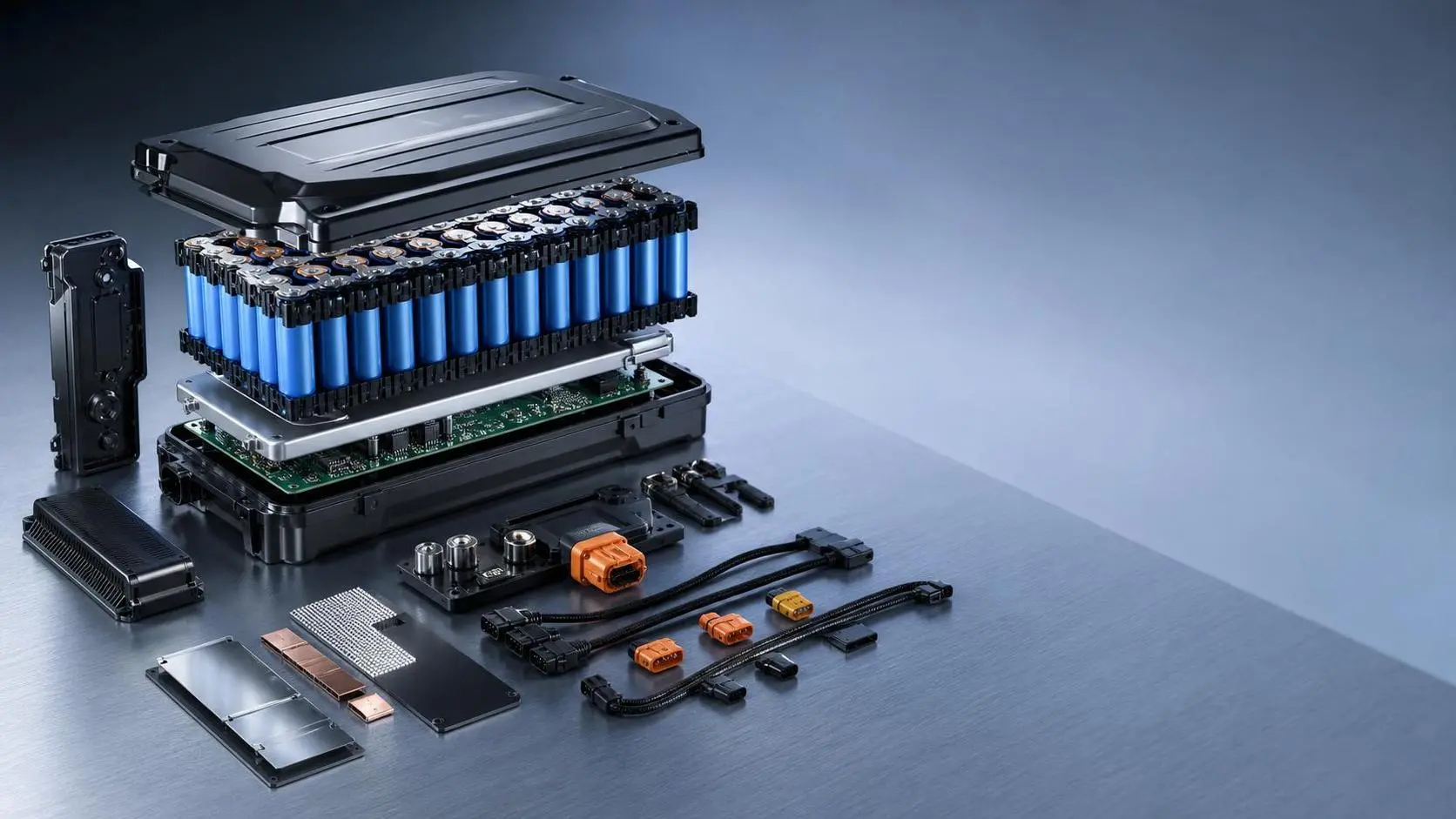
Electric Two Wheeler Battery Components Explained: Cells, BMS, Thermal Parts, and Connectors
Electric two wheeler battery components explained clearly—learn how cells, BMS, thermal parts, and connectors shape safety, range, reliability, and smarter sourcing decisions.