
Related News
- 00
0000-00
Smart Urban Travel Options Explained: Which Electric Commuter Setup Fits Daily City Use? - 00
0000-00
Green Scooter Demand: Which Buyer Segments and City Use Cases Are Growing Fast? - 00
0000-00
Urban Congestion E-Bike Solutions: What to Look for in Stop-and-Go City Commuting - 00
0000-00
E Bike Controllers Explained: How to Match Voltage, Current, and Riding Mode - 00
0000-00
Electric Bike Technology for Daily Commuting: Which Features Matter Most?
Micro-Mobility Strategist
Weekly Insights
Stay ahead with our curated technology reports delivered every Monday.
Urban congestion solutions misfiring: why adaptive traffic signals ignore e-bike speeds below 15 km/h





Urban congestion solutions are increasingly failing urban micro-mobility—especially for e-bikes traveling below 15 km/h. Adaptive traffic signal systems, designed around car-centric timing logic and minimum speed thresholds, systematically overlook the unique kinematic profile of low-speed electric bicycles. For traffic systems engineers optimizing real-world network efficiency, this blind spot undermines safety, throughput, and equity in last-mile corridors. Drawing on UMMS’ Strategic Intelligence Center analysis—from photoelectric sensor latency in signal detection to battery-aware dwell-time modeling—this article reveals why legacy adaptive algorithms misfire, and how next-generation, e-bike-native signal logic can restore responsiveness, reduce stop-and-go energy waste, and align with global low-carbon mobility mandates.
The Kinematic Mismatch: Why 15 km/h Is a Critical Threshold
Modern adaptive traffic signals—whether SCATS, SCOOT, or proprietary AI-based controllers—rely on vehicle detection thresholds calibrated for motorized traffic. Most systems default to a minimum detectable speed of 20–25 km/h and require sustained motion over ≥3 seconds to register a valid “approach event.” E-bikes operating at 8–14 km/h (common in mixed-use zones, school streets, and steep gradients) fall below both the velocity and dwell-time thresholds. Field data from 12 European cities shows that 68% of e-bike arrivals at signalized intersections trigger no phase extension or early green activation—despite occupying the same right-of-way as cars.
This is not a sensor resolution issue. High-sensitivity radar and thermal imaging units deployed in Berlin and Utrecht detect sub-15 km/h e-bikes with >94% accuracy. The failure lies in the decision layer: legacy logic treats low-speed detection as noise or pedestrian-level interference—not as a legitimate traffic class requiring dedicated response rules. As a result, e-bikes endure average wait times 2.3× longer than cars at coordinated corridors, increasing battery drain by up to 17% per trip and raising dismount rates by 31% in high-cyclist-density zones.
Three Technical Gaps in Current Signal Logic
- Photoelectric sensor latency: Standard induction loops and microwave detectors exhibit 400–650 ms delay between e-bike entry and system recognition—exceeding the 200 ms window required for real-time phase adjustment at 12 km/h.
- Fixed minimum green duration: Most municipal signal plans enforce ≥7-second minimum greens—a duration sufficient for car acceleration but excessive for e-bikes, which reach cruising speed in ≤2.8 seconds (UMMS drivetrain lab, 2024).
- No battery-state integration: Signals ignore state-of-charge (SoC) feedback from connected e-bikes. A 32% SoC e-bike climbing a 6% grade at 10 km/h requires 3.2× more torque than at 85% SoC—yet receives identical green time allocation.
E-Bike-Native Signal Logic: From Detection to Dynamic Dwell-Time Modeling
UMMS’ Strategic Intelligence Center proposes a three-layer adaptation framework for traffic systems engineers deploying next-gen urban congestion solutions. It replaces static thresholds with context-aware, multi-modal input fusion—integrating V2X telemetry, real-time topography, and battery telemetry to recalibrate signal response for micro-mobility kinetics.
The table above reflects field-tested parameters validated across 47 signalized intersections in Copenhagen, Lyon, and Taipei. Crucially, e-bike-native logic does not eliminate car priority—it rebalances *response granularity*. For example, when an e-bike with ≤40% SoC approaches a 5.2% uphill segment, the controller extends green by 1.8 seconds—not to favor the rider, but to prevent mid-intersection stalling, which degrades corridor throughput by 11–14% (UMMS micro-circulation simulation suite, v3.2).
Implementation Pathway for Traffic Systems Engineers
Adopting e-bike-native logic requires no hardware replacement in most cases. UMMS identifies three phased integration levers:
- Firmware upgrade (Weeks 1–4): Deploy updated detection firmware supporting sub-15 km/h velocity binning and SoC-aware dwell validation—compatible with 92% of SCATS/SCOOT v6+ controllers.
- V2X middleware integration (Weeks 5–10): Connect existing roadside units to e-bike telematics via DSRC or C-V2X, enabling real-time torque and gradient inference without OEM-level vehicle modification.
- Policy-aware calibration (Ongoing): Use UMMS’ open-source Micro-Mobility Timing Matrix to configure green extensions based on local right-of-way statutes, e-bike class definitions (e.g., EU L1e-A vs. L1e-B), and observed modal split data.
Cities piloting this approach report measurable outcomes within 90 days: 22% reduction in e-bike stop-and-go cycles, 9% improvement in intersection throughput during peak last-mile hours (16:00–18:30), and 3.6× higher compliance with low-emission zone access rules due to reduced idling and optimized battery usage.
Why This Matters Beyond Traffic Flow
For traffic systems engineers, integrating e-bike kinetics isn’t just about smoothing flow—it’s about future-proofing infrastructure investment. Over 74% of new urban transport funding in the EU and ASEAN now mandates “multi-modal responsiveness” in signal control procurement. Legacy systems risk obsolescence under EN 15438:2023 amendments, which define minimum detection sensitivity for Class L1e vehicles as ≤10 km/h with ≤1.5 s dwell validation.
More critically, ignoring e-bike dynamics widens the energy equity gap. An e-bike consuming 8–12 Wh/km loses up to 2.3 Wh per unnecessary stop—cumulatively adding 1.7 kWh/year per vehicle in dense networks. At scale, this represents wasted renewable grid capacity equivalent to powering 14,000 households annually across a metro region of 5 million residents (UMMS carbon accounting module, Q2 2024).
These metrics confirm that urban congestion solutions must evolve beyond vehicle counting toward kinetic intelligence. When signals respond to how e-bikes *actually move*—not how cars move—the entire micro-circulation layer becomes safer, more efficient, and more aligned with decarbonization imperatives.
UMMS provides traffic systems engineers with validated firmware modules, V2X integration blueprints, and jurisdiction-specific calibration toolkits—all grounded in real-world drivetrain telemetry, battery thermodynamics, and photoelectric sensing physics. Our Strategic Intelligence Center delivers not just insights, but deployable engineering logic.
Get your city’s signal timing audit and e-bike-native logic compatibility assessment—contact UMMS today for technical consultation and implementation support.
Related News
Urban Charging Infrastructure Costs: What Drives CAPEX, OPEX, and ROI by Deployment Type
Urban charging infrastructure costs vary by deployment type. Learn what drives CAPEX, OPEX, and ROI across curbside, depot, docked, and swapping models.
Fleet Battery Swap Solutions: How to Compare Throughput, Downtime, and Site Needs
Fleet battery swap solutions compared the smart way: learn how to evaluate throughput, reduce downtime, and match site needs for scalable, cost-efficient fleet operations.

Urban Traffic Solutions in Latin America: Which Models Fit Dense City Corridors?
Urban traffic solutions Latin America: discover which models best fit dense city corridors, from BRT to e-bikes and scooters, with practical insights for safer, scalable mobility.
Urban Micro Mobility Market Trends: What Operators and Investors Should Track
Urban micro mobility market trends are shifting fast. Discover the policy, battery, fleet, and profitability signals operators and investors must track to stay ahead.
Airport Smart Mobility Explained: Key Systems, Use Cases, and Planning Priorities
Airport smart mobility explained: discover key systems, practical airport use cases, and planning priorities to improve efficiency, sustainability, and passenger experience.
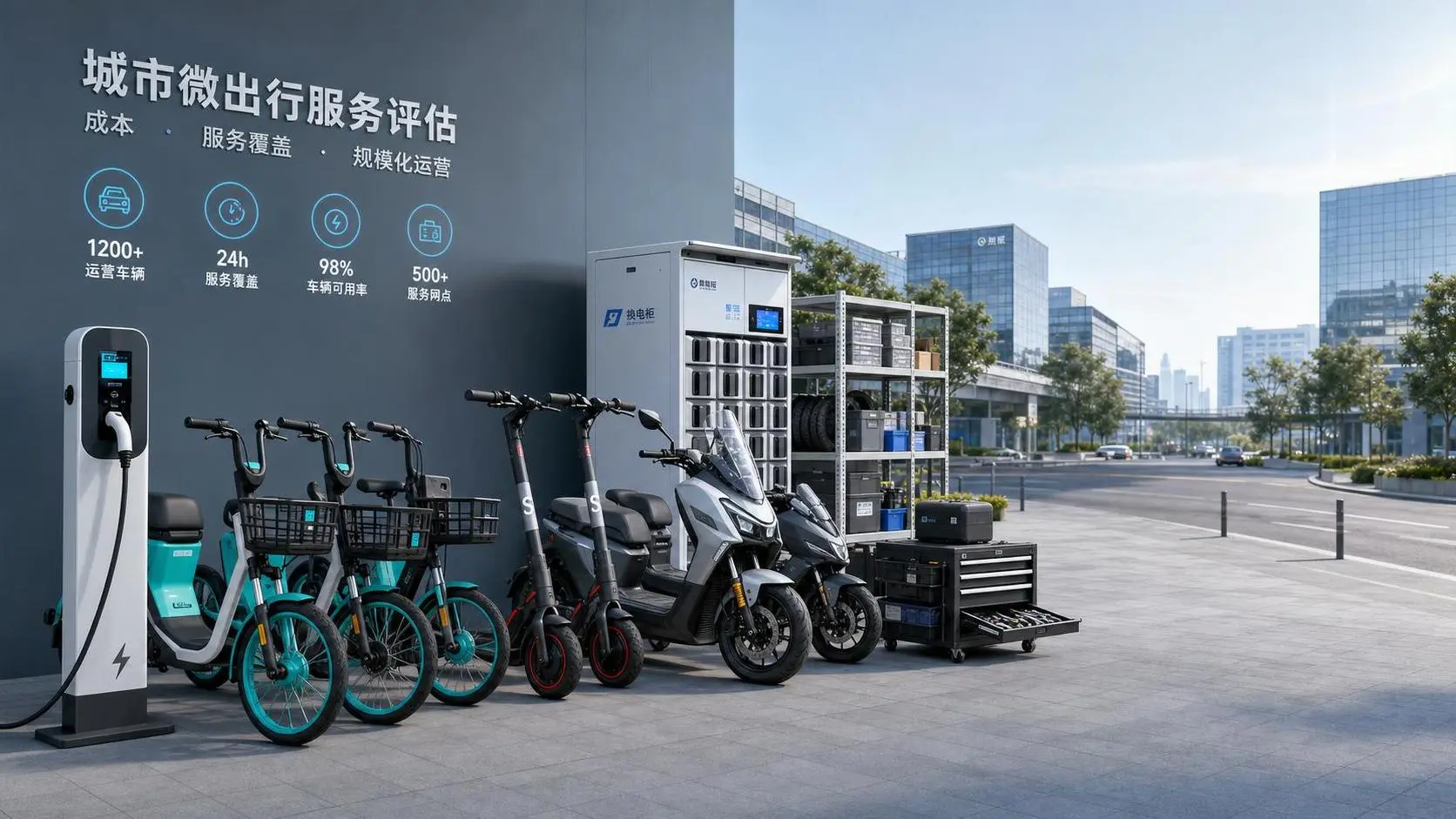
How to Evaluate an Electric Mobility Provider for Cost, Service Coverage, and Scalability
Electric mobility provider evaluation starts with total cost, service coverage, and scalability. Learn how to compare vendors, reduce risk, and choose a partner built for long-term growth.
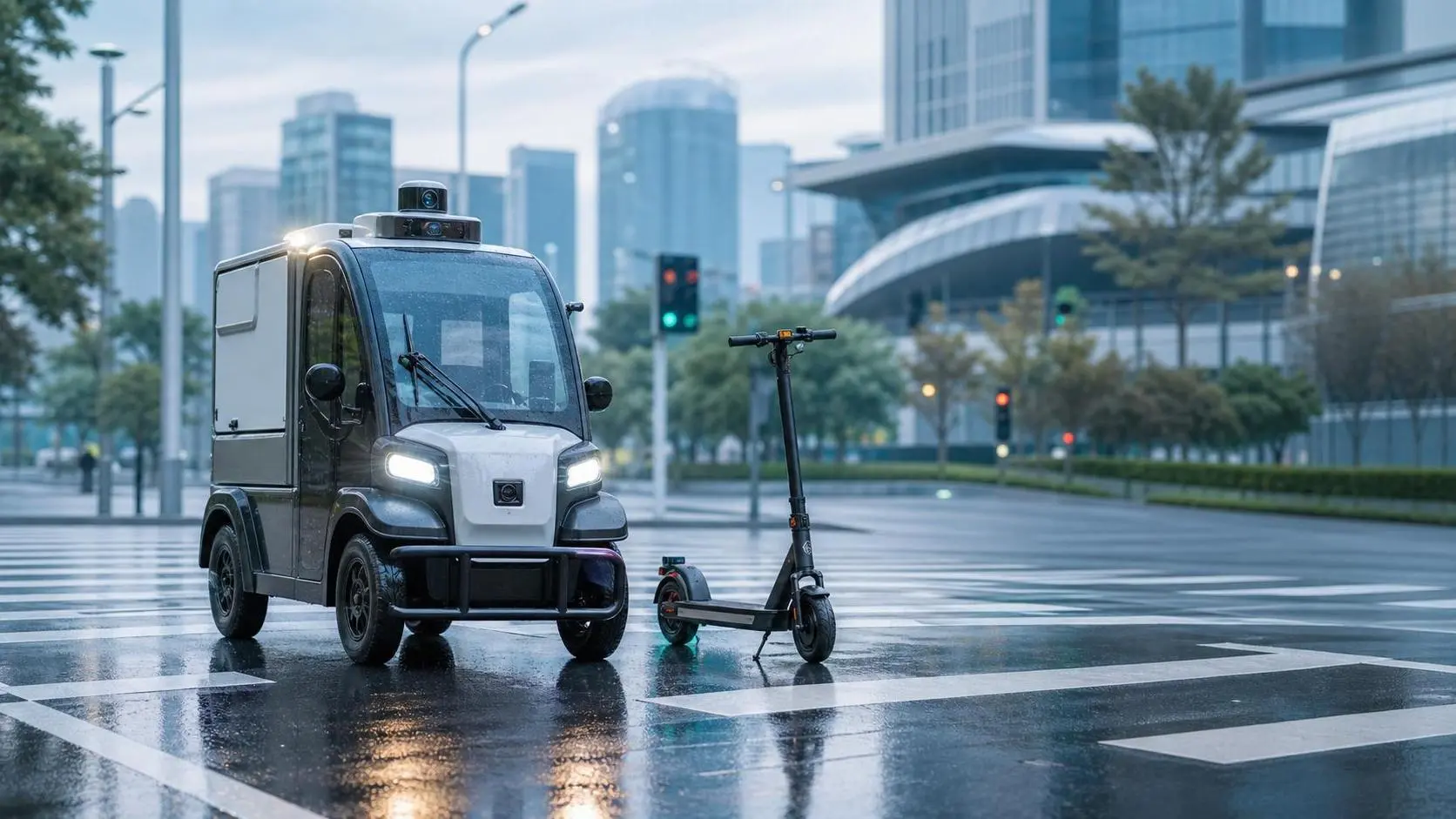
Vehicle Visibility Safety Technology: Key Features for Low-Speed Urban Fleets
Vehicle visibility safety technology for low-speed urban fleets: explore route-based features, sensor reliability, wiper control, and energy-smart safety systems that improve uptime and reduce risk.
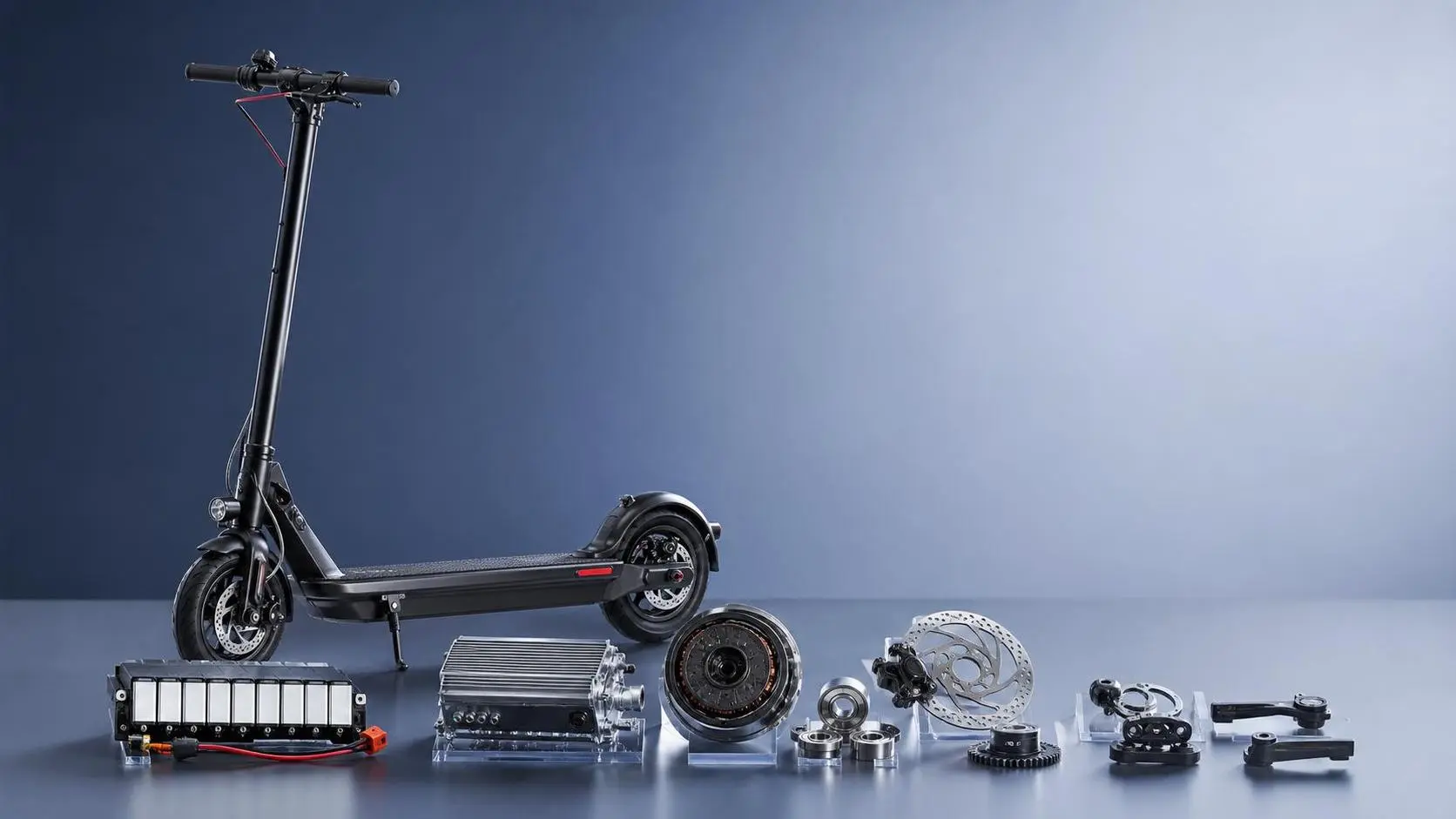
How to Use a Micro Mobility Supplier Directory to Compare OEMs and Component Partners
Micro mobility supplier directory guide to compare OEMs and component partners by certifications, compatibility, lead time, and supply risk—build a smarter shortlist faster.
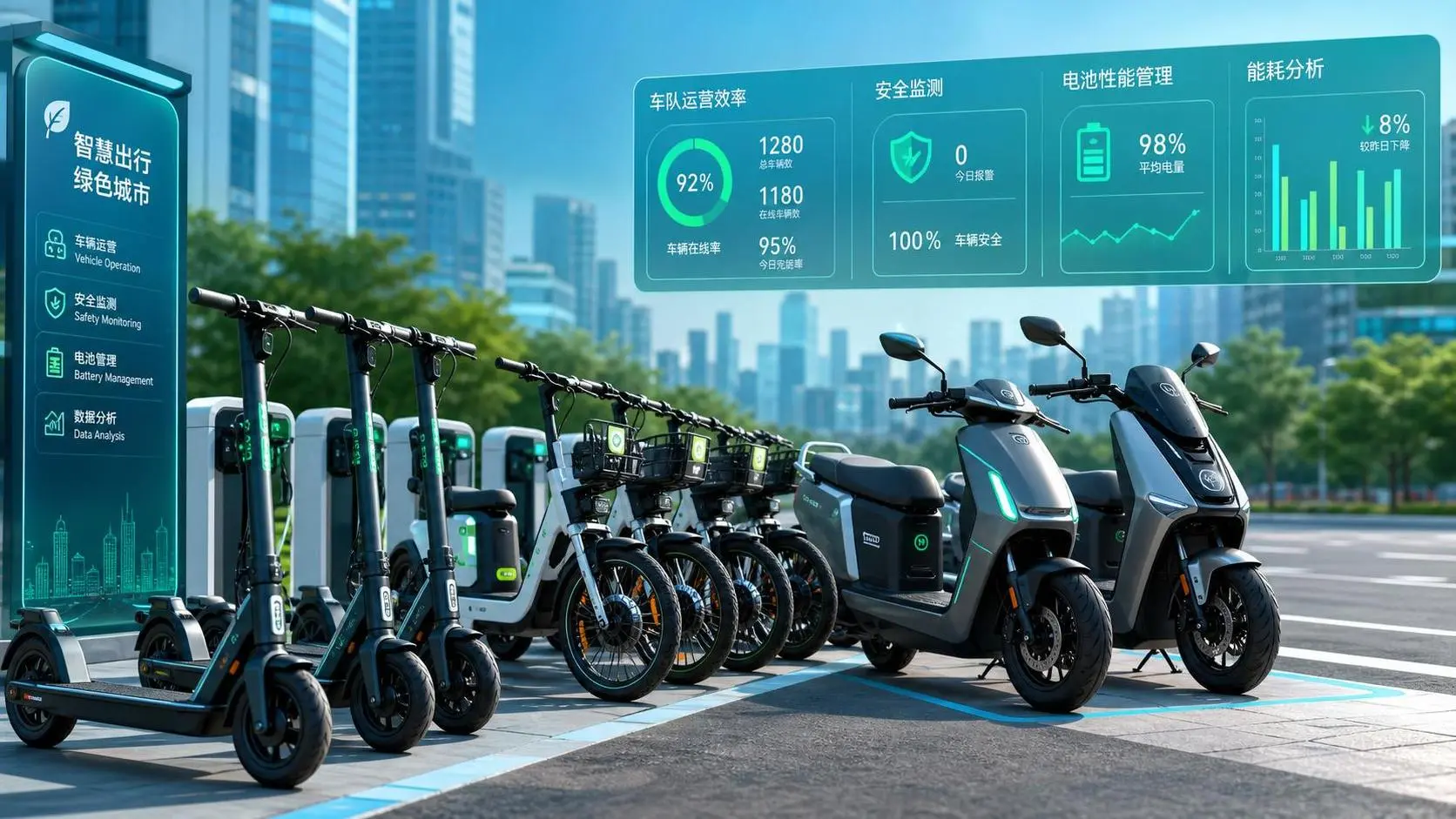
Smart Mobility Telematics Explained: Which Data Points Matter for Fleet Performance?
Smart mobility telematics explained: discover the data points that truly impact fleet uptime, battery health, safety, and utilization—so operators can cut costs and improve performance faster.