
Related News
- 00
0000-00
Micro-Mobility Trends Forecast: What Fleet Operators Should Watch Through 2030 - 00
0000-00
Urban Micro-Mobility Systems in Latin America: Key Market Drivers, Barriers, and Growth Segments - 00
0000-00
Intellectualization of Mobility in North America: What Is Driving Adoption Across Urban Transport? - 00
0000-00
What Is Driving Green Two-wheelers Demand in Europe? Policy, Fuel Costs, and Buyer Segments - 00
0000-00
Urban Micro-Mobility in North America: Policy, Charging Access, and Fleet Growth Drivers
Prof. Marcus Chen
Weekly Insights
Stay ahead with our curated technology reports delivered every Monday.
Micro-Mobility Trends Forecast: What Fleet Operators Should Watch Through 2030





Micro-Mobility Trends Forecast: What Fleet Operators Should Watch Through 2030
As cities tighten emissions rules, invest in charging networks, and rethink curb space, a reliable micro-mobility trends forecast is becoming essential for fleet operators. Through 2030, the winners will be those who track battery economics, regulatory shifts, vehicle durability, data connectivity, and rider demand early. This outlook highlights the signals enterprise decision-makers should watch now to reduce risk, improve utilization, and capture long-term growth in urban mobility.
The phrase sounds straightforward, but in practice many operators still treat forecasting as a demand exercise: how many trips, which neighborhoods, what seasonality. That is too narrow for the next phase of the sector. A useful forecast in micro-mobility is not a guess about ridership alone. It is a working view of how vehicle hardware, battery strategy, software controls, street regulation, insurance pressure, and public acceptance will interact over several years. Through 2030, the market will be shaped less by headline growth claims and more by whether fleets can stay compliant, maintain margins, and keep vehicles in service long enough to justify capital deployment.
That matters across the full two-wheeler spectrum. Shared e-scooters remain the most visible part of urban micro-mobility, but e-bikes, seated scooters, cargo platforms, and in some markets higher-speed electric two-wheelers are pulling the industry into a more segmented operating model. A city center commuter fleet does not behave like a campus system. A delivery-focused e-bike program does not age like a tourist scooter fleet. One of the most common mistakes in market reading is to talk about micro-mobility as though it were a single category with one demand curve and one regulatory future. It is already a multi-format operating business.
Battery economics will decide more than adoption rates
Battery conversations often get flattened into range. Operators should look past that. Through 2030, battery economics will influence fleet architecture, maintenance labor, uptime, warehouse design, and residual value. The real question is not only how far a vehicle can travel on paper, but how the battery performs after repeated charge cycles, under variable weather, with fast turnaround requirements, and under local safety rules for storage and transport.
This is where strategic distinctions matter. Swappable battery systems can reduce downtime and support denser utilization, especially in scooter and light motorcycle fleets, but they introduce inventory complexity, battery tracking requirements, and dependence on disciplined field operations. Fixed-battery vehicles may simplify some theft and handling risks, yet they can create charging bottlenecks and increase idle time if depots are not designed correctly. For enterprise buyers, the forecast signal is not “swap versus charge” in the abstract. It is whether local utilization patterns, labor costs, fire-safety compliance, and service logistics make one model structurally superior in a given city.
Another issue that deserves more attention is battery standardization. In some regions, market participants are pushing for interoperability and clearer technical standards, while in others proprietary systems remain dominant. Operators should watch this closely because standardized battery ecosystems can lower sourcing risk, while proprietary packs may lock fleets into a narrow supplier base. Neither route is automatically wrong; the business risk profile is different.
Durability is replacing launch speed as the key procurement criterion
The earlier years of shared micro-mobility rewarded fast rollout. The next stage rewards vehicles that survive hard urban use. That sounds obvious, but procurement teams still get distracted by top-line unit price, speed specifications, or app features while underestimating frame fatigue, connector reliability, water ingress, brake wear, and the long tail of replacement parts availability.
Operators should expect durability to become one of the clearest dividing lines between financially stable fleets and churn-heavy fleets. A vehicle that lasts longer under repeated curb impacts, vandalism exposure, and poor weather conditions may look more expensive on invoice, yet perform better over total cost of ownership. This is especially relevant as cities raise expectations around vehicle condition, parking discipline, and public right-of-way management. Poor hardware quality no longer remains an internal maintenance problem; it becomes a regulatory liability.
For e-bikes and precision bicycle drivetrains, durability has a second layer: performance consistency. Components that shift cleanly, resist contamination, and hold alignment under heavy urban duty cycles support rider confidence and lower service interruptions. For operators evaluating connected or electronic drivetrain systems, the right question is not whether the technology feels advanced. It is whether the added complexity is offset by measurable gains in fleet uptime, maintenance predictability, or rider retention.
Regulation will become more operational, less symbolic
By 2030, regulatory pressure is unlikely to move in one universal direction. Some cities will support shared fleets as part of decarbonization and congestion policy. Others will restrict permits, cap fleet size, tighten parking rules, or shift liability requirements. What changes is the style of regulation. The market is moving away from broad political enthusiasm or skepticism and toward more technical oversight: vehicle speed management, geofencing accuracy, battery handling, data reporting, and public-space compliance.
That shift favors operators with stronger systems discipline. Geofencing, for example, is often discussed as a product feature, but in practice it is a regulatory instrument. If location precision is weak or enforcement lags, operators can lose city trust quickly. The same applies to parking verification workflows and incident traceability. A micro-mobility trends forecast that ignores municipal operating rules is not much use to an executive team deciding where to allocate fleet capital.
There is also a broader policy connection worth watching: curb space. As cities balance delivery traffic, cycling infrastructure, pedestrian access, and shared mobility parking, curb management will influence which fleet models can scale efficiently. This is not a minor urban design issue. It affects retrieval costs, parking compliance, customer convenience, and whether vehicle density in high-demand zones remains economically viable.
Connected fleets will be judged by decision quality, not data volume
Most operators already accept that connected vehicles are standard. The harder question is what kind of connectivity produces business value. Through 2030, telematics stacks will become denser, but the winning systems are unlikely to be the ones that simply collect more data points. They will be the ones that turn battery health, component stress, crash indicators, route anomalies, and charging behavior into faster operational decisions.
For smart e-scooters and advanced e-bikes, connectivity is gradually moving from a fleet-tracking function to a diagnostic layer. Predictive maintenance is frequently overstated in marketing, yet the underlying idea is sound when applied carefully. If operators can identify degradation patterns before vehicles fail in the field, they reduce retrieval cost and service disruption. The caveat is that data quality, hardware sensor reliability, and maintenance workflow integration matter more than dashboard sophistication.
A related misconception is that more connectivity automatically improves economics. It can do the opposite if the architecture is expensive, power-hungry, or dependent on fragmented vendors. Decision-makers should examine whether connected modules support specific use cases: theft deterrence, maintenance timing, permit reporting, battery management, rider safety controls, or asset allocation. If the answer stays vague, the technology stack is probably ahead of the business case.
Demand will broaden, but not evenly
A serious forecast for micro-mobility demand should separate trip replacement from trip creation. In dense cities, shared fleets often replace short car, taxi, or public transit connector trips. In leisure districts, they may generate discretionary usage that did not exist before. In suburban or peri-urban settings, the problem is different again: riders need range, comfort, and safe infrastructure more than ultra-high vehicle density.
That is why the next wave of growth may come less from putting more of the same scooters on the street and more from matching vehicle formats to corridor type. E-bikes generally fit longer, less physically flat routes and broader user age ranges. Scooters remain effective for short hops and dense urban circulation. Higher-speed electric two-wheelers may expand in commercial or commuter use where road conditions and regulation allow, but they belong to a different risk, licensing, and infrastructure conversation. Treating these categories as interchangeable leads to poor fleet planning.
The strongest operators will think like system managers
One reason industry forecasts often miss the mark is that they focus on the vehicle, while operating results depend on the system around it. Through 2030, the best-run fleets are likely to treat hardware, software, batteries, charging, right-of-way compliance, and component sourcing as one integrated operating model. This is where specialized intelligence becomes valuable. It is not enough to know that demand for low-carbon urban mobility is rising. Operators need to know which battery handling rules are tightening, which drivetrain technologies are proving serviceable in high-usage fleets, which connected modules reduce maintenance blind spots, and which city frameworks are becoming more data-intensive.
That integrated view also changes supplier evaluation. Component quality in motors, battery management systems, precision drivetrains, braking assemblies, sensors, and control electronics has a direct effect on fleet economics. The market is no longer rewarding every “smart” feature equally. It is rewarding the features that survive field conditions and simplify decisions. For that reason, a serious micro-mobility trends forecast should be built from operational signals, not just market narratives.
The most practical question for decision-makers is not whether micro-mobility will grow. In many cities and use cases, it already has a durable role. The sharper question is where the next layer of value will come from. Through 2030, that value is likely to concentrate in fleets that choose the right vehicle type for the corridor, build battery strategy around real operating constraints, maintain regulatory credibility, and use connected systems to improve asset decisions rather than merely report them. That is the difference between participating in the market and understanding where it is actually heading.
Related News
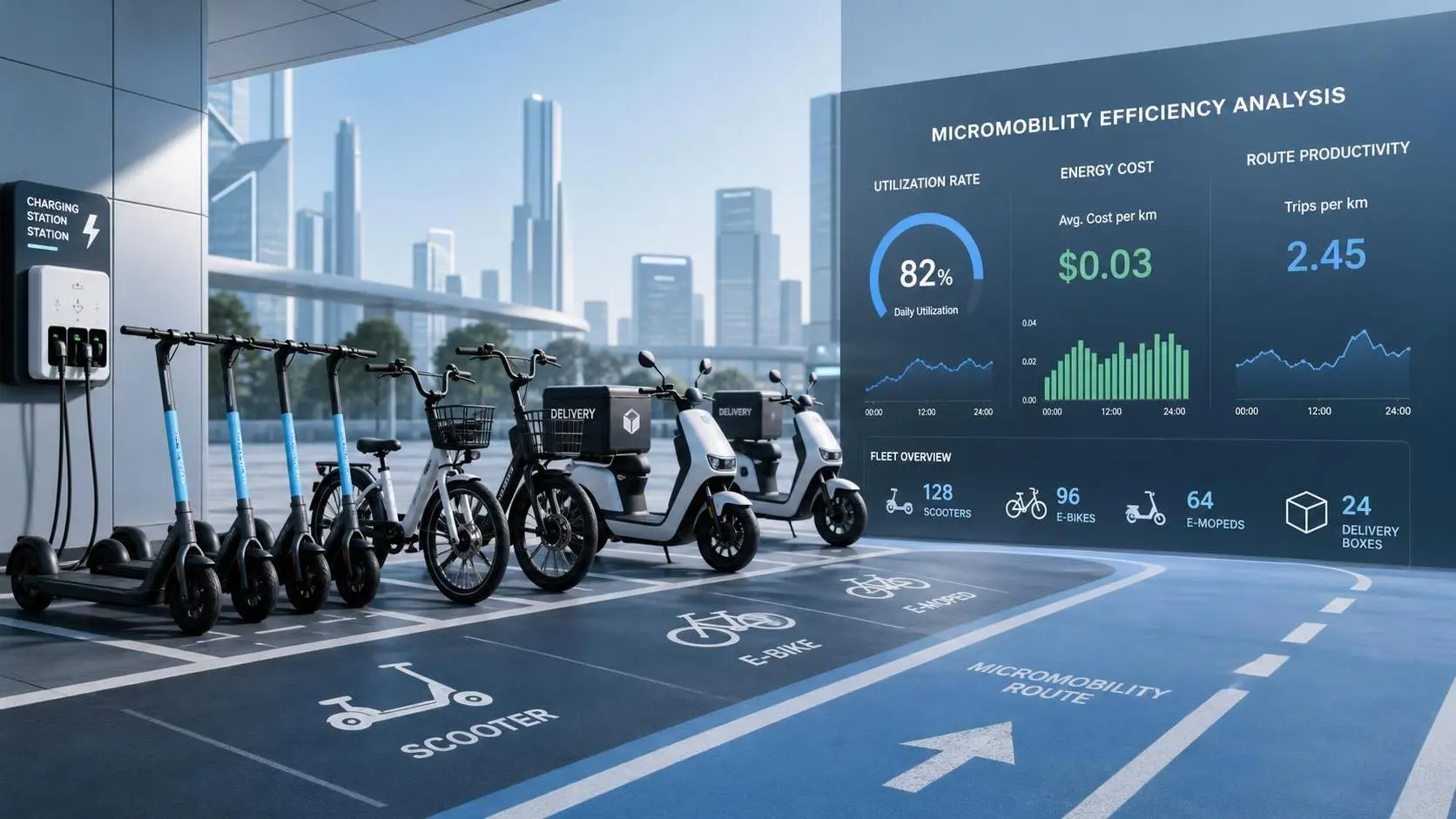
Mobility Efficiency Analysis: How to Measure Vehicle Use, Energy Cost, and Route Productivity
Mobility efficiency analysis reveals how to measure vehicle use, energy cost, and route productivity to cut waste, improve fleet performance, and make smarter urban mobility decisions.

How to Evaluate a Brushless Wiper Motor Supplier for OEM Quality and Lead Time
Brushless wiper motor supplier selection made easier: learn how to assess OEM quality, engineering support, compliance, and lead time to reduce sourcing risk.

How Do Photoelectric Wiper Sensors Work and Where Are They Most Effective?
Photoelectric wiper sensors explained: learn how they detect rain, reduce false triggers, and deliver the best visibility gains in urban EVs, e-bikes, fleets, and smart mobility.

How Battery-Swapping Networks Reduce Downtime in Shared Fleet Scooter Operations
Battery-swapping networks cut scooter fleet downtime by speeding field turnaround, improving uptime in peak zones, and helping operators optimize labor, battery rotation, and service efficiency.
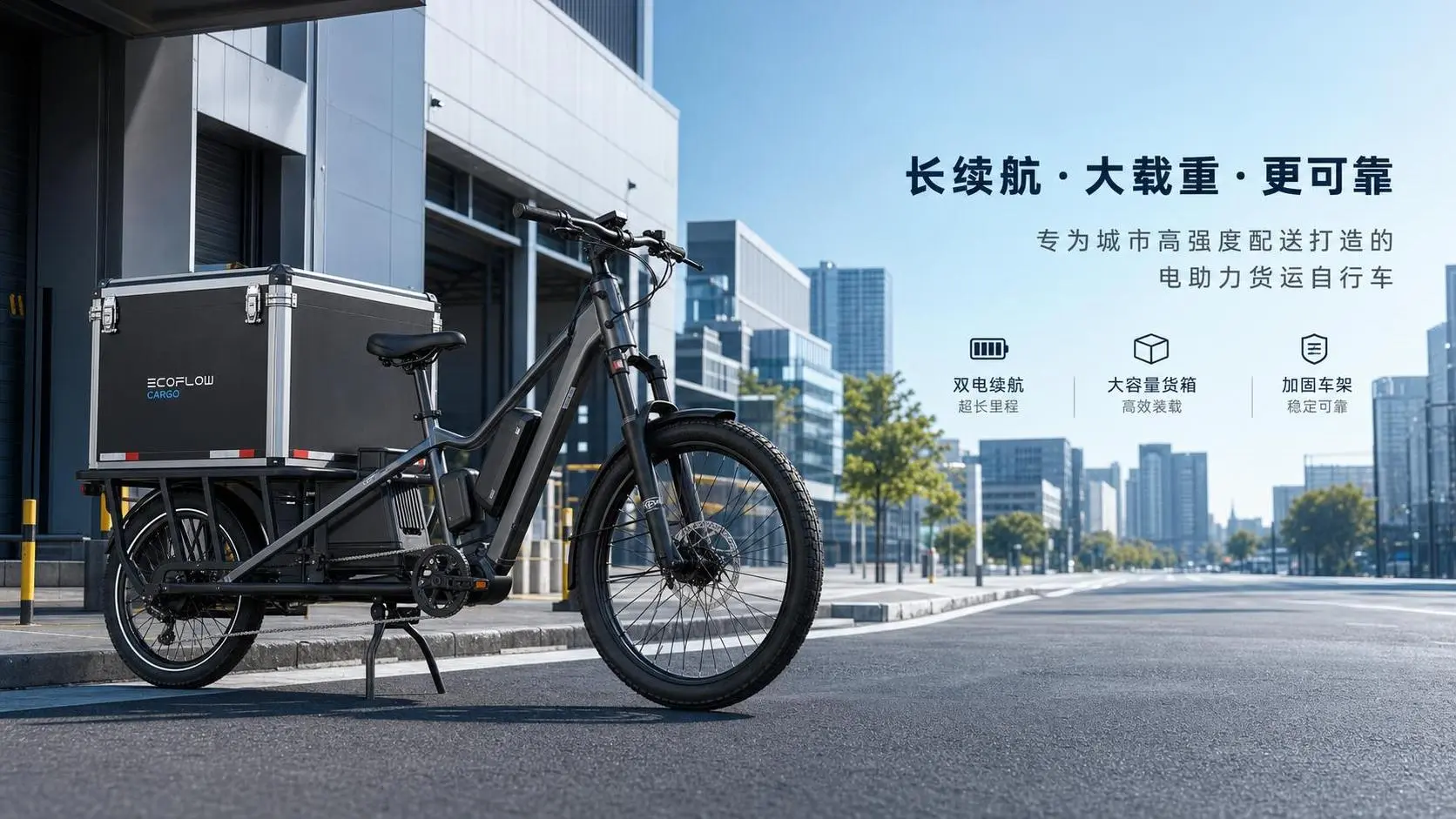
How to Choose a Long-Range Commercial Cargo E-Bike for Delivery Operations
Commercial cargo e-bike long range buying guide: learn how to assess battery, payload, route fit, and uptime support to choose a reliable delivery model with lower operating costs.
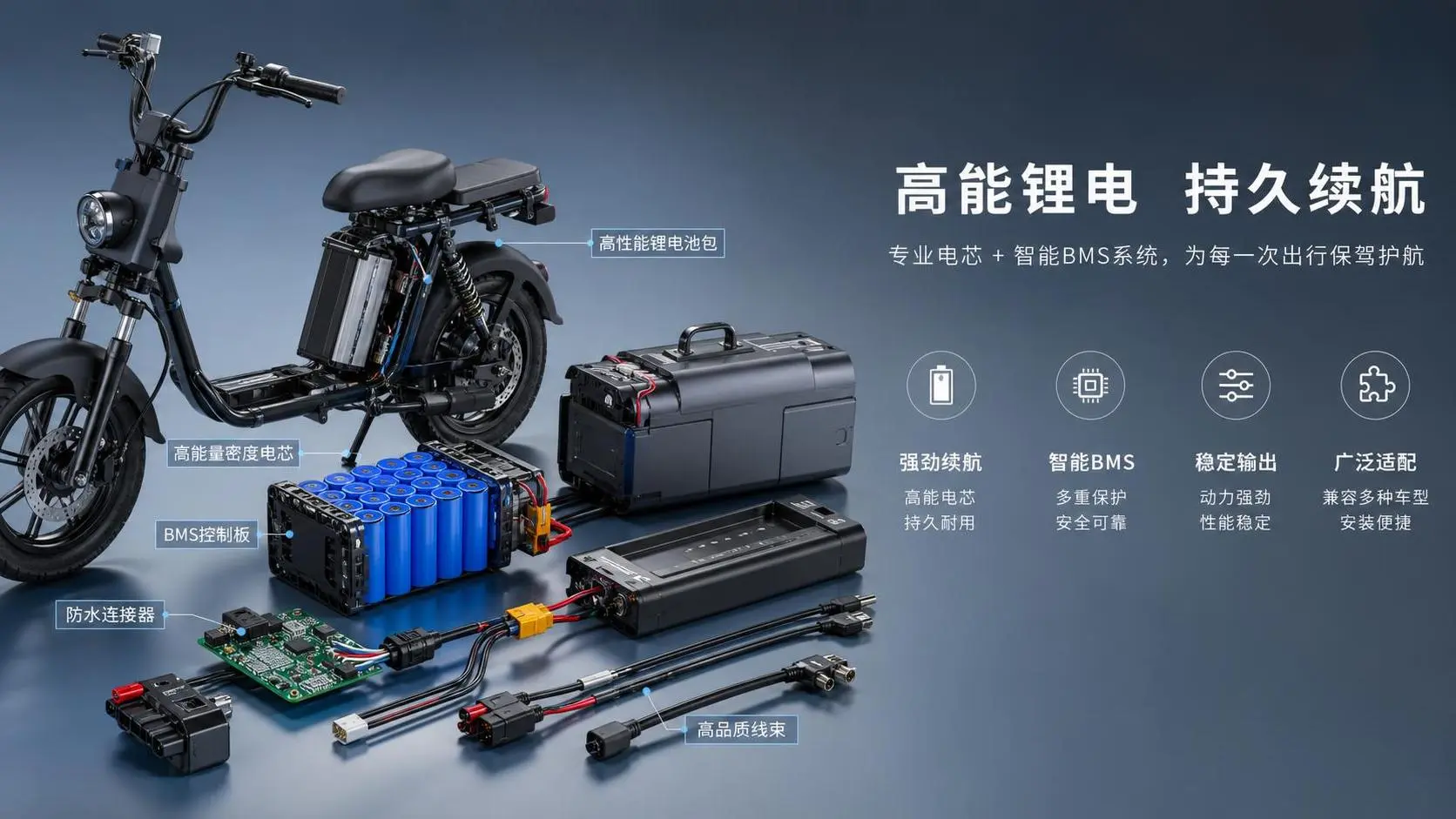
How to Select the Right E-Bike Battery Components for Range, Safety, and Fit?
E-bike component selection battery guide: learn how to choose the right battery components for better range, stronger safety, and perfect fit across modern e-bike platforms.

How to Evaluate Core Component Suppliers for Electric Motorcycles Before Sourcing?
Core component suppliers for electric motorcycles can make or break safety, compliance, and delivery. Learn how to assess technical strength, certifications, quality control, and hidden sourcing risks before you buy.

E-Bike Incentives Explained: How Riders Can Find Local Rebates and Tax Credits
E bike incentives explained: learn how to find local rebates, tax credits, and utility offers, avoid common mistakes, and cut the real cost of your next e-bike.

How to Choose Lightweight Scooter Frames in Europe: Materials, Standards, and Use Cases
Lightweight scooter frames Europe buyers need should balance materials, EN standards, durability, and real use cases. Discover how to choose safer, smarter, compliant frames.