
Related News
- 00
0000-00
What Is the Intellectualization of Mobility Platform and How Is It Applied in Shared Fleets? - 00
0000-00
Where LED Urban Visibility Safety Systems Fit Best in Shared Scooters and City E-bikes - 00
0000-00
Green Transport Scooters for Urban Fleets: Which Specs Matter Most in Daily Use? - 00
0000-00
Micro-Mobility Solutions for Campuses: How to Choose the Right Fleet Model - 00
0000-00
Smart Battery Solutions for Shared Fleets: What Reduces Downtime and Maintenance Costs?
Urban Transit Fellow
Weekly Insights
Stay ahead with our curated technology reports delivered every Monday.
2026 Right-of-Way Regulations for Shared Fleet Scooters





As shared fleet scooters scale across urban networks, right-of-way regulations are moving from legal detail to operational priority. In 2026, compliance is no longer limited to signs, lanes, and rider conduct.
Cities now connect right-of-way regulations with braking distance, lighting performance, sensor integrity, fleet geofencing, and incident traceability. This shift matters because shared mobility safety is increasingly judged through measurable technical controls.
For the wider micro-mobility ecosystem, the policy trend is clear. Fleet access, insurance terms, public acceptance, and deployment rights will increasingly depend on how well operators translate right-of-way regulations into hardware and system discipline.
2026 signals a stricter phase for right-of-way regulations
The biggest change is that right-of-way regulations are becoming performance-based. Regulators are asking not only where scooters may ride, but whether fleets can enforce those rules consistently.
This means local authorities are reviewing sidewalk riding prevention, low-speed zone compliance, parking precision, warning visibility, and emergency braking behavior as part of the same control framework.
In practice, shared fleet scooters will face more route restrictions near schools, transit hubs, hospital corridors, and mixed pedestrian streets. Sensitive zones are becoming the testing ground for future right-of-way regulations.
Another signal is data accountability. Cities increasingly expect event logs showing speed reductions, geofence entries, hard braking events, and rider alerts. Policy enforcement is shifting from patrol-heavy supervision to digital verification.
Why right-of-way regulations are tightening across shared scooter networks
Several forces are shaping the 2026 environment. Together, they explain why right-of-way regulations are becoming more technical, more localized, and less tolerant of weak fleet controls.
The result is a new compliance baseline. Shared scooters must prove they can adapt behavior by zone, by time window, and by traffic context rather than rely on rider judgment alone.
Technical compliance is now part of right-of-way regulations
In 2026, right-of-way regulations increasingly intersect with product engineering. If a scooter cannot see, slow, warn, or record reliably, legal compliance becomes fragile even before an incident happens.
Braking performance is under greater review
Braking consistency matters in bike lanes, crossings, and shared corridors. Authorities may compare stopping distance under dry and wet conditions, especially where fleet scooters mix with vulnerable road users.
Poor brake tuning also affects right-of-way regulations indirectly. A scooter that cannot slow smoothly in a geofenced zone may trigger non-compliance, even if its maximum speed appears acceptable on paper.
Visibility systems are no longer optional details
Front lights, rear lights, reflectors, and side visibility are increasingly linked to access rights. Night riding, fog, rain, and winter twilight push right-of-way regulations toward visibility verification.
For UMMS-observed markets, weather resilience is gaining attention. Lighting durability, moisture protection, and warning signal reliability can influence whether a fleet remains approved in stricter districts.
Sensors and geofencing define enforceability
Right-of-way regulations are only effective when fleets can detect location, lane context, and restricted areas with usable accuracy. Sensor drift or weak map updates create hidden compliance gaps.
Geofencing will likely move beyond simple speed caps. More cities may require dismount zones, no-entry windows, pedestrian-priority slow corridors, and forced parking validation in narrow curb areas.
Operational impact reaches every business link in shared mobility
Tighter right-of-way regulations affect much more than legal teams. They reshape fleet specification, software architecture, maintenance intervals, deployment strategy, and public-space negotiations.
- Vehicle design must support predictable braking, stronger lighting, and durable frame behavior under repeated urban stress.
- IoT systems need cleaner location logic, faster rule updates, and better ride-event recording.
- Operations teams must redeploy fleets according to zone risk, time restrictions, and incident density.
- Maintenance planning must prioritize brake wear, tire condition, headlight output, and sensor calibration.
- Policy engagement now depends on proving that right-of-way regulations can be executed at street level.
This trend also affects supplier evaluation. Components once treated as routine, such as controllers, brake assemblies, light modules, and connectivity units, now influence regulatory reliability and market continuity.
For broader urban micro-mobility, the implication is strategic. Better right-of-way regulations can support long-term shared scooter legitimacy, but only when fleets show discipline that matches public-space sensitivity.
Key areas to watch as right-of-way regulations evolve
The most useful response is to track a small set of high-impact indicators. These reveal whether local right-of-way regulations are moving toward tighter approvals or more stable operating permissions.
- Expansion of pedestrian-first zones with mandatory low-speed or no-ride rules
- Rising demand for digital logs proving enforcement of right-of-way regulations
- Local testing of braking distance and visibility standards before permit renewal
- Seasonal safety requirements for wet pavement, low light, and cold-weather traction
- Integration of fleet incident data into insurance pricing and municipal scorecards
- More precise parking rules tied to curb management and transit station access
Markets that move first on these indicators often set templates for others. Watching them early helps reduce compliance lag and costly retrofits across hardware and software systems.
Practical response paths for 2026 compliance readiness
A useful approach is to convert right-of-way regulations into operational checkpoints. This keeps legal interpretation, engineering action, and street performance aligned during rapid market changes.
The strongest strategies do not treat right-of-way regulations as a barrier. They treat them as a design input for safer fleet architecture and more trusted urban operations.
The next step is converting policy pressure into system discipline
The 2026 outlook shows that right-of-way regulations will keep expanding in scope, detail, and technical expectation. Fleets that wait for final enforcement language may lose time, permits, and public confidence.
A better next step is to review local rule exposure, test hardware against urban risk scenarios, and strengthen compliance evidence across the full operating chain. That preparation supports safer streets and more durable shared scooter access.
For organizations tracking the future of micro-mobility, the message is simple. Right-of-way regulations are no longer only about traffic priority. They now define how intelligent, visible, and accountable shared fleets must become.
Related News

How to Choose Lightweight Scooter Frames in Europe: Materials, Standards, and Use Cases
Lightweight scooter frames Europe buyers need should balance materials, EN standards, durability, and real use cases. Discover how to choose safer, smarter, compliant frames.

What Is the Intellectualization of Mobility Platform and How Is It Applied in Shared Fleets?
Intellectualization of mobility platform is reshaping shared fleets with real-time data, predictive maintenance, and smarter compliance—learn how it boosts safety, uptime, and urban mobility efficiency.

Urban Micro-Mobility Systems in Latin America: Key Market Drivers, Barriers, and Growth Segments
Urban micro-mobility systems Latin America are reshaping city transport. Explore key drivers, barriers, and high-growth segments to spot the region’s most investable opportunities.

Electric Motorcycle Systems Price Breakdown: What Affects Cost From Battery to Controller?
Electric motorcycle systems price explained: see how battery, controller, motor, BMS, and wiring affect total cost, reliability, and sourcing value before you buy.

72V Electric Motorcycle Technology Explained: Motors, Controllers, Range, and Charging
Electric motorcycle technology 72V explained clearly: compare motors, controllers, range, battery design, and charging to choose a smoother, stronger, and smarter electric ride.

Where LED Urban Visibility Safety Systems Fit Best in Shared Scooters and City E-bikes
LED urban visibility safety systems deliver the most value in shared scooters and city e-bikes by improving multi-angle safety, fleet durability, and urban compliance across real-world routes.

Intellectualization of Mobility in North America: What Is Driving Adoption Across Urban Transport?
Intellectualization of mobility North America is reshaping urban transport through data, smart fleets, and battery intelligence. Explore what is driving adoption and why cities and operators are accelerating now.

How to Choose a Compact Battery Pack: Size, Energy Density, Thermal Design, and Cycle Life
Compact battery pack selection starts with more than size. Learn how energy density, thermal design, and cycle life shape range, safety, and long-term value.
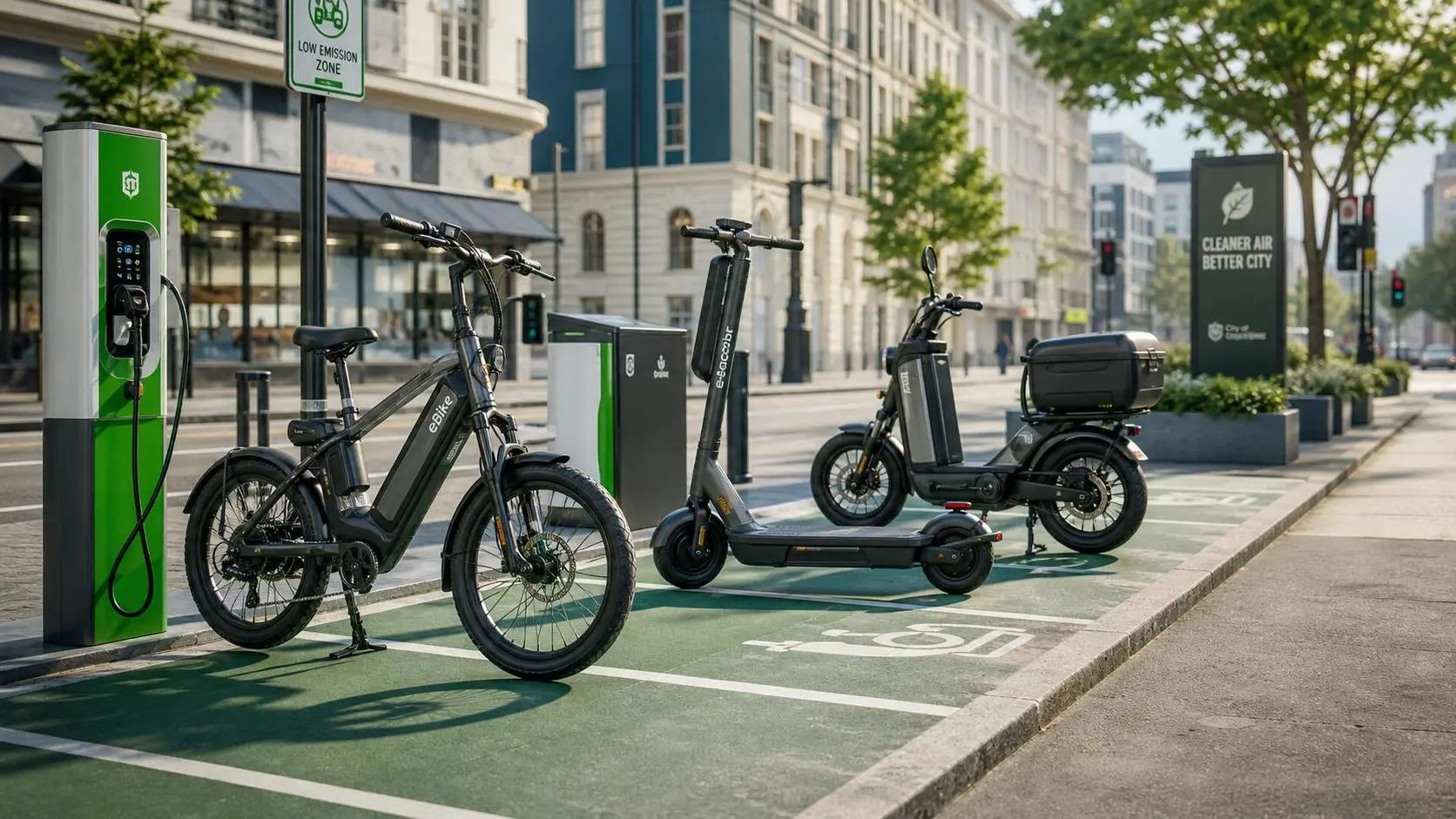
What Is Driving Green Two-wheelers Demand in Europe? Policy, Fuel Costs, and Buyer Segments
Green two-wheelers demand Europe is rising as policy support, fuel cost pressure, and diverse buyer segments reshape urban mobility. Explore the trends driving the next growth wave.